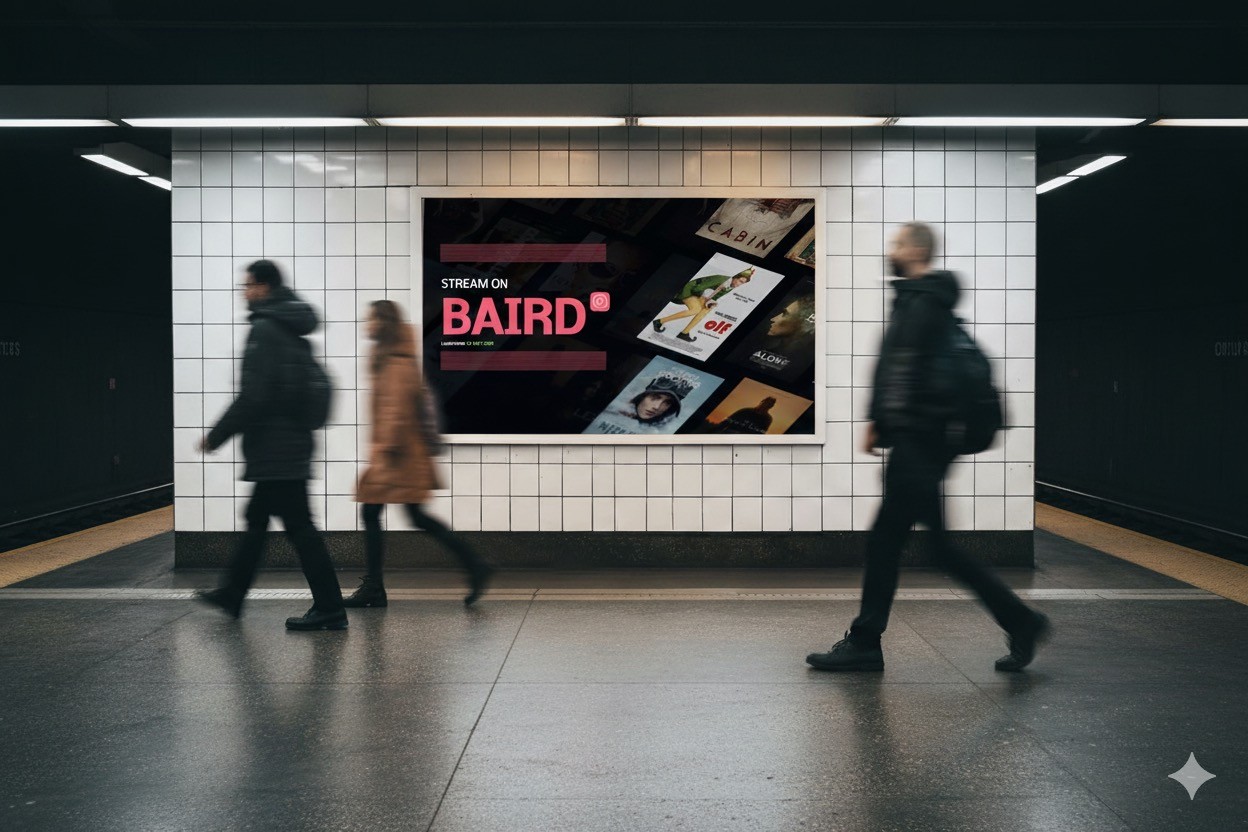
Baird
Reimagining Digital Entertainment
Baird wasn’t just building another streaming app, they were aiming for a complete entertainment hub. From movies and series to live TV and radio stations, the goal was clear: create one destination for all things digital entertainment. Unlike mainstream services, access wouldn’t be public, users needed a PIN generated on the web platform before they could even download the app

Year
2024
Project Role
Product Designer
Industry
Media/Streaming
Where All of Entertainment Comes Together
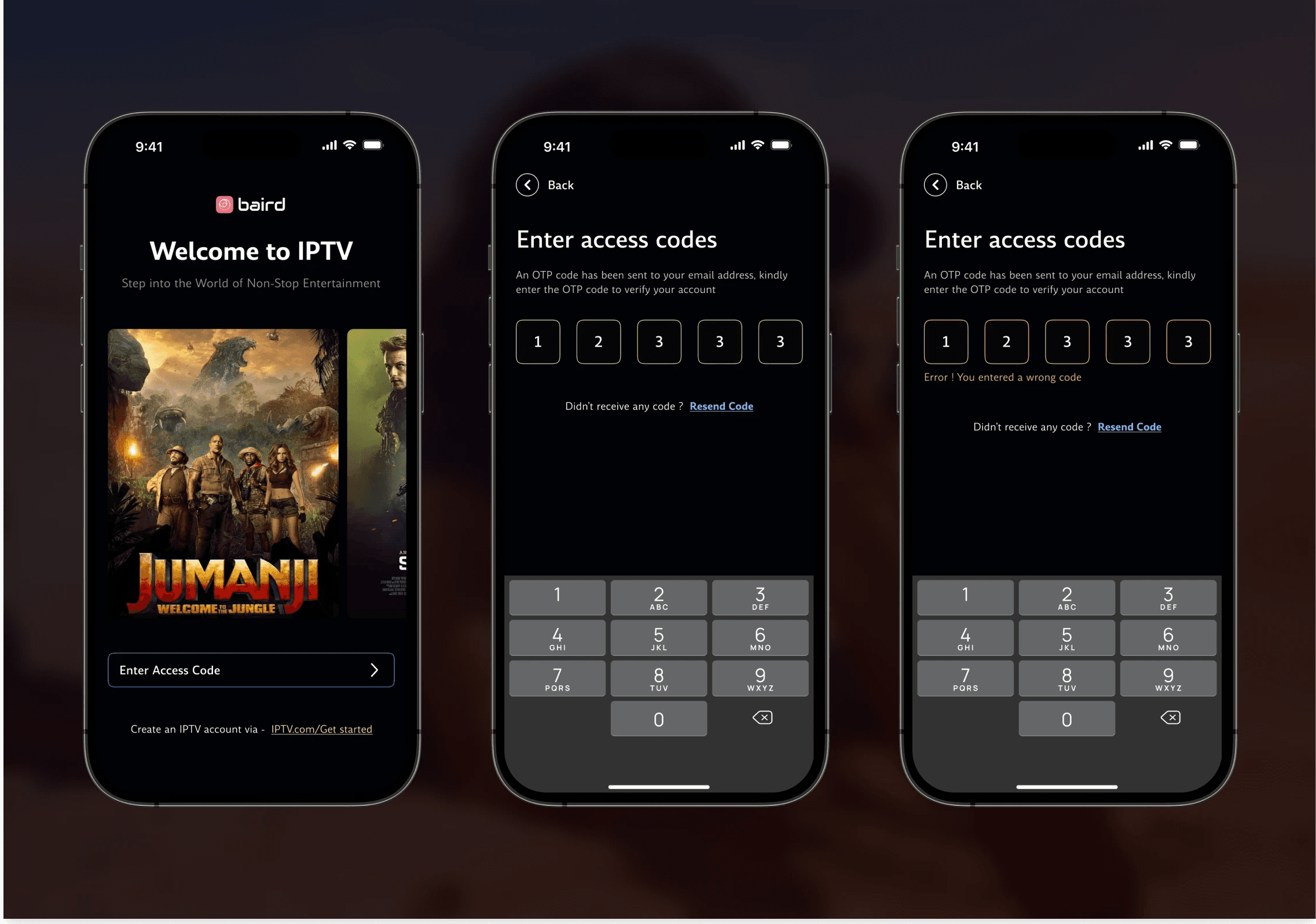
One of the most defining and complex aspects of this product was its exclusive access model. The app wasn’t publicly available; it could only be downloaded through a Host-enabled Pin accessed on the web and recieved by email address after subscription. This deliberate friction was a business decision designed to protect exclusivity, preserve brand positioning, and create a sense of gated community. This gatekeeping mechanism wasn’t a gimmick; it was a deliberate growth strategy to attract high-intent users and convert them into paying subscribers faster.
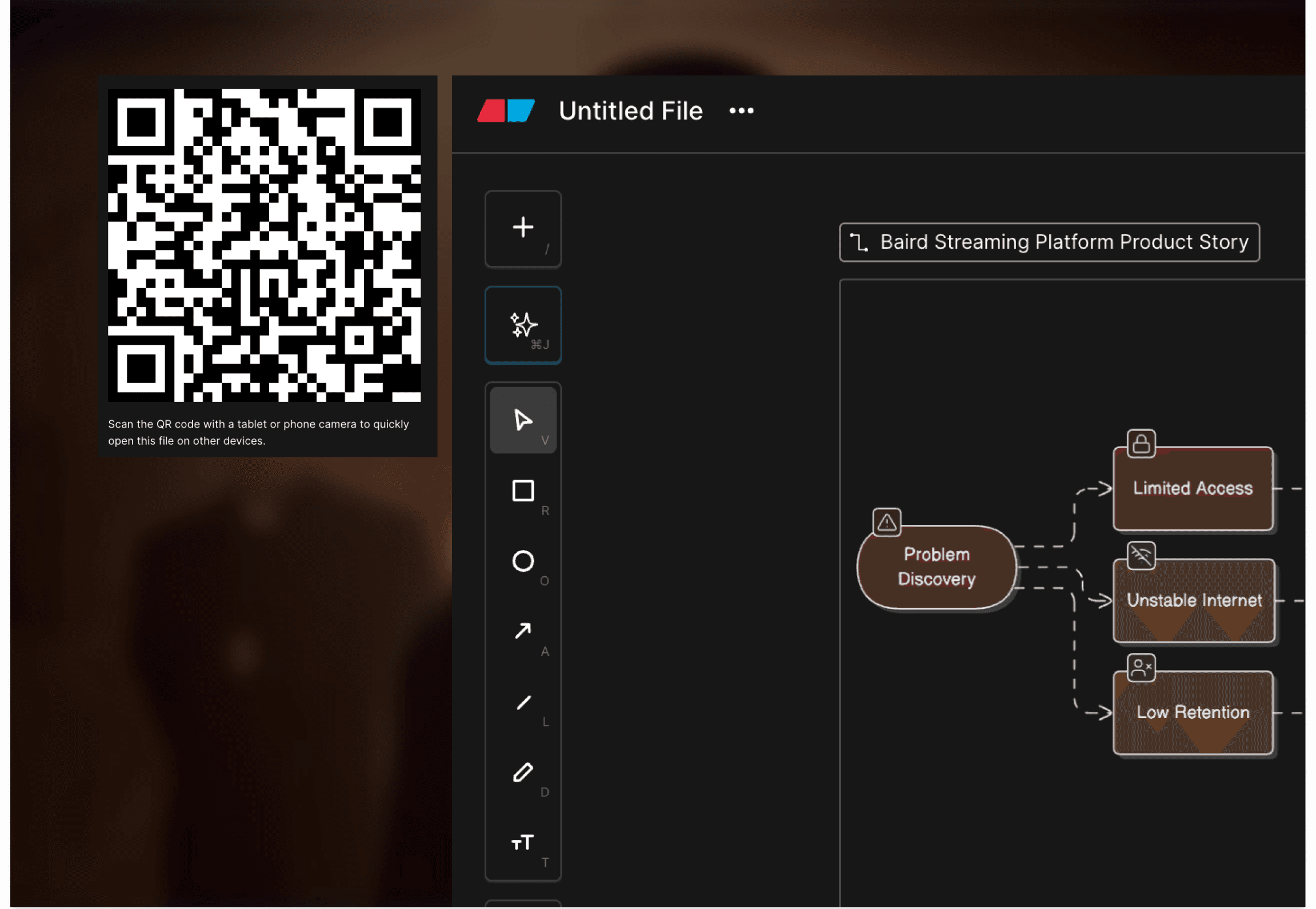
Understanding Real Retention Problem
We began by exploring platforms like Netflix, Hulu, Amazon Prime, Showmax, and BBC Sounds, each had their strengths, but none managed to unify on-demand, live TV, and radio in one coherent system.
By examining where streaming products often lose users: poor onboarding, confusing navigation, and endless scrolling that leads to decision fatigue, we found common issues that tied back our insights
Content discovery felt overwhelming — users often churned before exploring beyond a few shows.
Streaming felt transactional — there was no emotional hook or reward for staying engaged.
These findings guided our hypothesis: We believed streamlining discovery, personalized exploration, and made exclusivity feel earned, retention and engagement would follow.
Designing for discovery
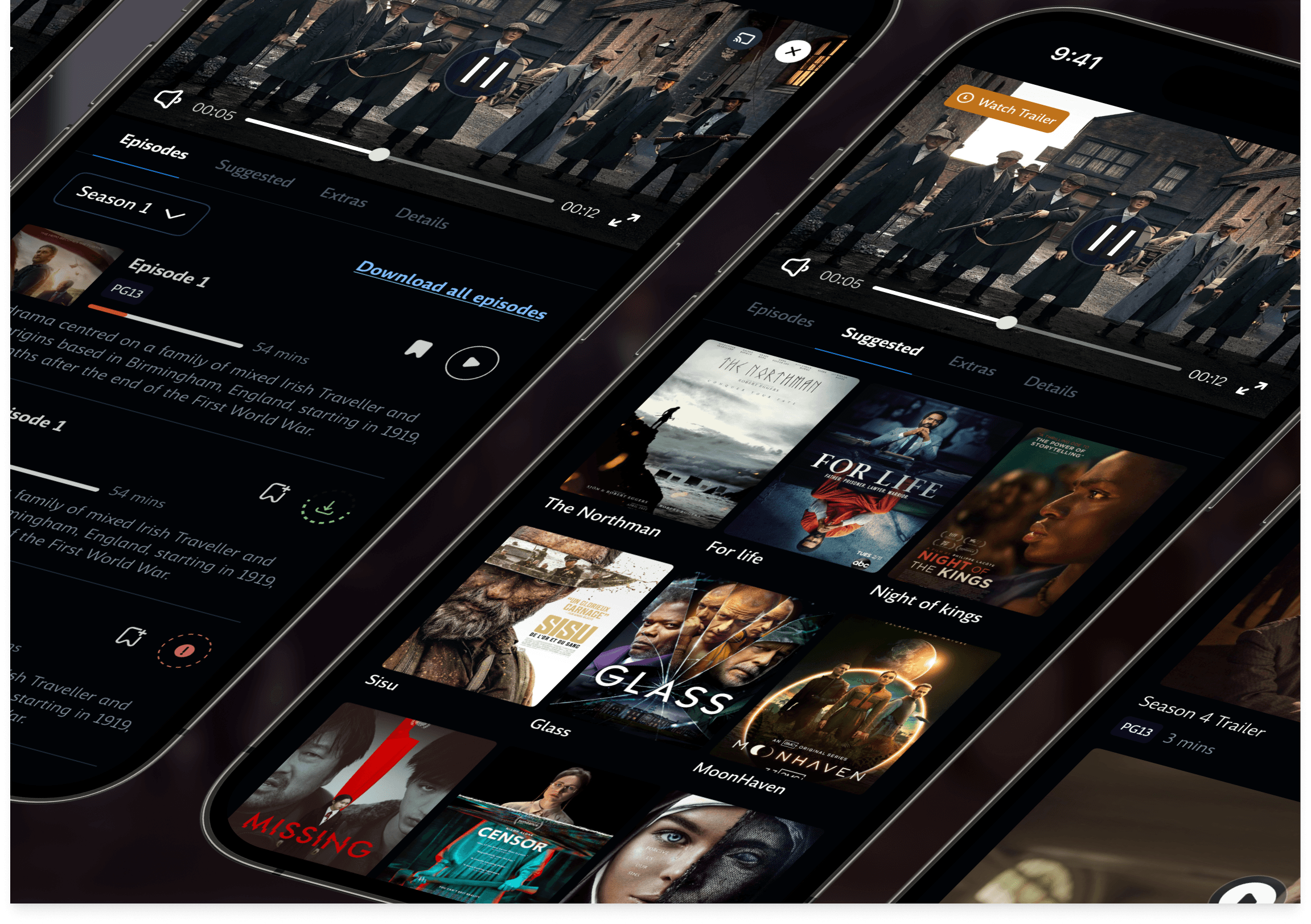
Baird’s design focused on simplicity, predictability, and joy in the browsing experience. Every choice from color accents to navigation logic was made to keep users engaged without confusion. Unlike traditional apps, Baird wasn’t distributed through app stores. Access came via paid host codes which meant first impressions mattered even more. From the very first login, the platform had to feel premium, reliable, and tailored.
Defining the Product Vision
Rather than chasing feature parity with competitors, we framed Baird as a curated media club — a hybrid of on-demand streaming, live radio/TV, and exclusive content drops. This strategic lens influenced several key product decisions:
PIN-Based Access – Not just a lock, but a status signal. The access wall was designed as a minimal, cinematic entry screen that set the tone before the first interaction.
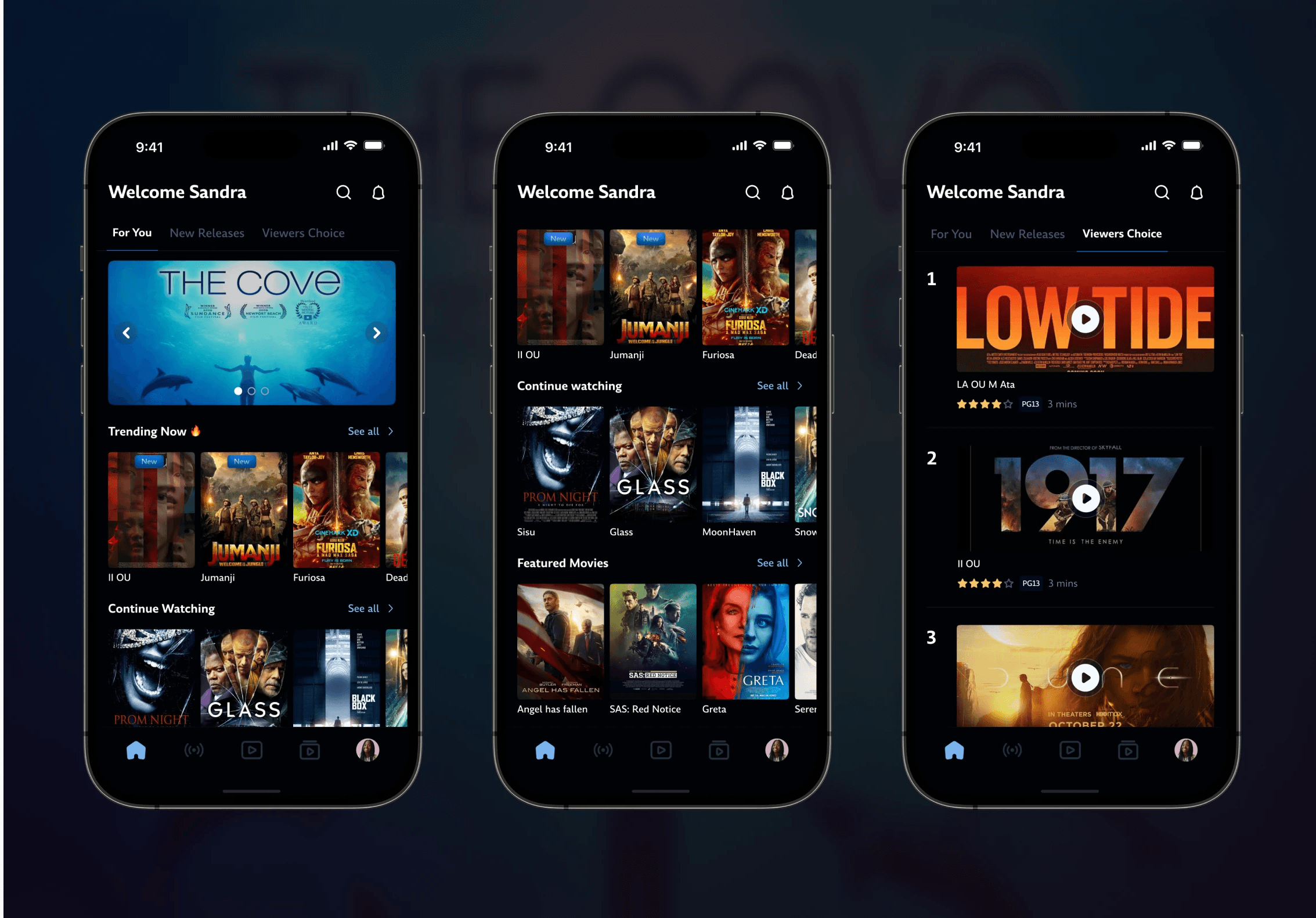
No Onboarding Flow – Because entry was pre-qualified, we designed the home screen to act as instant orientation — surfacing live content, trending shows, and personalized playlists without friction.
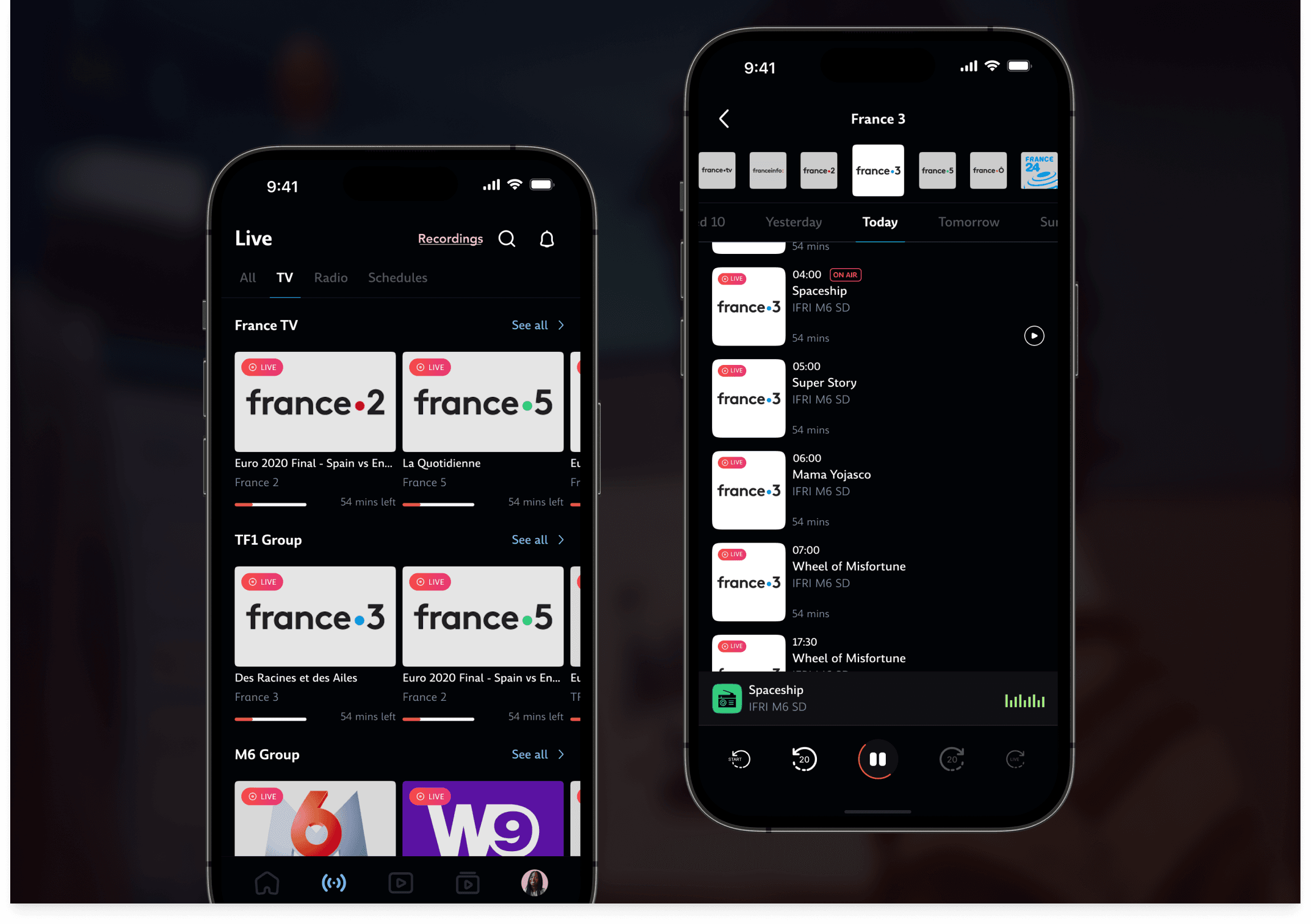
Multi-Content Surface – Users could seamlessly switch between movies, series, live radio, and live TV from a unified navigation bar, with dynamic cards showing real-time broadcast info.
Design Constraints & Trade-Offs
Because users could only access the app after generating a PIN on the website, we deliberately removed any onboarding screens. The challenge was clear: how do you orient users in an unfamiliar environment with zero hand-holding?
Our Approach:
We used layout hierarchy as the silent guide. The home screen became a “map,” grouping the four key content zones (Movies, Series, Live TV, Radio) into clear sections on the home page.
Micro-interactions and contextual nudges replaced tutorials. For example, hovering or tapping on a category surfaced tooltips explaining what kind of content lived there.
We also leaned on progressive disclosure — revealing more advanced options only after the user explored the basics, ensuring the first session felt intuitive rather than overwhelming.
Fun Fact: 87% of users engaged with at least two categories on their first visit — a strong signal that the “orientation-through-interface” approach worked.
Curated Guidance Over Endless Choice
Early user testing showed that users abandoned sessions when overwhelmed with too many content tiles. The team debated: should we prioritize variety (show more) or clarity (show less but smarter)?
Our Approach:
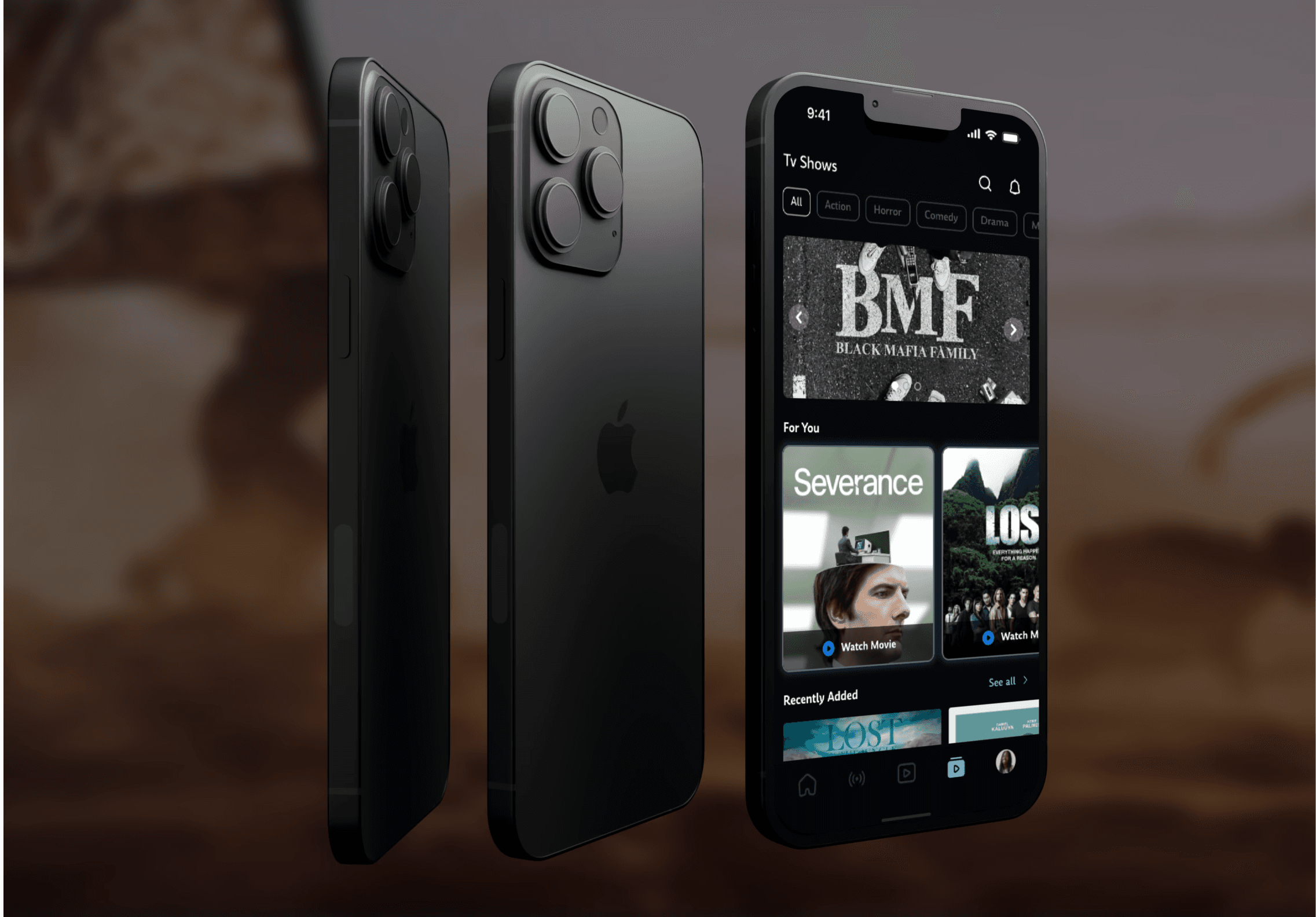
We chose to reduce the noise, by reducing a vast list of nudge options across different streaming services the product offers on the home screen based on user type and trending activity.
Personalization logic was tuned to intent signals (e.g., time of day, prior session behavior) rather than broad content tags.
We also included contextual labels (“Trending Live Now,” “Because You Watched…”) to build trust in the recommendations and reduce decision fatigue.
Seamless Live Streaming
The client’s revenue model depended on daily active engagement — not just occasional binge-watching. Live radio and live TV became crucial retention levers because they encouraged habitual, repeat usage.
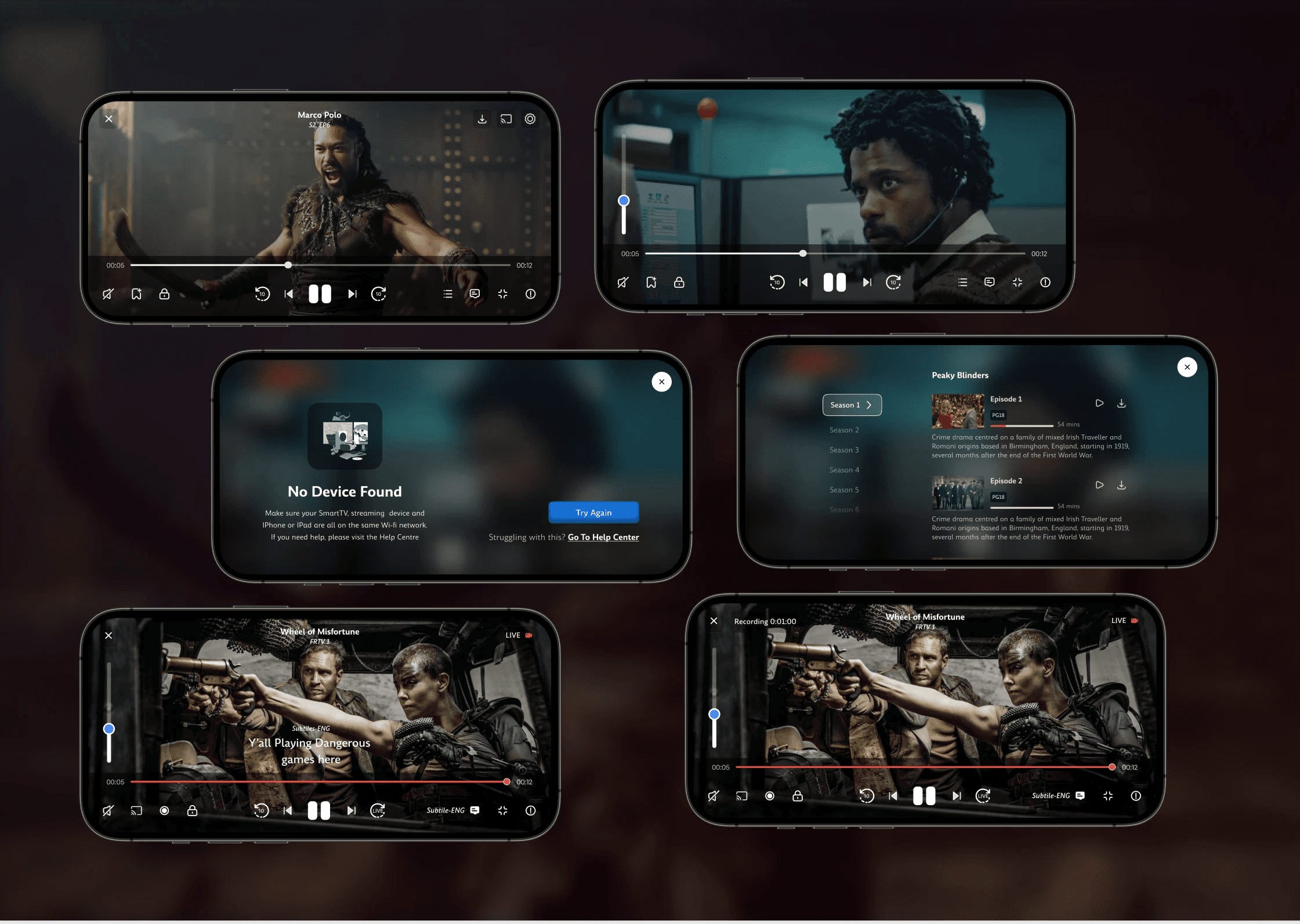
We designed a persistent streaming layer that allowed users to move between live channels, shows, and radio stations without interruption. Playback continued as users browsed content or switched sections — a feature inspired by the behavior of radio apps but rare in video platforms.
The design had to balance performance with visual richness. We stripped away unnecessary visual load, optimized asset sizes, and introduced lightweight UI components that didn’t interfere with the streaming pipeline.
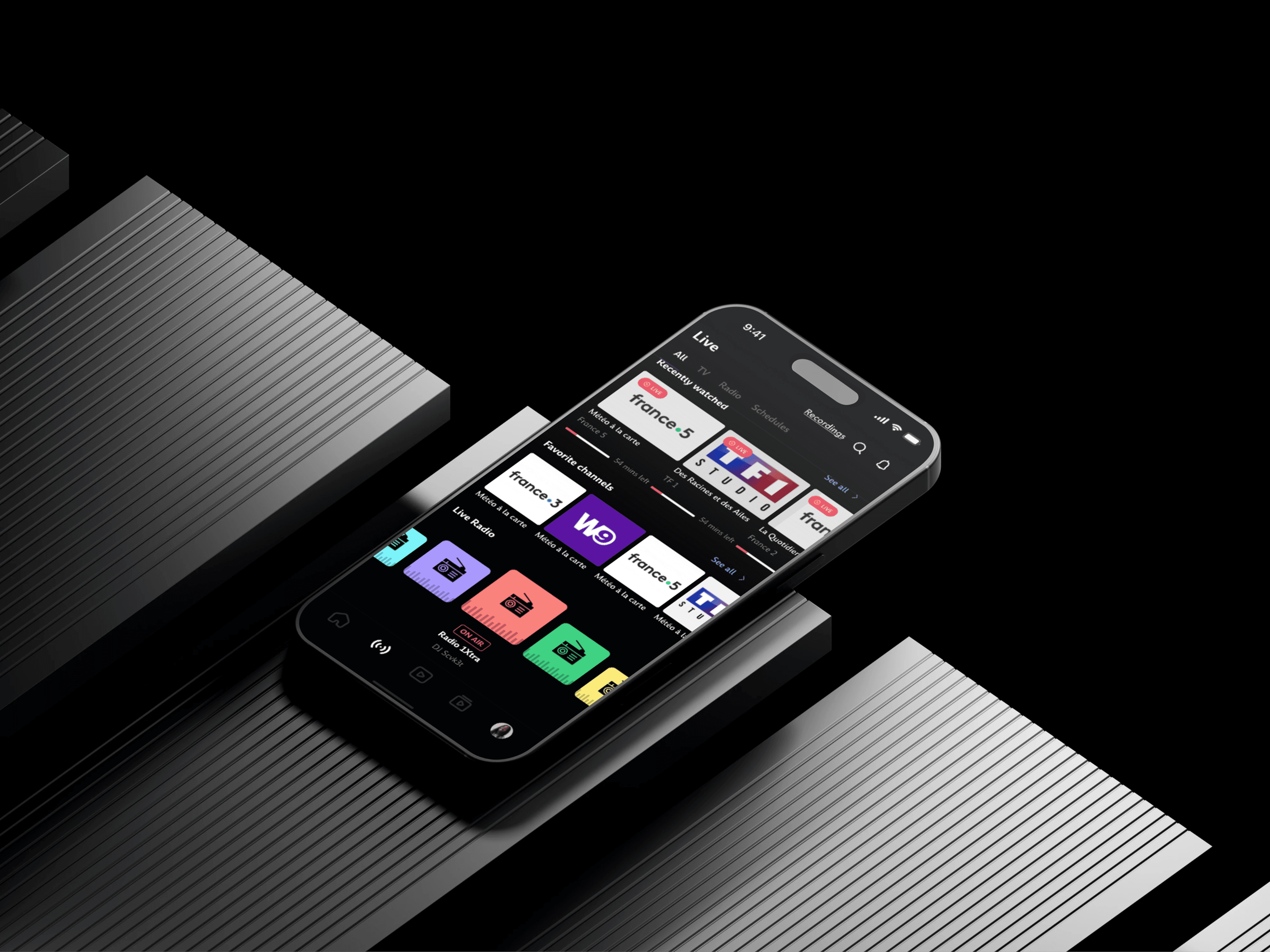

Radio Meets Streaming
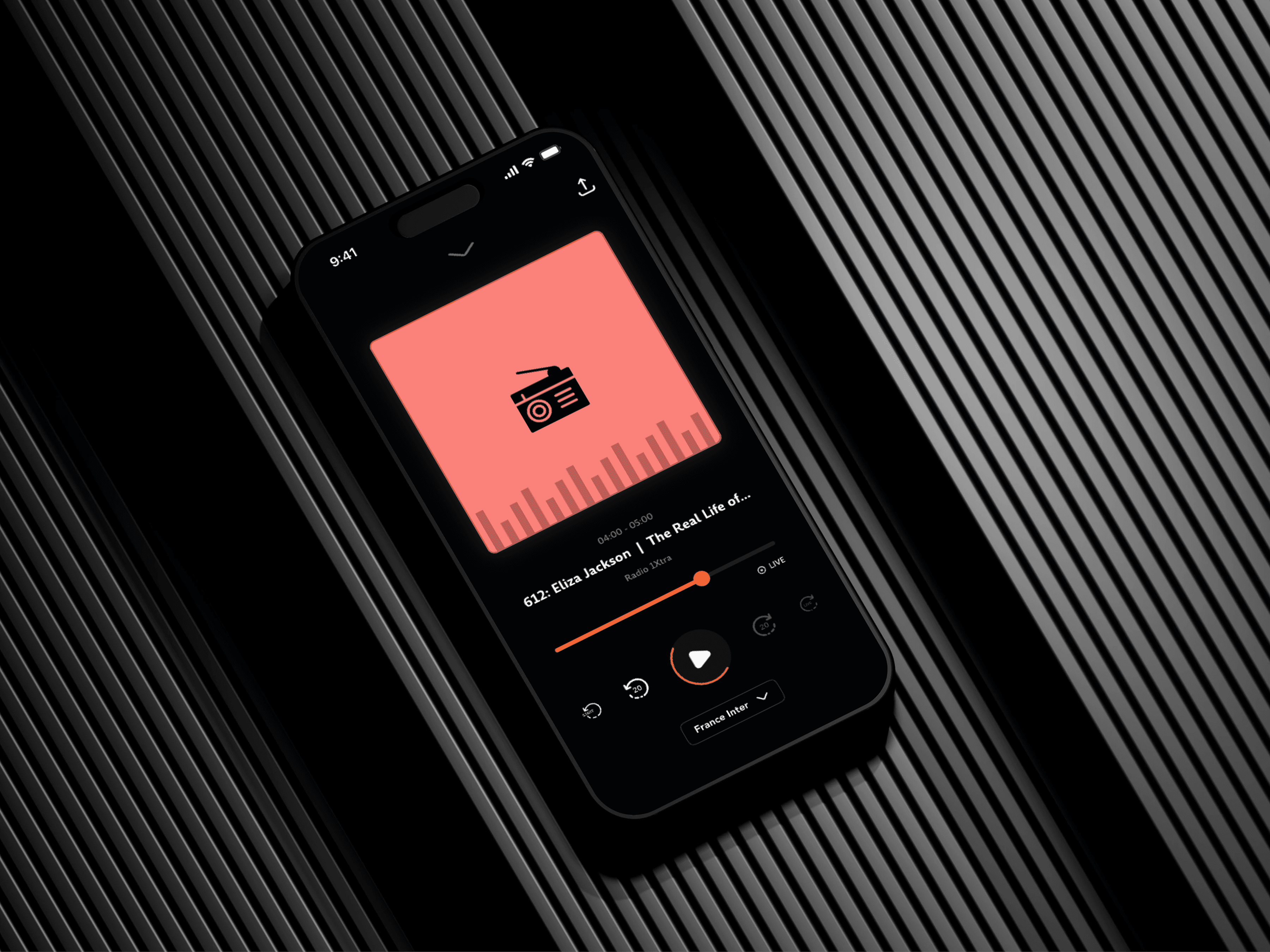
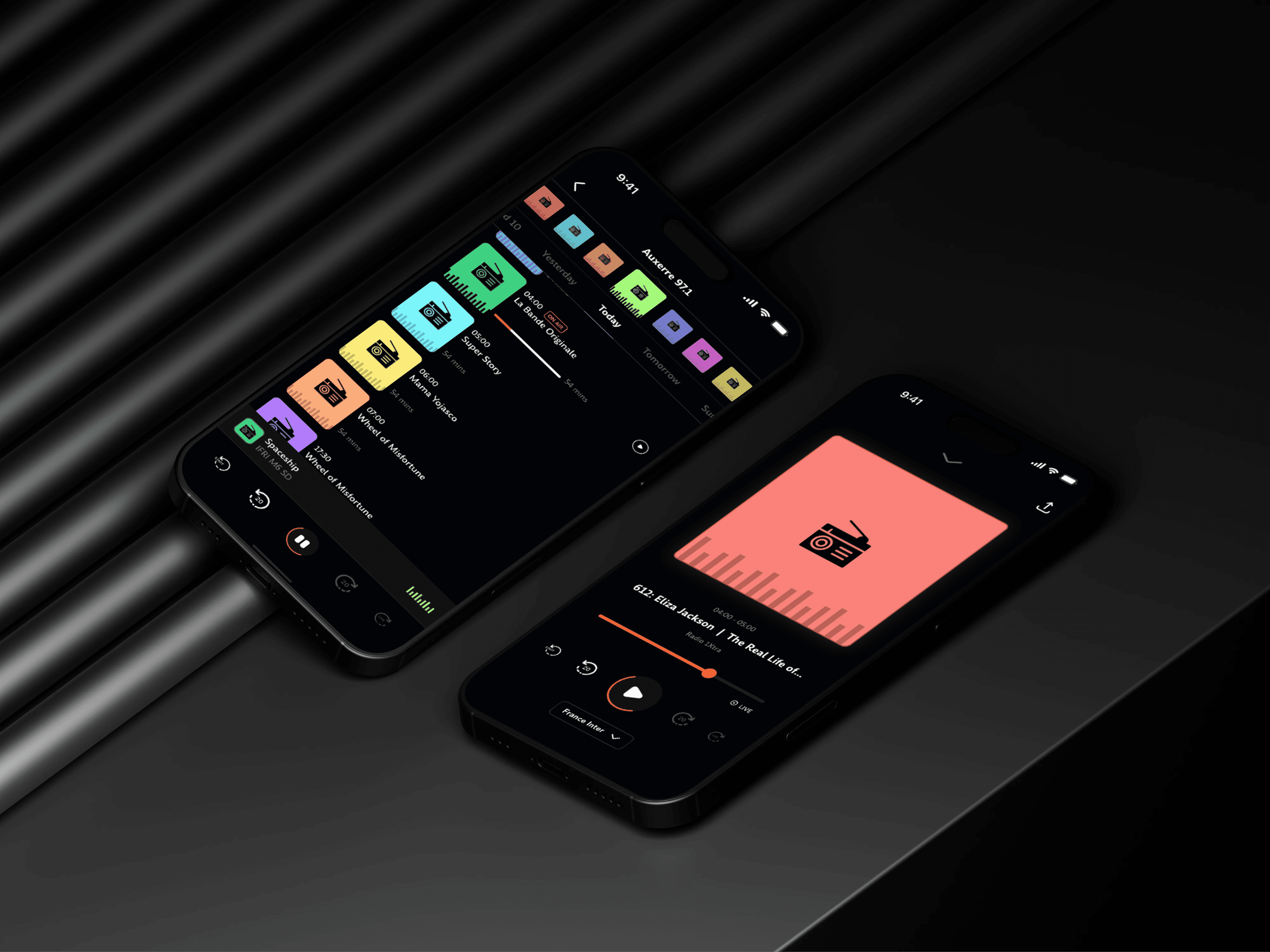
Traditional radio streaming often suffers from low interactivity and poor discoverability.We designed multiple touchpoints (from the homepage to in-show recommendations) that encouraged users to drop into live sessions effortlessly. This reduced the friction often associated with joining live streams.
Dynamic Schedule Layer: Instead of listing stations, we introduced a visual programming grid — a design borrowed from TV UI patterns — so users could quickly see what’s live now and what’s coming next. This drove repeat visits and boosted session frequency.
Interactive Listening: We introduced contextual reactions and micro-chat during shows, fostering a sense of co-presence. This turned passive listening into a social ritual, increasing dwell time and creating more opportunities to upsell premium access (e.g., exclusive live sessions for subscribers).
Personalized Curation: By leveraging listening history and content preferences, the system recommended live sessions users were most likely to enjoy. This personalized layer directly supported our retention and engagement KPIs.
Making Live TV Stickier
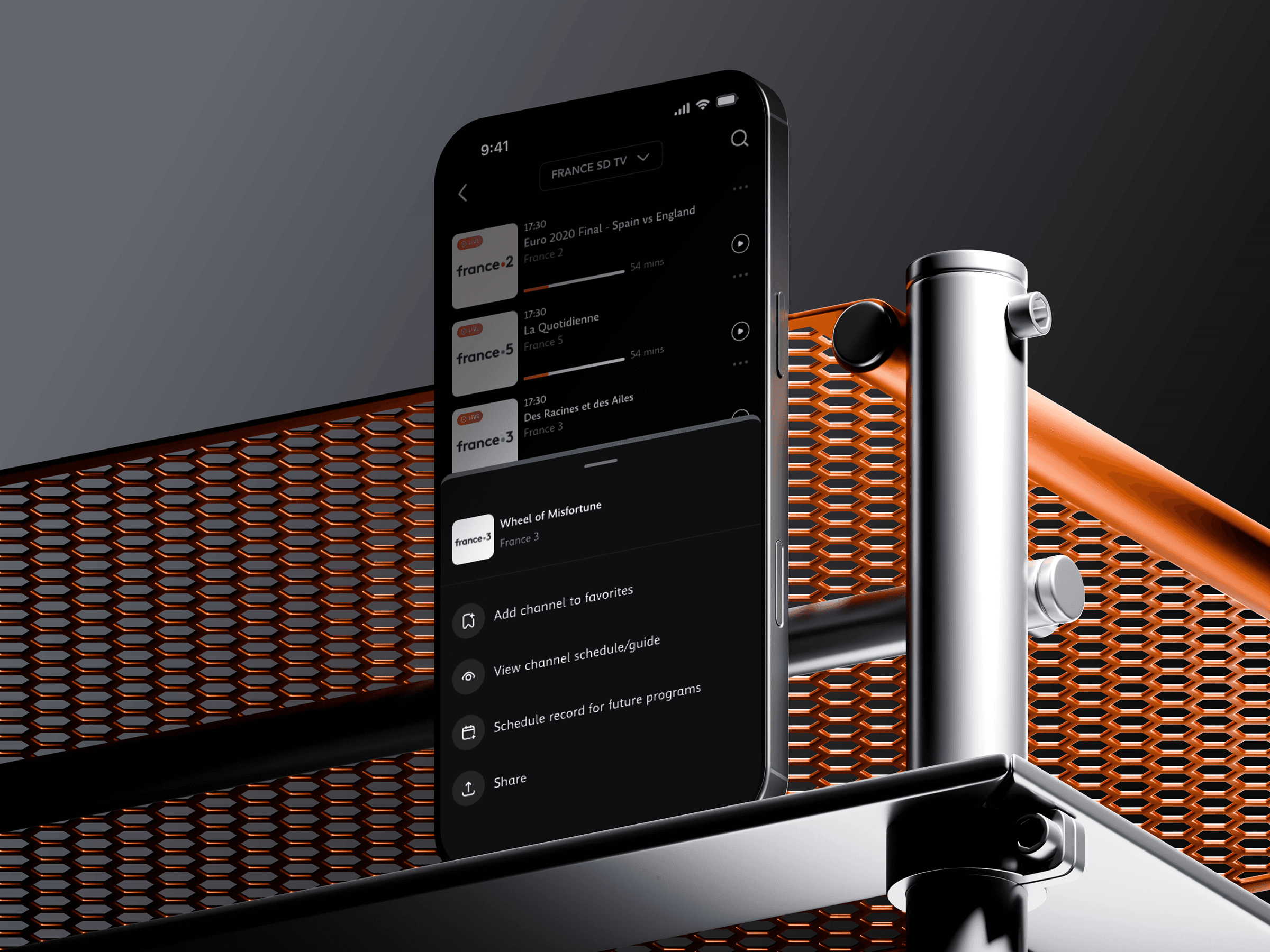
The goal here was to increase watch-time per session by giving users more reasons to stay tuned in.
We designed a real-time metadata layer that displayed contextual details; like current segment info, guest names, upcoming schedule, and even live polls — right alongside the broadcast. This transformed passive viewing into an informed experience, and helped users decide whether to keep watching or tune back later.
We also integrated subtle interaction points: “View channel schedule/guide” or “Schedule record for future programs” directly from the live screen, deepening engagement without breaking flow.
Extending Access Beyond Connectivity
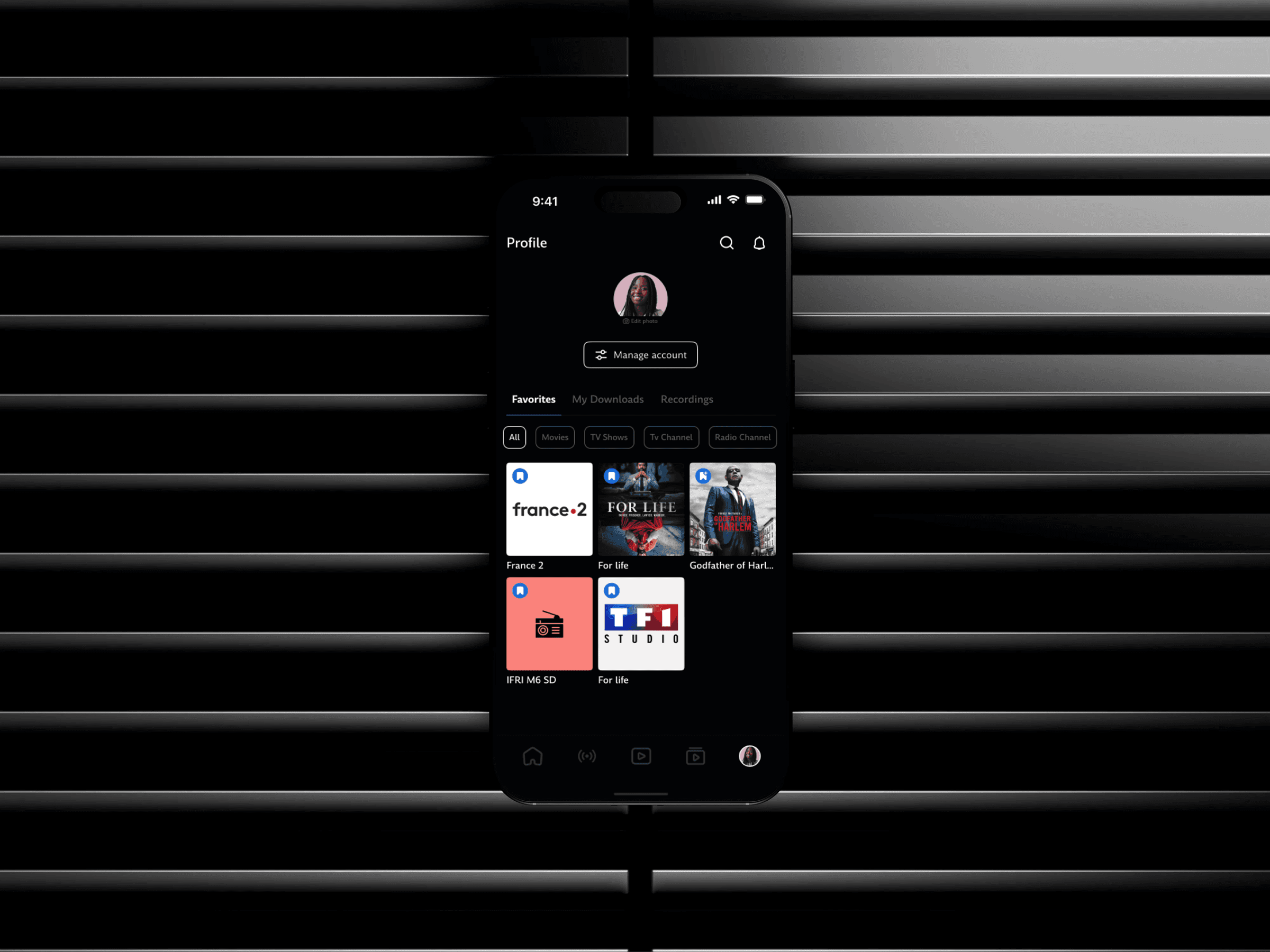
Offline downloads became a strategic feature not just for convenience, but as a Growth Unlock Strategy enabling us to reach users in low-connectivity environments and position the product as a daily entertainment essential, not just a “when-connected” tool. We quickly identified a critical barrier: unstable or expensive internet access was preventing users from fully engaging with our platform. Without a way to consume content offline especially longer-form video like shows and movies
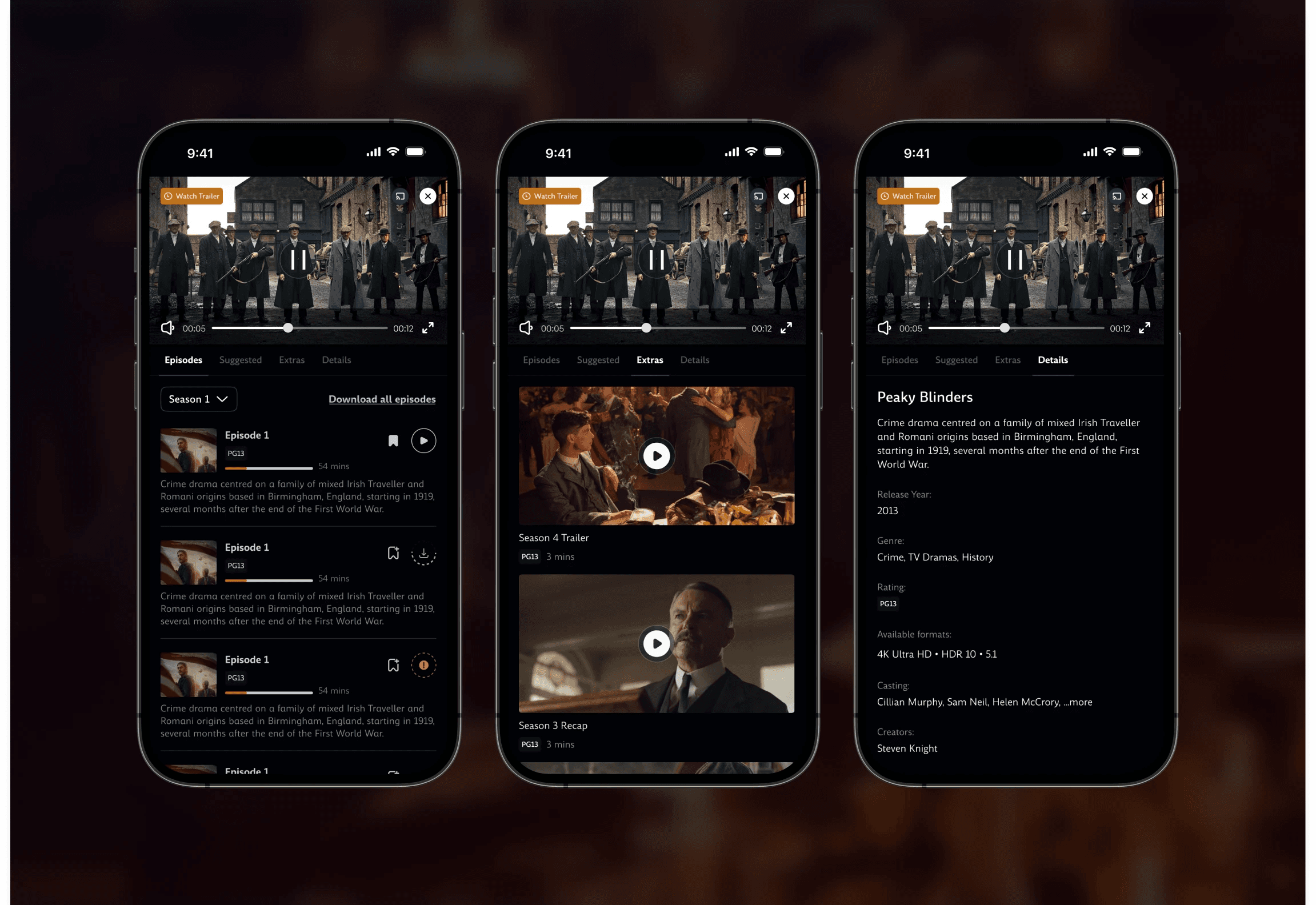
Contextual Download Triggers: Instead of burying the option in menus, we surfaced “Download for Offline” directly at high-intent moments (e.g., when previewing a show or after finishing a trailer). This nudged users into deeper engagement and created natural upsell moments.
Clear Storage Management: We designed a dedicated Downloads Hub with visibility into storage usage, expiration timelines, and quick actions (delete, renew, or upgrade). This added transparency reduced friction and built trust in the feature.
Smart Quality Controls: To address bandwidth sensitivity, we could choose download quality based on data or storage preferences all in your download settings
This eventually opened up a wider reach into lower-connectivity markets, a critical business goal. Most importantly, it became one of the top three drivers of premium subscription conversions as at the Time ( trends change ).
Decision Impact
30%
Improvement in content discovery
25%
Increment in user engagement on first three month post launch.
10%
Achieved a 10% reduction in bot sign-ups by implementing an invite-first onboarding strategy and retaining only verified active user data.
10%
Enhanced first-touch user experience, leading to a significant reduction in home screen drop-offs within three months post-launch.
Baird
Reimagining Digital Entertainment
Baird wasn’t just building another streaming app, they were aiming for a complete entertainment hub. From movies and series to live TV and radio stations, the goal was clear: create one destination for all things digital entertainment. Unlike mainstream services, access wouldn’t be public, users needed a PIN generated on the web platform before they could even download the app

Year
2024
Project Role
Product Designer
Industry
Media/Streaming
Where All of Entertainment Comes Together
One of the most defining and complex aspects of this product was its exclusive access model. The app wasn’t publicly available; it could only be downloaded through a Host-enabled Pin accessed on the web and recieved by email address after subscription. This deliberate friction was a business decision designed to protect exclusivity, preserve brand positioning, and create a sense of gated community. This gatekeeping mechanism wasn’t a gimmick; it was a deliberate growth strategy to attract high-intent users and convert them into paying subscribers faster.
Understanding Real Retention Problem
We began by exploring platforms like Netflix, Hulu, Amazon Prime, Showmax, and BBC Sounds, each had their strengths, but none managed to unify on-demand, live TV, and radio in one coherent system.
By examining where streaming products often lose users: poor onboarding, confusing navigation, and endless scrolling that leads to decision fatigue, we found common issues that tied back our insights
Content discovery felt overwhelming — users often churned before exploring beyond a few shows.
Streaming felt transactional — there was no emotional hook or reward for staying engaged.
These findings guided our hypothesis: We believed streamlining discovery, personalized exploration, and made exclusivity feel earned, retention and engagement would follow.


Designing for discovery
Baird’s design focused on simplicity, predictability, and joy in the browsing experience. Every choice from color accents to navigation logic was made to keep users engaged without confusion. Unlike traditional apps, Baird wasn’t distributed through app stores. Access came via paid host codes which meant first impressions mattered even more. From the very first login, the platform had to feel premium, reliable, and tailored.
Defining the Product Vision
Rather than chasing feature parity with competitors, we framed Baird as a curated media club — a hybrid of on-demand streaming, live radio/TV, and exclusive content drops. This strategic lens influenced several key product decisions:
PIN-Based Access – Not just a lock, but a status signal. The access wall was designed as a minimal, cinematic entry screen that set the tone before the first interaction.
No Onboarding Flow – Because entry was pre-qualified, we designed the home screen to act as instant orientation — surfacing live content, trending shows, and personalized playlists without friction.
Multi-Content Surface – Users could seamlessly switch between movies, series, live radio, and live TV from a unified navigation bar, with dynamic cards showing real-time broadcast info.


Design Constraints & Trade-Offs
Because users could only access the app after generating a PIN on the website, we deliberately removed any onboarding screens. The challenge was clear: how do you orient users in an unfamiliar environment with zero hand-holding?
Our Approach:
We used layout hierarchy as the silent guide. The home screen became a “map,” grouping the four key content zones (Movies, Series, Live TV, Radio) into clear sections on the home page.
Micro-interactions and contextual nudges replaced tutorials. For example, hovering or tapping on a category surfaced tooltips explaining what kind of content lived there.
We also leaned on progressive disclosure — revealing more advanced options only after the user explored the basics, ensuring the first session felt intuitive rather than overwhelming.
Fun Fact: 87% of users engaged with at least two categories on their first visit — a strong signal that the “orientation-through-interface” approach worked.
Curated Guidance Over Endless Choice
Early user testing showed that users abandoned sessions when overwhelmed with too many content tiles. The team debated: should we prioritize variety (show more) or clarity (show less but smarter)?
Our Approach:
We chose to reduce the noise, by reducing a vast list of nudge options across different streaming services the product offers on the home screen based on user type and trending activity.
Personalization logic was tuned to intent signals (e.g., time of day, prior session behavior) rather than broad content tags.
We also included contextual labels (“Trending Live Now,” “Because You Watched…”) to build trust in the recommendations and reduce decision fatigue.


Seamless Live Streaming
The client’s revenue model depended on daily active engagement — not just occasional binge-watching. Live radio and live TV became crucial retention levers because they encouraged habitual, repeat usage.
We designed a persistent streaming layer that allowed users to move between live channels, shows, and radio stations without interruption. Playback continued as users browsed content or switched sections — a feature inspired by the behavior of radio apps but rare in video platforms.
The design had to balance performance with visual richness. We stripped away unnecessary visual load, optimized asset sizes, and introduced lightweight UI components that didn’t interfere with the streaming pipeline.


Radio Meets Streaming
Traditional radio streaming often suffers from low interactivity and poor discoverability.We designed multiple touchpoints (from the homepage to in-show recommendations) that encouraged users to drop into live sessions effortlessly. This reduced the friction often associated with joining live streams.
Dynamic Schedule Layer: Instead of listing stations, we introduced a visual programming grid — a design borrowed from TV UI patterns — so users could quickly see what’s live now and what’s coming next. This drove repeat visits and boosted session frequency.
Interactive Listening: We introduced contextual reactions and micro-chat during shows, fostering a sense of co-presence. This turned passive listening into a social ritual, increasing dwell time and creating more opportunities to upsell premium access (e.g., exclusive live sessions for subscribers).
Personalized Curation: By leveraging listening history and content preferences, the system recommended live sessions users were most likely to enjoy. This personalized layer directly supported our retention and engagement KPIs.


Making Live TV Stickier
The goal here was to increase watch-time per session by giving users more reasons to stay tuned in.
We designed a real-time metadata layer that displayed contextual details; like current segment info, guest names, upcoming schedule, and even live polls — right alongside the broadcast. This transformed passive viewing into an informed experience, and helped users decide whether to keep watching or tune back later.
We also integrated subtle interaction points: “View channel schedule/guide” or “Schedule record for future programs” directly from the live screen, deepening engagement without breaking flow.


Extending Access Beyond Connectivity
Offline downloads became a strategic feature not just for convenience, but as a Growth Unlock Strategy enabling us to reach users in low-connectivity environments and position the product as a daily entertainment essential, not just a “when-connected” tool. We quickly identified a critical barrier: unstable or expensive internet access was preventing users from fully engaging with our platform. Without a way to consume content offline especially longer-form video like shows and movies
Contextual Download Triggers: Instead of burying the option in menus, we surfaced “Download for Offline” directly at high-intent moments (e.g., when previewing a show or after finishing a trailer). This nudged users into deeper engagement and created natural upsell moments.
Clear Storage Management: We designed a dedicated Downloads Hub with visibility into storage usage, expiration timelines, and quick actions (delete, renew, or upgrade). This added transparency reduced friction and built trust in the feature.
Smart Quality Controls: To address bandwidth sensitivity, we could choose download quality based on data or storage preferences all in your download settings
This eventually opened up a wider reach into lower-connectivity markets, a critical business goal. Most importantly, it became one of the top three drivers of premium subscription conversions as at the Time ( trends change ).

Decision Impact
30%
Improvement in content discovery
25%
Increment in user engagement on first three month post launch.
10%
Achieved a 10% reduction in bot sign-ups by implementing an invite-first onboarding strategy and retaining only verified active user data.

10%
Enhanced first-touch user experience, leading to a significant reduction in home screen drop-offs within three months post-launch.
Baird
Reimagining Digital Entertainment
Baird wasn’t just building another streaming app, they were aiming for a complete entertainment hub. From movies and series to live TV and radio stations, the goal was clear: create one destination for all things digital entertainment. Unlike mainstream services, access wouldn’t be public, users needed a PIN generated on the web platform before they could even download the app

Year
2024
Project Role
Product Designer
Industry
Media/Streaming
Where All of Entertainment Comes Together
One of the most defining and complex aspects of this product was its exclusive access model. The app wasn’t publicly available; it could only be downloaded through a Host-enabled Pin accessed on the web and recieved by email address after subscription. This deliberate friction was a business decision designed to protect exclusivity, preserve brand positioning, and create a sense of gated community. This gatekeeping mechanism wasn’t a gimmick; it was a deliberate growth strategy to attract high-intent users and convert them into paying subscribers faster.
Understanding Real Retention Problem
We began by exploring platforms like Netflix, Hulu, Amazon Prime, Showmax, and BBC Sounds, each had their strengths, but none managed to unify on-demand, live TV, and radio in one coherent system.
By examining where streaming products often lose users: poor onboarding, confusing navigation, and endless scrolling that leads to decision fatigue, we found common issues that tied back our insights
Content discovery felt overwhelming — users often churned before exploring beyond a few shows.
Streaming felt transactional — there was no emotional hook or reward for staying engaged.
These findings guided our hypothesis: We believed streamlining discovery, personalized exploration, and made exclusivity feel earned, retention and engagement would follow.


Designing for discovery
Baird’s design focused on simplicity, predictability, and joy in the browsing experience. Every choice from color accents to navigation logic was made to keep users engaged without confusion. Unlike traditional apps, Baird wasn’t distributed through app stores. Access came via paid host codes which meant first impressions mattered even more. From the very first login, the platform had to feel premium, reliable, and tailored.
Defining the Product Vision
Rather than chasing feature parity with competitors, we framed Baird as a curated media club — a hybrid of on-demand streaming, live radio/TV, and exclusive content drops. This strategic lens influenced several key product decisions:
PIN-Based Access – Not just a lock, but a status signal. The access wall was designed as a minimal, cinematic entry screen that set the tone before the first interaction.
No Onboarding Flow – Because entry was pre-qualified, we designed the home screen to act as instant orientation — surfacing live content, trending shows, and personalized playlists without friction.
Multi-Content Surface – Users could seamlessly switch between movies, series, live radio, and live TV from a unified navigation bar, with dynamic cards showing real-time broadcast info.


Design Constraints & Trade-Offs
Because users could only access the app after generating a PIN on the website, we deliberately removed any onboarding screens. The challenge was clear: how do you orient users in an unfamiliar environment with zero hand-holding?
Our Approach:
We used layout hierarchy as the silent guide. The home screen became a “map,” grouping the four key content zones (Movies, Series, Live TV, Radio) into clear sections on the home page.
Micro-interactions and contextual nudges replaced tutorials. For example, hovering or tapping on a category surfaced tooltips explaining what kind of content lived there.
We also leaned on progressive disclosure — revealing more advanced options only after the user explored the basics, ensuring the first session felt intuitive rather than overwhelming.
Fun Fact: 87% of users engaged with at least two categories on their first visit — a strong signal that the “orientation-through-interface” approach worked.
Curated Guidance Over Endless Choice
Early user testing showed that users abandoned sessions when overwhelmed with too many content tiles. The team debated: should we prioritize variety (show more) or clarity (show less but smarter)?
Our Approach:
We chose to reduce the noise, by reducing a vast list of nudge options across different streaming services the product offers on the home screen based on user type and trending activity.
Personalization logic was tuned to intent signals (e.g., time of day, prior session behavior) rather than broad content tags.
We also included contextual labels (“Trending Live Now,” “Because You Watched…”) to build trust in the recommendations and reduce decision fatigue.


Seamless Live Streaming
The client’s revenue model depended on daily active engagement — not just occasional binge-watching. Live radio and live TV became crucial retention levers because they encouraged habitual, repeat usage.
We designed a persistent streaming layer that allowed users to move between live channels, shows, and radio stations without interruption. Playback continued as users browsed content or switched sections — a feature inspired by the behavior of radio apps but rare in video platforms.
The design had to balance performance with visual richness. We stripped away unnecessary visual load, optimized asset sizes, and introduced lightweight UI components that didn’t interfere with the streaming pipeline.


Radio Meets Streaming
Traditional radio streaming often suffers from low interactivity and poor discoverability.We designed multiple touchpoints (from the homepage to in-show recommendations) that encouraged users to drop into live sessions effortlessly. This reduced the friction often associated with joining live streams.
Dynamic Schedule Layer: Instead of listing stations, we introduced a visual programming grid — a design borrowed from TV UI patterns — so users could quickly see what’s live now and what’s coming next. This drove repeat visits and boosted session frequency.
Interactive Listening: We introduced contextual reactions and micro-chat during shows, fostering a sense of co-presence. This turned passive listening into a social ritual, increasing dwell time and creating more opportunities to upsell premium access (e.g., exclusive live sessions for subscribers).
Personalized Curation: By leveraging listening history and content preferences, the system recommended live sessions users were most likely to enjoy. This personalized layer directly supported our retention and engagement KPIs.


Making Live TV Stickier
The goal here was to increase watch-time per session by giving users more reasons to stay tuned in.
We designed a real-time metadata layer that displayed contextual details; like current segment info, guest names, upcoming schedule, and even live polls — right alongside the broadcast. This transformed passive viewing into an informed experience, and helped users decide whether to keep watching or tune back later.
We also integrated subtle interaction points: “View channel schedule/guide” or “Schedule record for future programs” directly from the live screen, deepening engagement without breaking flow.


Extending Access Beyond Connectivity
Offline downloads became a strategic feature not just for convenience, but as a Growth Unlock Strategy enabling us to reach users in low-connectivity environments and position the product as a daily entertainment essential, not just a “when-connected” tool. We quickly identified a critical barrier: unstable or expensive internet access was preventing users from fully engaging with our platform. Without a way to consume content offline especially longer-form video like shows and movies
Contextual Download Triggers: Instead of burying the option in menus, we surfaced “Download for Offline” directly at high-intent moments (e.g., when previewing a show or after finishing a trailer). This nudged users into deeper engagement and created natural upsell moments.
Clear Storage Management: We designed a dedicated Downloads Hub with visibility into storage usage, expiration timelines, and quick actions (delete, renew, or upgrade). This added transparency reduced friction and built trust in the feature.
Smart Quality Controls: To address bandwidth sensitivity, we could choose download quality based on data or storage preferences all in your download settings
This eventually opened up a wider reach into lower-connectivity markets, a critical business goal. Most importantly, it became one of the top three drivers of premium subscription conversions as at the Time ( trends change ).

Decision Impact
30%
Improvement in content discovery
25%
Increment in user engagement on first three month post launch.
10%
Achieved a 10% reduction in bot sign-ups by implementing an invite-first onboarding strategy and retaining only verified active user data.
10%
Enhanced first-touch user experience, leading to a significant reduction in home screen drop-offs within three months post-launch.