Gupa
Redefining Travel Through E-Concession Innovation
By integrating booking, discovery, and local engagement in one seamless flow, Gupa empowers travelers to plan holistic journeys; booking a seaside guesthouse, a sunset cruise, and a hands-on local cooking class, all within a single, intuitive experience.

Year
2024
Project Role
Founding Product Designer
Industry
Hospitality
Discovery to Concept
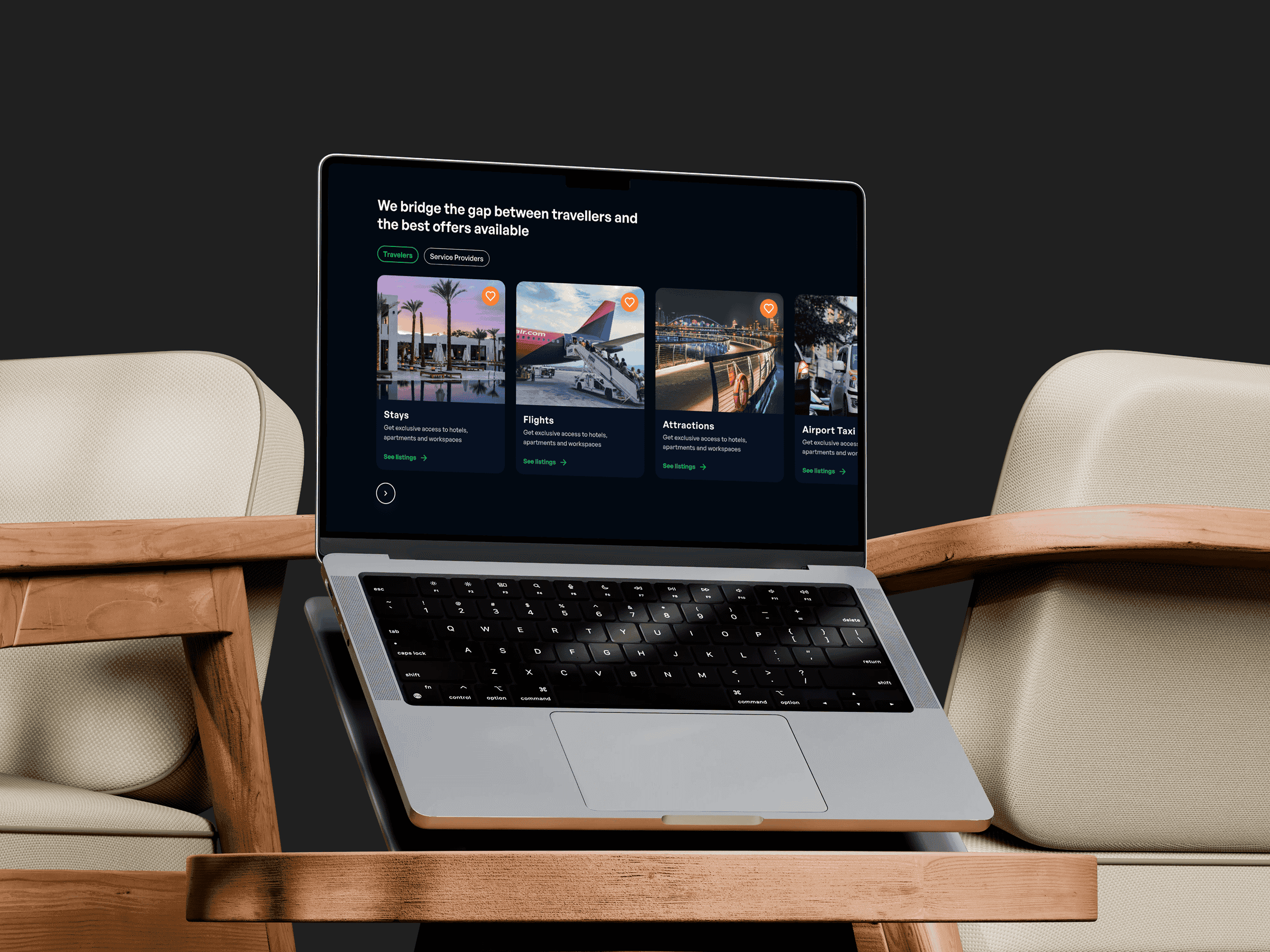
Gupa is a responsive web platform built to simplify how travelers discover, plan, and book trips. In a market dominated by Booking.com and Airbnb, Gupa set out to be more than a marketplace; it aimed to become a personalized travel companion, merging accommodation, activities, and authentic local experiences into one cohesive journey.
From a business perspective, Gupa's traffic wasn't converting. Engagement stayed shallow, and local vendors saw few meaningful interactions. The core insight: solving user frustration and driving deeper engagement were two sides of the same coin.
The Fragmented Travel Experience
Despite the dominance of Booking.com, Airbnb, and TripAdvisor, the travel planning experience remained broken. User research revealed a familiar pattern: most travelers juggled multiple tools, one for flights, another for accommodation, a third for local activities, leading to frustration, decision fatigue, and abandoned plans.
Three core pain points emerged:
Fragmented Planning: Users jumped across apps for flights, accommodations, activities, and reviews.
Decision Overload: Endless options without meaningful personalization led to decision fatigue.
Lack of Trust: Hidden costs and unverified reviews caused skepticism and abandoned bookings.


Breaking the Norm
The hypothesis was straightforward: if Gupa could consolidate every step of the travel journey, from inspiration to booking, and personalize recommendations based on user intent, planning would feel effortless.
Our north star goals were:
Unify the travel journey in one seamless platform.
Personalize content, recommendations, and pricing using user data and preferences.
Humanize the experience by connecting travelers with local partners for authentic experiences.
Challenges
Our biggest challenge was finding the right balance between depth and simplicity. Personalization required collecting and analyzing user data without making onboarding feel intrusive. Integrating multiple booking services also brought technical hurdles, from syncing availability to ensuring real-time pricing.
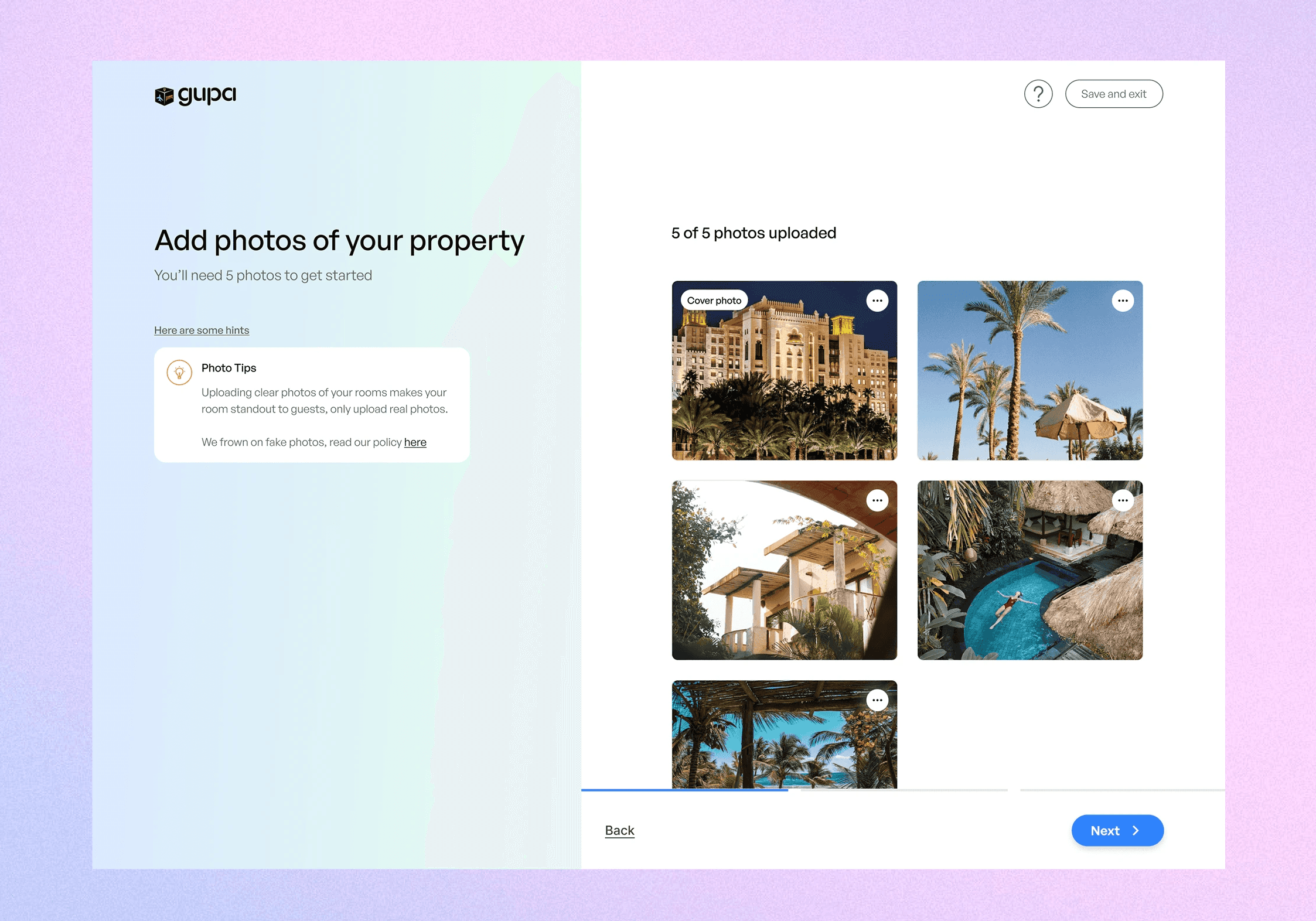
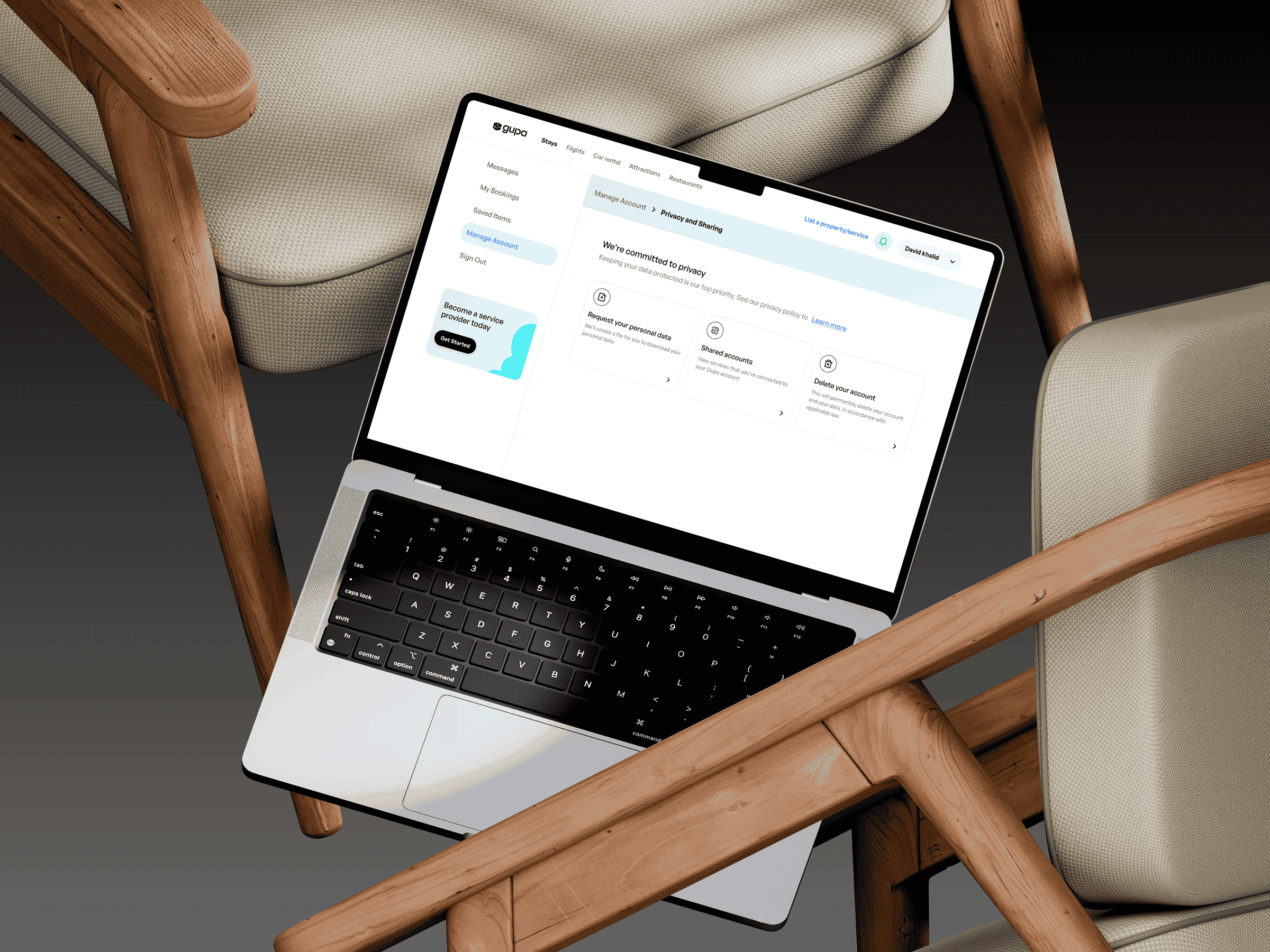
From the vendor perspective, frustrations came from complex onboarding processes ( currently redesigning this ), limited visibility of their listings, and difficulty managing pricing or availability in real time. Many local partners felt their offerings were buried under larger competitors, and the lack of direct communication tools made it hard to build trust or tailor deals to travelers.


Core Concept: The E-Concession Model
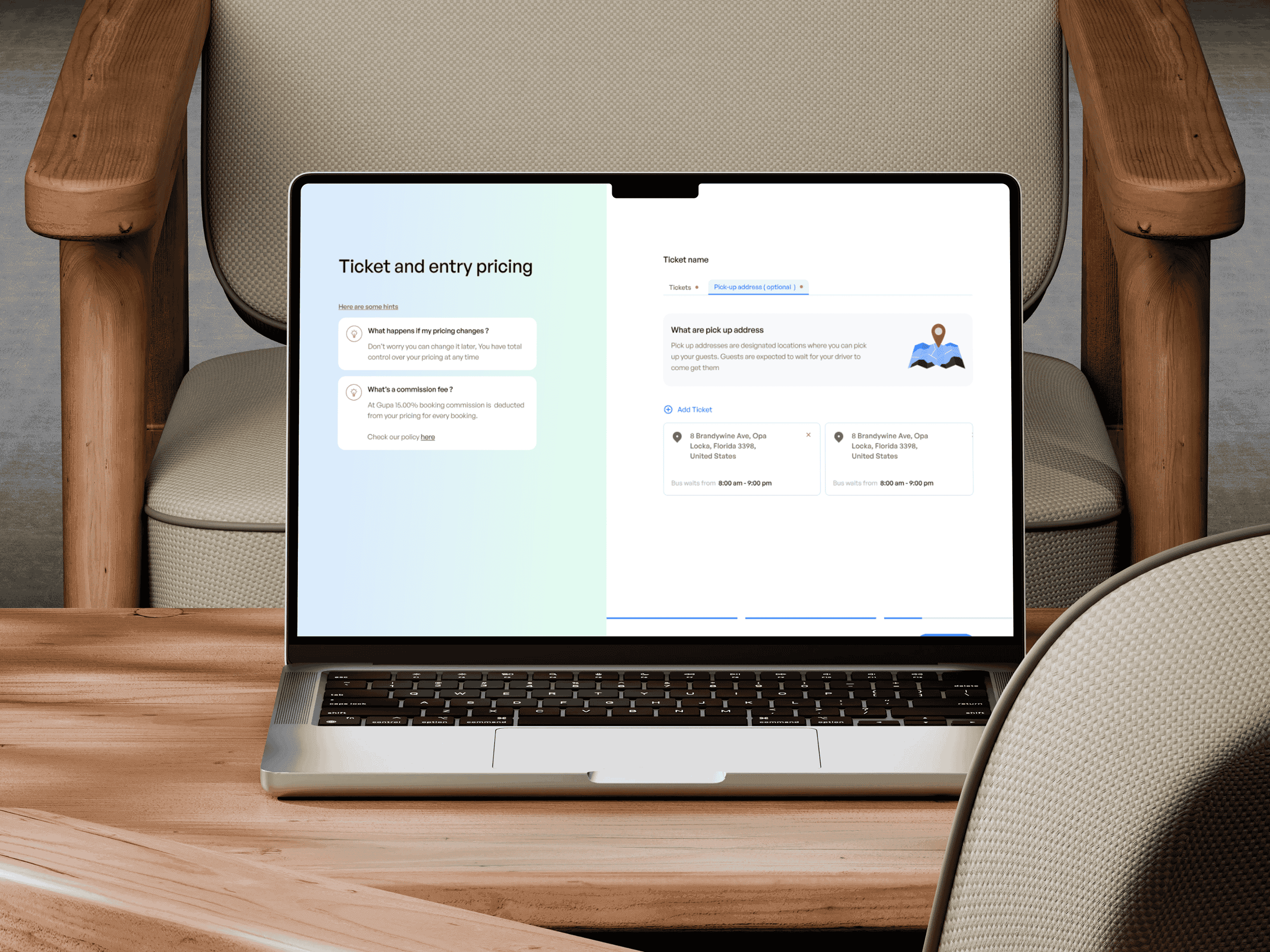
At the heart of Gupa is the E-Concession system, a scalable partnership framework that allows local providers (hotels, hosts, tour guides, transportation services) to list under predefined agreements. This ensures affordable pricing, consistent service quality, and authentic, locally driven offerings.
UX Strategy
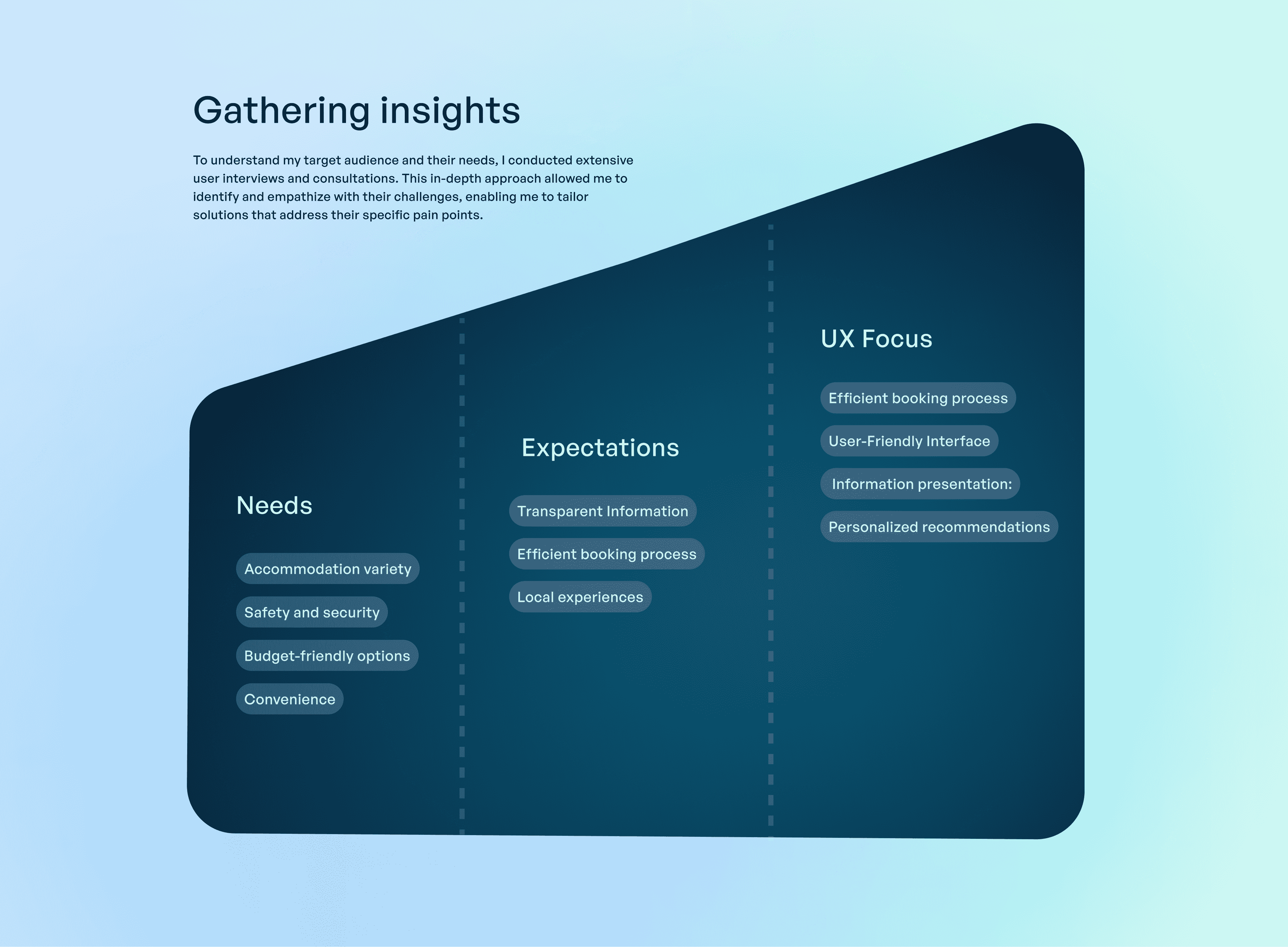
We grounded our design approach in extensive user research and persona-based interviews, representing four primary traveler types: solo adventurers, families, business travelers, and budget explorers. Each persona had different goals and pain points, which directly shaped our UX flows.
We approached this in three major layers:
Personalized Discovery: A smart recommendation engine that tailors trip ideas, accommodations, and activities based on a traveler’s preferences, budget, and history.
Unified Planning Flow: A seamless, step-by-step booking process — from flights to stays and experiences — all within a single interface.
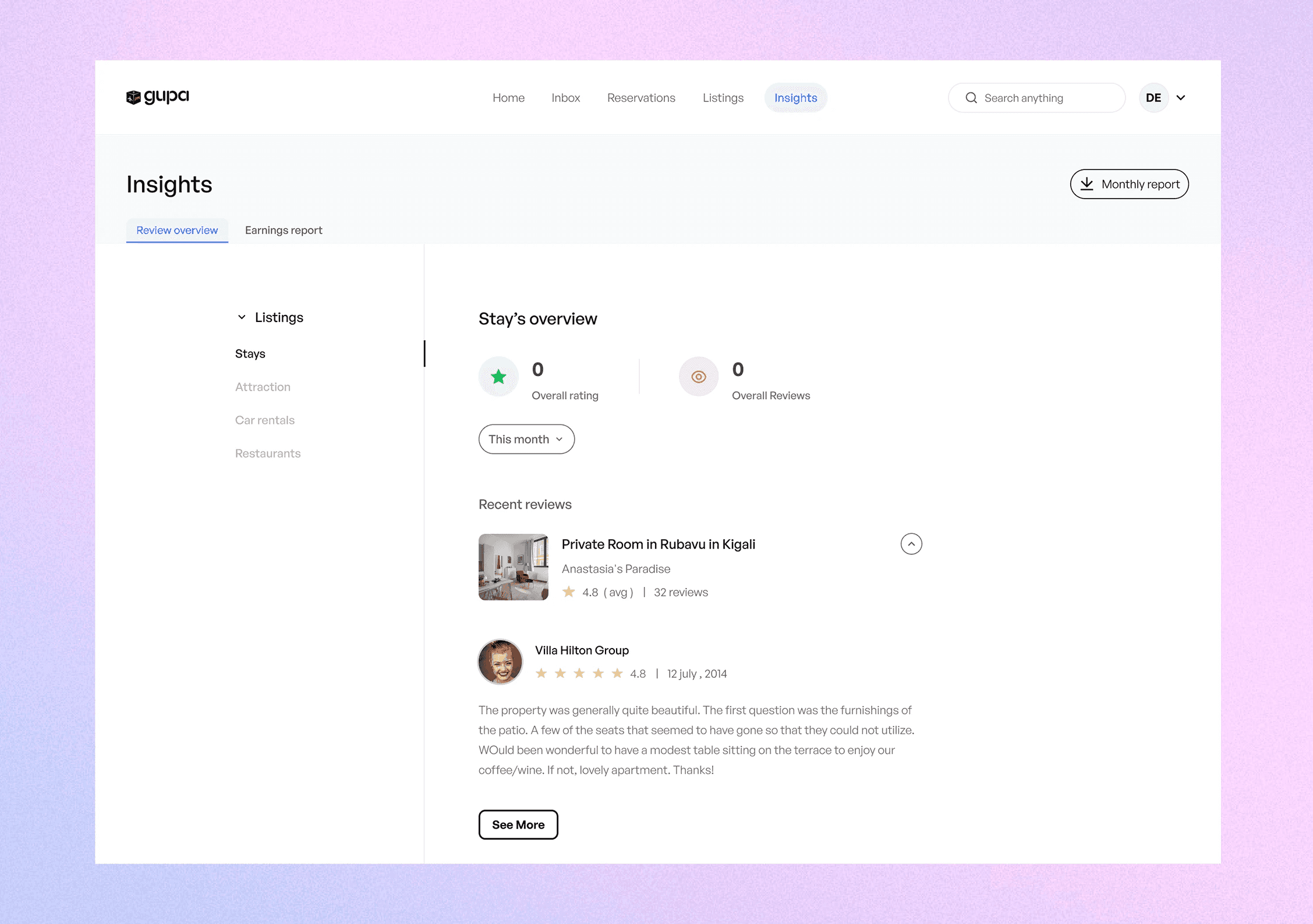
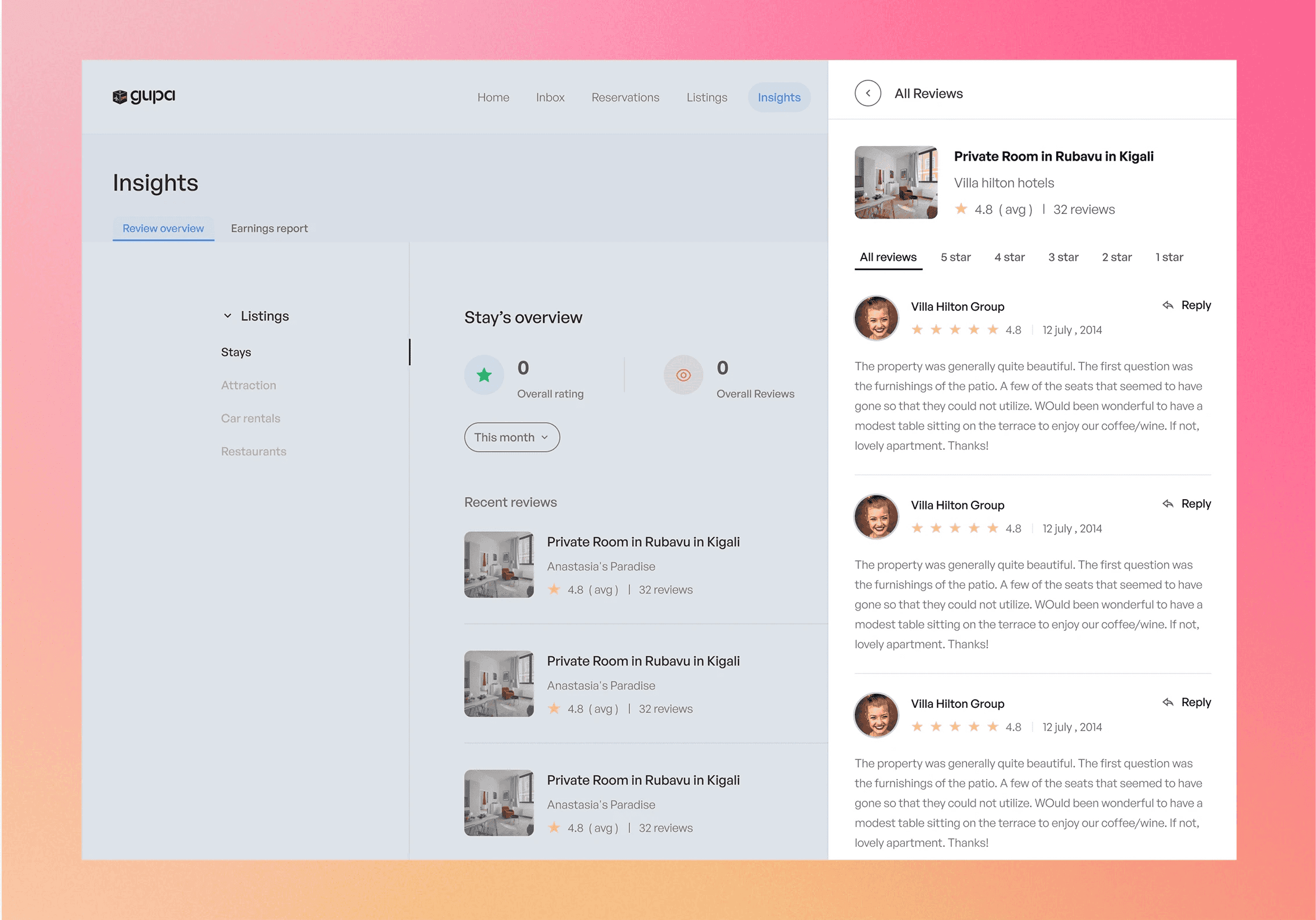
Transparency & Trust: Verified reviews, upfront pricing, and detailed breakdowns to help users make informed decisions without second-guessing.


Guided Search & Intent-Based Discovery
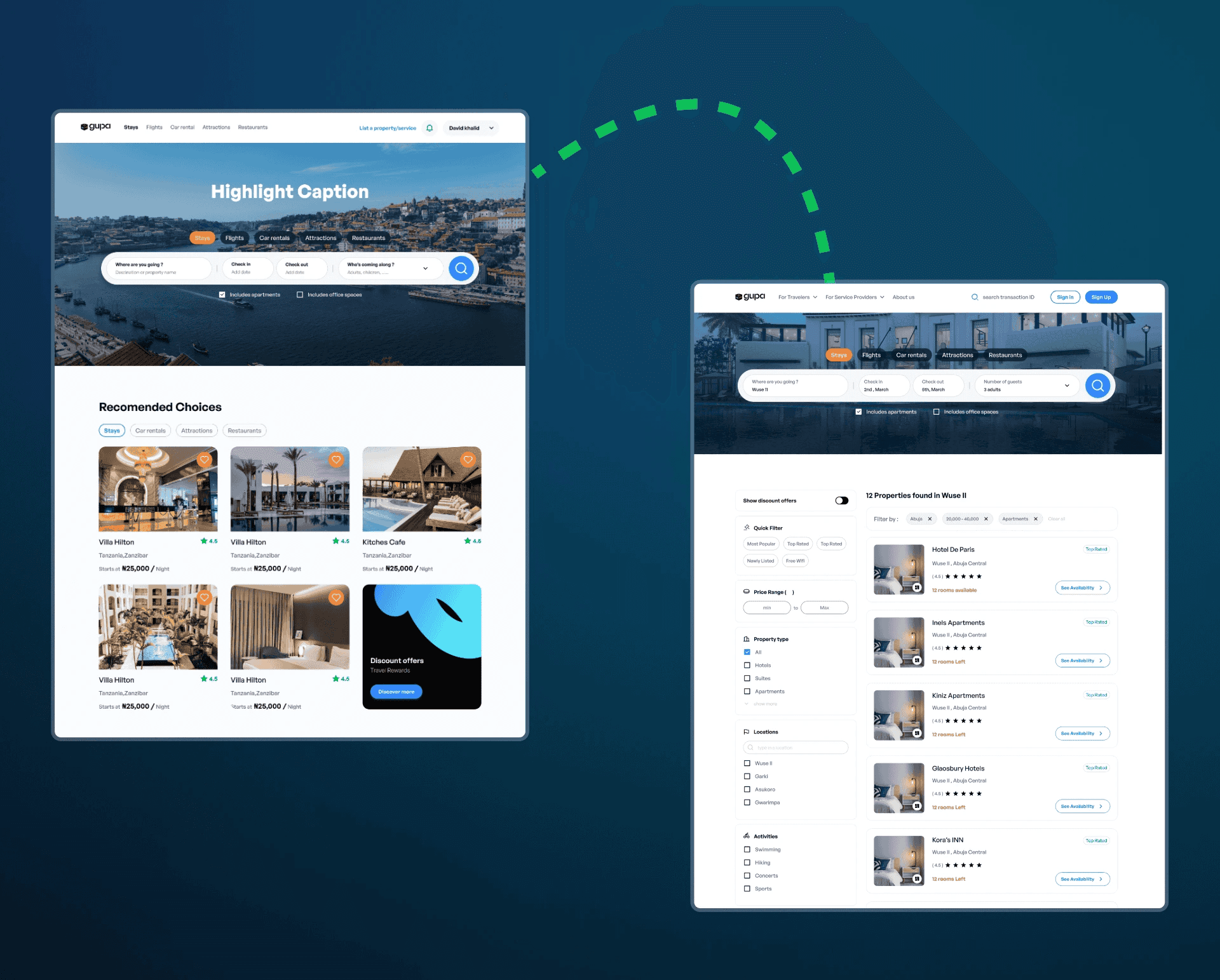
The focus was on making search smarter, more intuitive, and intent-driven.
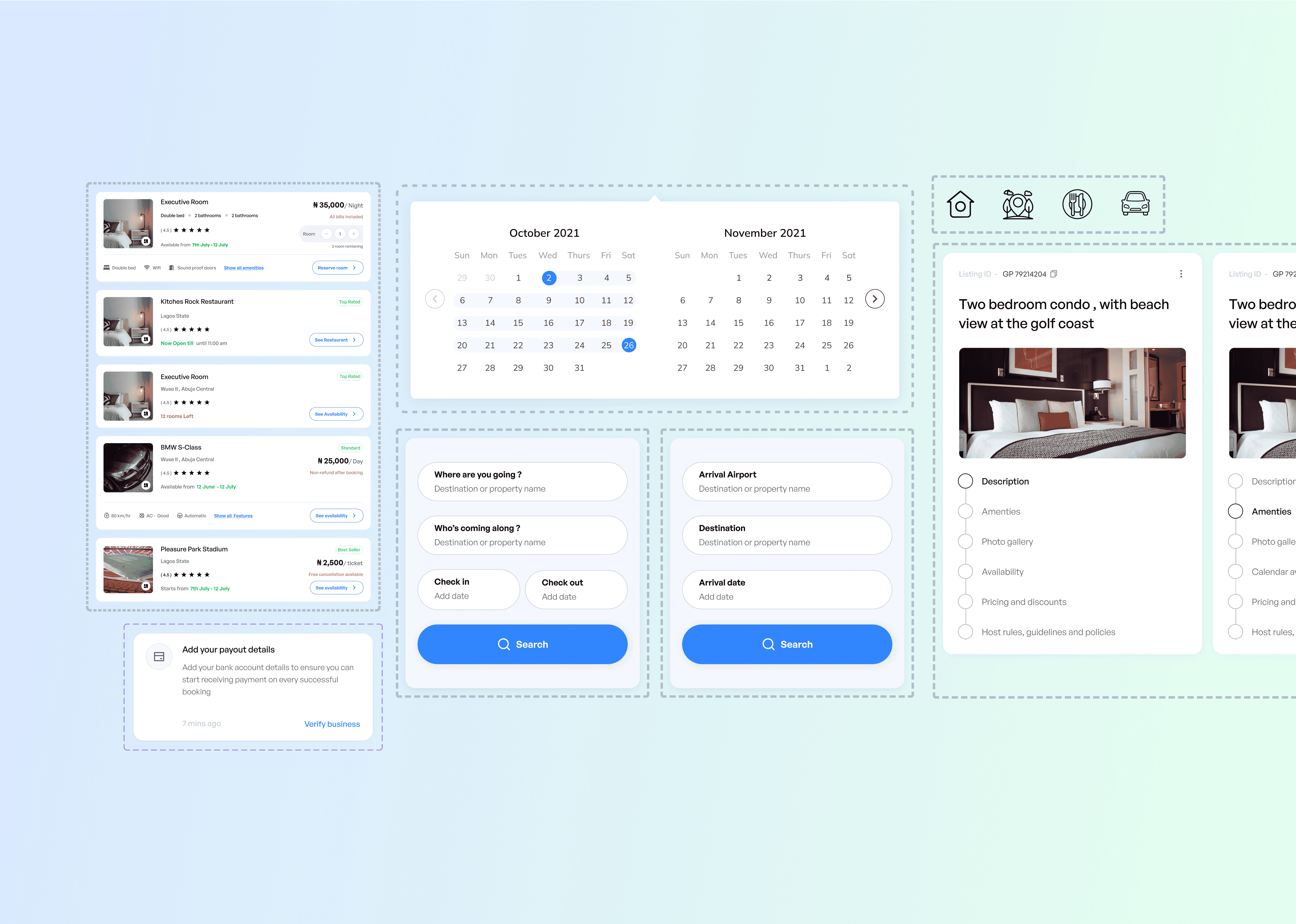
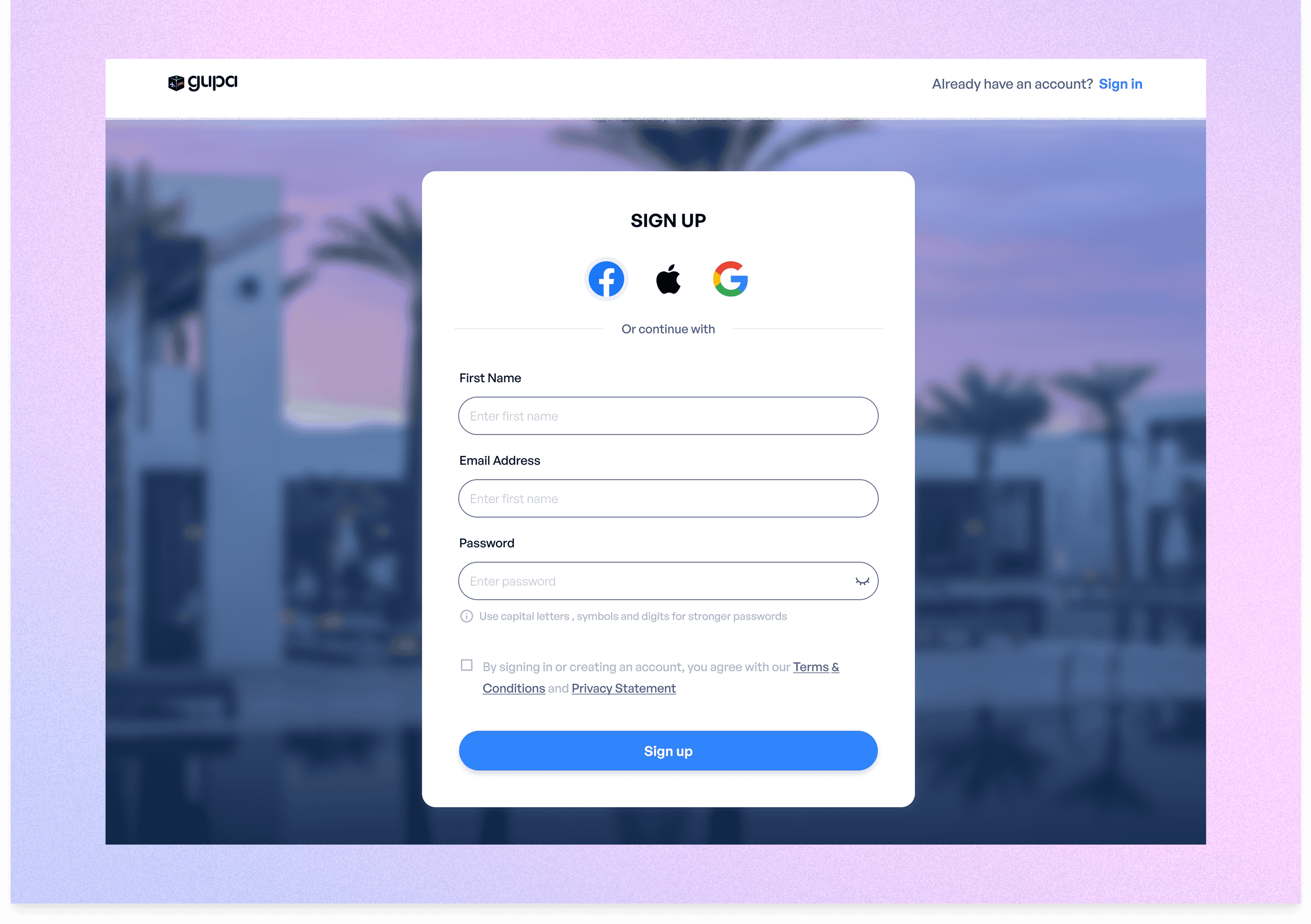
A guided onboarding flow that captures basic preferences (destination, budget, travel type, group size) and uses them to refine search results.
Category-based browsing (e.g., “Family-Friendly Stays,” “Adventure Spots,” “Business Travel Essentials”) to reduce decision fatigue.
Quick Filters and Dynamic Sorting that prioritize relevance like proximity to landmarks, local rating, or affordability so users could make decisions faster.


Integrated Booking System
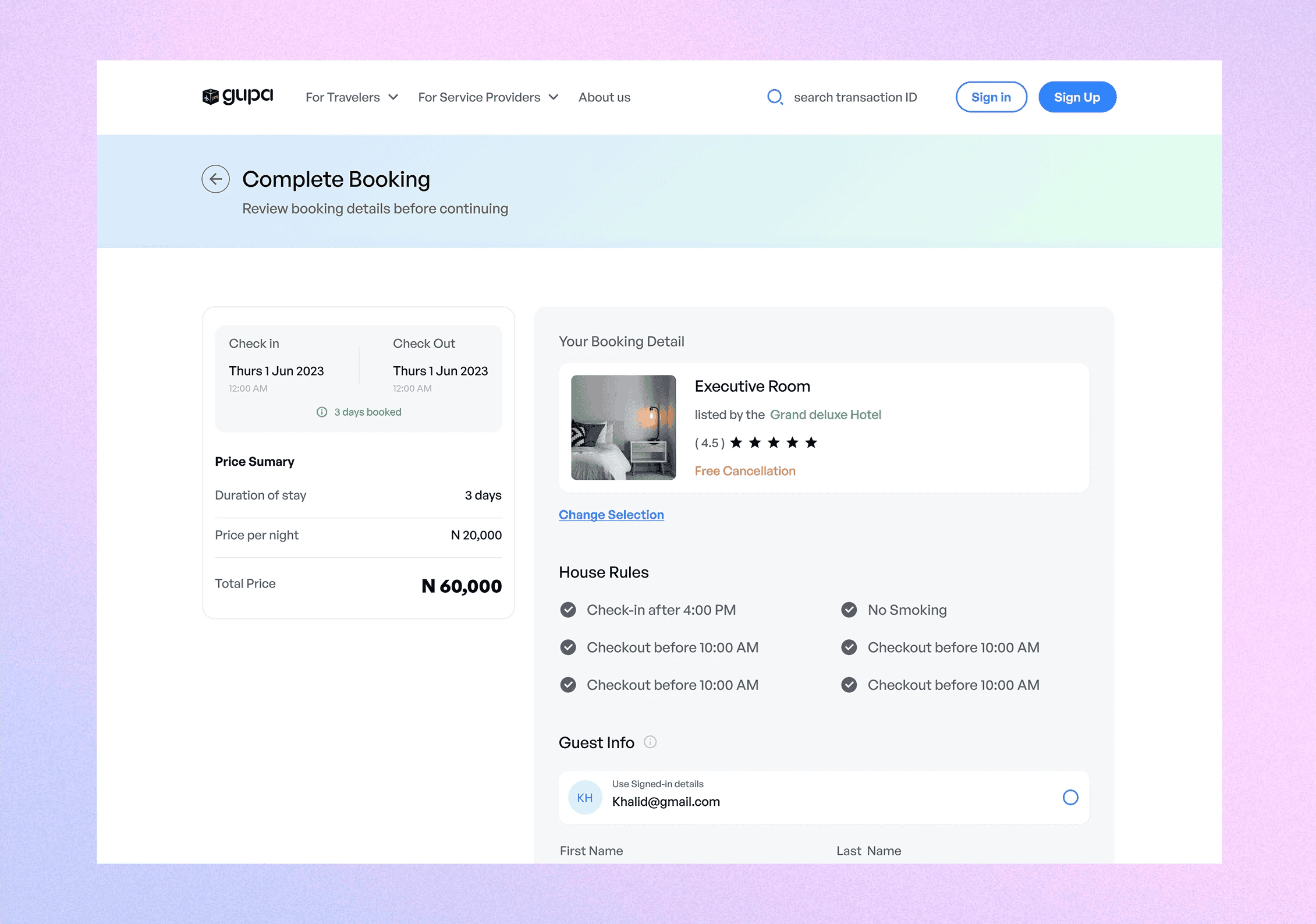
Traditionally, travelers bounce between multiple sites to book flights, accommodations, and activities — a major reason for drop-offs. Gupa solves this by integrating all stages of the travel journey into a single, unified flow. Users can discover, compare, and book everything without leaving the platform.
User Value: Convenience is maximized — no more juggling tabs, re-entering details, or tracking multiple confirmations.
Business & Vendor Value: Vendors benefit from higher retention and better visibility since users stay within Gupa’s ecosystem. It also streamlines management by syncing booking details, availability, and payments in real time.


Trust-Building Systems
Trust is a major barrier in online travel. Hidden fees, misleading photos, and fake reviews create skepticism and often lead users to abandon platforms altogether. Gupa tackles this with verified user reviews, transparent pricing, and detailed breakdowns of costs — from taxes to add-ons.
User Value: Travelers can make decisions with confidence, knowing exactly what they’re paying for and what to expect.
Business & Vendor Value: Honest, transparent listings help build credibility and reduce disputes. Vendors with strong reviews are rewarded with more visibility, and new partners can build trust faster with clear pricing structures.


Personalized Dashboard
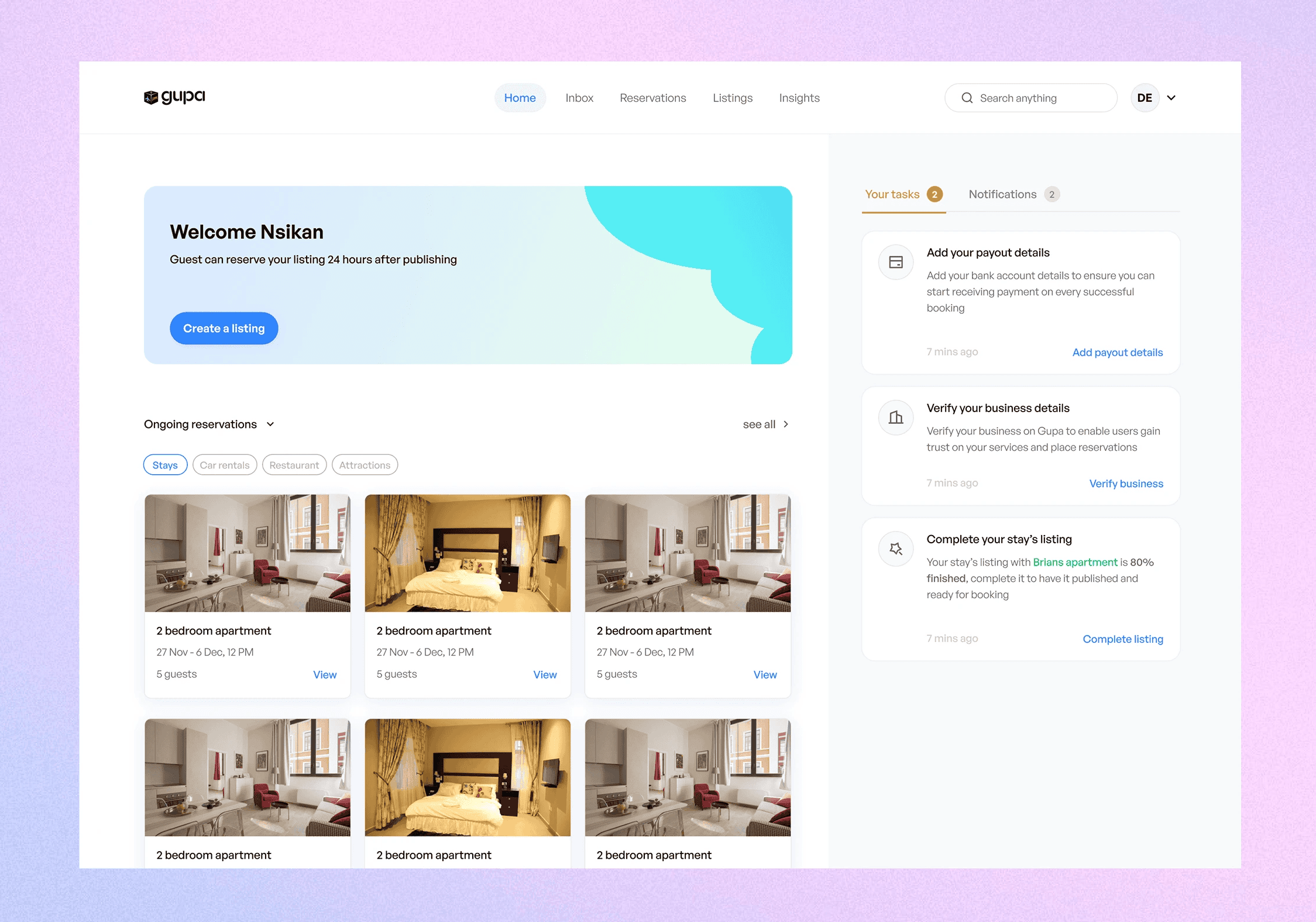
The personalized dashboard centralizes all travel-related information in one place — from booked flights and stays to itineraries and activity reminders. It’s more than just a tracking tool; it’s a dynamic travel companion that adapts to user behavior, suggesting upgrades, nearby experiences, or loyalty rewards throughout the journey.
User Value: It simplifies travel management and enhances the overall experience by keeping everything organized and actionable.
Business & Vendor Value: The dashboard provides ongoing engagement opportunities — vendors can upsell experiences, promote last-minute offers, and stay connected with travelers before, during, and after their trips..

Achieved 30%
Reduction in trip planning time through guided recommendations and a seamless booking flow.
Increased Rates
Increase in conversion rates, with more travelers completing end-to-end bookings in a single session.
Gupa
Redefining Travel Through E-Concession Innovation
By integrating booking, discovery, and local engagement in one seamless flow, Gupa empowers travelers to plan holistic journeys; booking a seaside guesthouse, a sunset cruise, and a hands-on local cooking class, all within a single, intuitive experience.

Year
2024
Project Role
Founding Product Designer
Industry
Hospitality
Discovery to Concept
Gupa is a responsive web platform built to simplify how travelers discover, plan, and book trips. In a market dominated by Booking.com and Airbnb, Gupa set out to be more than a marketplace; it aimed to become a personalized travel companion, merging accommodation, activities, and authentic local experiences into one cohesive journey.
From a business perspective, Gupa's traffic wasn't converting. Engagement stayed shallow, and local vendors saw few meaningful interactions. The core insight: solving user frustration and driving deeper engagement were two sides of the same coin.
The Fragmented Travel Experience
Despite the dominance of Booking.com, Airbnb, and TripAdvisor, the travel planning experience remained broken. User research revealed a familiar pattern: most travelers juggled multiple tools, one for flights, another for accommodation, a third for local activities, leading to frustration, decision fatigue, and abandoned plans.
Three core pain points emerged:
Fragmented Planning: Users jumped across apps for flights, accommodations, activities, and reviews.
Decision Overload: Endless options without meaningful personalization led to decision fatigue.
Lack of Trust: Hidden costs and unverified reviews caused skepticism and abandoned bookings.


Breaking the Norm
The hypothesis was straightforward: if Gupa could consolidate every step of the travel journey, from inspiration to booking, and personalize recommendations based on user intent, planning would feel effortless.
Our north star goals were:
Unify the travel journey in one seamless platform.
Personalize content, recommendations, and pricing using user data and preferences.
Humanize the experience by connecting travelers with local partners for authentic experiences.
Challenges
Our biggest challenge was finding the right balance between depth and simplicity. Personalization required collecting and analyzing user data without making onboarding feel intrusive. Integrating multiple booking services also brought technical hurdles, from syncing availability to ensuring real-time pricing.
From the vendor perspective, frustrations came from complex onboarding processes ( currently redesigning this ), limited visibility of their listings, and difficulty managing pricing or availability in real time. Many local partners felt their offerings were buried under larger competitors, and the lack of direct communication tools made it hard to build trust or tailor deals to travelers.


Core Concept: The E-Concession Model
At the heart of Gupa is the E-Concession system, a scalable partnership framework that allows local providers (hotels, hosts, tour guides, transportation services) to list under predefined agreements. This ensures affordable pricing, consistent service quality, and authentic, locally driven offerings.
UX Strategy
We grounded our design approach in extensive user research and persona-based interviews, representing four primary traveler types: solo adventurers, families, business travelers, and budget explorers. Each persona had different goals and pain points, which directly shaped our UX flows.
We approached this in three major layers:
Personalized Discovery: A smart recommendation engine that tailors trip ideas, accommodations, and activities based on a traveler’s preferences, budget, and history.
Unified Planning Flow: A seamless, step-by-step booking process — from flights to stays and experiences — all within a single interface.
Transparency & Trust: Verified reviews, upfront pricing, and detailed breakdowns to help users make informed decisions without second-guessing.


Guided Search & Intent-Based Discovery
The focus was on making search smarter, more intuitive, and intent-driven.
A guided onboarding flow that captures basic preferences (destination, budget, travel type, group size) and uses them to refine search results.
Category-based browsing (e.g., “Family-Friendly Stays,” “Adventure Spots,” “Business Travel Essentials”) to reduce decision fatigue.
Quick Filters and Dynamic Sorting that prioritize relevance like proximity to landmarks, local rating, or affordability so users could make decisions faster.


Integrated Booking System
Traditionally, travelers bounce between multiple sites to book flights, accommodations, and activities — a major reason for drop-offs. Gupa solves this by integrating all stages of the travel journey into a single, unified flow. Users can discover, compare, and book everything without leaving the platform.
User Value: Convenience is maximized — no more juggling tabs, re-entering details, or tracking multiple confirmations.
Business & Vendor Value: Vendors benefit from higher retention and better visibility since users stay within Gupa’s ecosystem. It also streamlines management by syncing booking details, availability, and payments in real time.


Trust-Building Systems
Trust is a major barrier in online travel. Hidden fees, misleading photos, and fake reviews create skepticism and often lead users to abandon platforms altogether. Gupa tackles this with verified user reviews, transparent pricing, and detailed breakdowns of costs — from taxes to add-ons.
User Value: Travelers can make decisions with confidence, knowing exactly what they’re paying for and what to expect.
Business & Vendor Value: Honest, transparent listings help build credibility and reduce disputes. Vendors with strong reviews are rewarded with more visibility, and new partners can build trust faster with clear pricing structures.


Personalized Dashboard
The personalized dashboard centralizes all travel-related information in one place — from booked flights and stays to itineraries and activity reminders. It’s more than just a tracking tool; it’s a dynamic travel companion that adapts to user behavior, suggesting upgrades, nearby experiences, or loyalty rewards throughout the journey.
User Value: It simplifies travel management and enhances the overall experience by keeping everything organized and actionable.
Business & Vendor Value: The dashboard provides ongoing engagement opportunities — vendors can upsell experiences, promote last-minute offers, and stay connected with travelers before, during, and after their trips..

Achieved 30%
Reduction in trip planning time through guided recommendations and a seamless booking flow.
Increased Rates
Increase in conversion rates, with more travelers completing end-to-end bookings in a single session.
Gupa
Redefining Travel Through E-Concession Innovation
By integrating booking, discovery, and local engagement in one seamless flow, Gupa empowers travelers to plan holistic journeys; booking a seaside guesthouse, a sunset cruise, and a hands-on local cooking class, all within a single, intuitive experience.

Year
2024
Project Role
Founding Product Designer
Industry
Hospitality
Discovery to Concept
Gupa is a responsive web platform built to simplify how travelers discover, plan, and book trips. In a market dominated by Booking.com and Airbnb, Gupa set out to be more than a marketplace; it aimed to become a personalized travel companion, merging accommodation, activities, and authentic local experiences into one cohesive journey.
From a business perspective, Gupa's traffic wasn't converting. Engagement stayed shallow, and local vendors saw few meaningful interactions. The core insight: solving user frustration and driving deeper engagement were two sides of the same coin.
The Fragmented Travel Experience
Despite the dominance of Booking.com, Airbnb, and TripAdvisor, the travel planning experience remained broken. User research revealed a familiar pattern: most travelers juggled multiple tools, one for flights, another for accommodation, a third for local activities, leading to frustration, decision fatigue, and abandoned plans.
Three core pain points emerged:
Fragmented Planning: Users jumped across apps for flights, accommodations, activities, and reviews.
Decision Overload: Endless options without meaningful personalization led to decision fatigue.
Lack of Trust: Hidden costs and unverified reviews caused skepticism and abandoned bookings.


Breaking the Norm
The hypothesis was straightforward: if Gupa could consolidate every step of the travel journey, from inspiration to booking, and personalize recommendations based on user intent, planning would feel effortless.
Our north star goals were:
Unify the travel journey in one seamless platform.
Personalize content, recommendations, and pricing using user data and preferences.
Humanize the experience by connecting travelers with local partners for authentic experiences.
Challenges
Our biggest challenge was finding the right balance between depth and simplicity. Personalization required collecting and analyzing user data without making onboarding feel intrusive. Integrating multiple booking services also brought technical hurdles, from syncing availability to ensuring real-time pricing.
From the vendor perspective, frustrations came from complex onboarding processes ( currently redesigning this ), limited visibility of their listings, and difficulty managing pricing or availability in real time. Many local partners felt their offerings were buried under larger competitors, and the lack of direct communication tools made it hard to build trust or tailor deals to travelers.


Core Concept: The E-Concession Model
At the heart of Gupa is the E-Concession system, a scalable partnership framework that allows local providers (hotels, hosts, tour guides, transportation services) to list under predefined agreements. This ensures affordable pricing, consistent service quality, and authentic, locally driven offerings.
UX Strategy
We grounded our design approach in extensive user research and persona-based interviews, representing four primary traveler types: solo adventurers, families, business travelers, and budget explorers. Each persona had different goals and pain points, which directly shaped our UX flows.
We approached this in three major layers:
Personalized Discovery: A smart recommendation engine that tailors trip ideas, accommodations, and activities based on a traveler’s preferences, budget, and history.
Unified Planning Flow: A seamless, step-by-step booking process — from flights to stays and experiences — all within a single interface.
Transparency & Trust: Verified reviews, upfront pricing, and detailed breakdowns to help users make informed decisions without second-guessing.


Guided Search & Intent-Based Discovery
The focus was on making search smarter, more intuitive, and intent-driven.
A guided onboarding flow that captures basic preferences (destination, budget, travel type, group size) and uses them to refine search results.
Category-based browsing (e.g., “Family-Friendly Stays,” “Adventure Spots,” “Business Travel Essentials”) to reduce decision fatigue.
Quick Filters and Dynamic Sorting that prioritize relevance like proximity to landmarks, local rating, or affordability so users could make decisions faster.


Integrated Booking System
Traditionally, travelers bounce between multiple sites to book flights, accommodations, and activities — a major reason for drop-offs. Gupa solves this by integrating all stages of the travel journey into a single, unified flow. Users can discover, compare, and book everything without leaving the platform.
User Value: Convenience is maximized — no more juggling tabs, re-entering details, or tracking multiple confirmations.
Business & Vendor Value: Vendors benefit from higher retention and better visibility since users stay within Gupa’s ecosystem. It also streamlines management by syncing booking details, availability, and payments in real time.


Trust-Building Systems
Trust is a major barrier in online travel. Hidden fees, misleading photos, and fake reviews create skepticism and often lead users to abandon platforms altogether. Gupa tackles this with verified user reviews, transparent pricing, and detailed breakdowns of costs — from taxes to add-ons.
User Value: Travelers can make decisions with confidence, knowing exactly what they’re paying for and what to expect.
Business & Vendor Value: Honest, transparent listings help build credibility and reduce disputes. Vendors with strong reviews are rewarded with more visibility, and new partners can build trust faster with clear pricing structures.


Personalized Dashboard
The personalized dashboard centralizes all travel-related information in one place — from booked flights and stays to itineraries and activity reminders. It’s more than just a tracking tool; it’s a dynamic travel companion that adapts to user behavior, suggesting upgrades, nearby experiences, or loyalty rewards throughout the journey.
User Value: It simplifies travel management and enhances the overall experience by keeping everything organized and actionable.
Business & Vendor Value: The dashboard provides ongoing engagement opportunities — vendors can upsell experiences, promote last-minute offers, and stay connected with travelers before, during, and after their trips..

Achieved 30%
Reduction in trip planning time through guided recommendations and a seamless booking flow.
Increased Rates
Increase in conversion rates, with more travelers completing end-to-end bookings in a single session.