Masomo AI
Rethinking How Students Learn in Emerging Markets
Using artificial intelligence, Masomo AI is able to tailor educational content to each student’s unique pace, guiding them through adaptive learning paths, and equips educators with clear, actionable insights for student growth.

Year
2025
Project Role
Asst. Product Designer
Industry
AI Edtech
Why It Matters
In Africa, education doesn’t exist in isolation, it’s layered with everyday realities. Classrooms are often overcrowded, resources stretched thin, and teachers tasked with guiding dozens of students at once. For many learners, schooling competes with daily responsibilities: helping at home, managing chores, or even working to support their families.
Our initial research focused on understanding why many students struggled to maintain consistent study habits. Through qualitative interviews and usability tests, we uncovered key pain points:
Context and Research
Through interviews, surveys, and observation sessions, several recurring challenges came to light as listed below:
Information overload – students jumped between WhatsApp groups, PDFs, and YouTube videos, often feeling overwhelmed. Synthesizing scattered content across fragmented sources was a constant friction point.
Low trust – Low trust — Students worried about outdated or unreliable resources and had no clear way to verify what they found. Access to credible, up-to-date information was scarce..
UI barriers – Clunky, unintuitive apps made it harder to stay focused, leading to frequent drop-offs. Poor UX compounded the problem for students facing language barriers, further reducing retention
Rigid systems A one-size-fits-all teaching approach ignored individual learning paces, leaving slower students behind and giving educators no visibility into where learners were struggling.


Product Clarity
We figured through several review on challenges, that we could:
Personalize content to match each student’s learning curve
Simplify how they discover and navigate materials
Gamify progress through adaptive difficulty
…then we could meaningfully increase engagement, improve study consistency, and position Masomo as an indispensable part of students’ academic routines.
Our design direction followed a “guided autonomy” principle — give users freedom to learn, but guide them intelligently at every step through personalization and contextual recommendations.
Defining Building Blocks
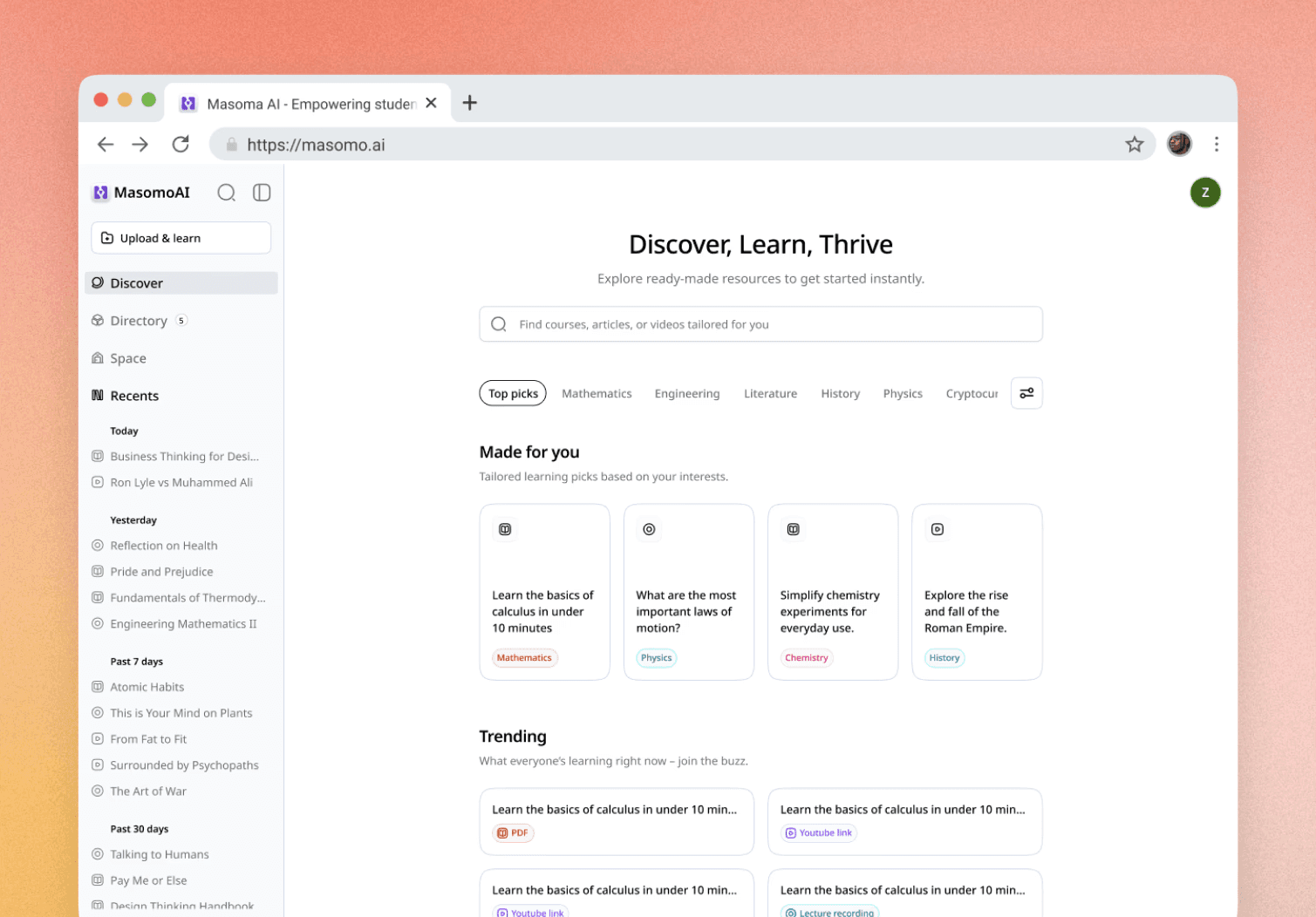
To scale, we created a small but flexible design system. Clean typography, a calm palette to reduced eye strain ( supporting long study sessions ), and reusable components like subject cards and progress trackers kept the product cohesive.
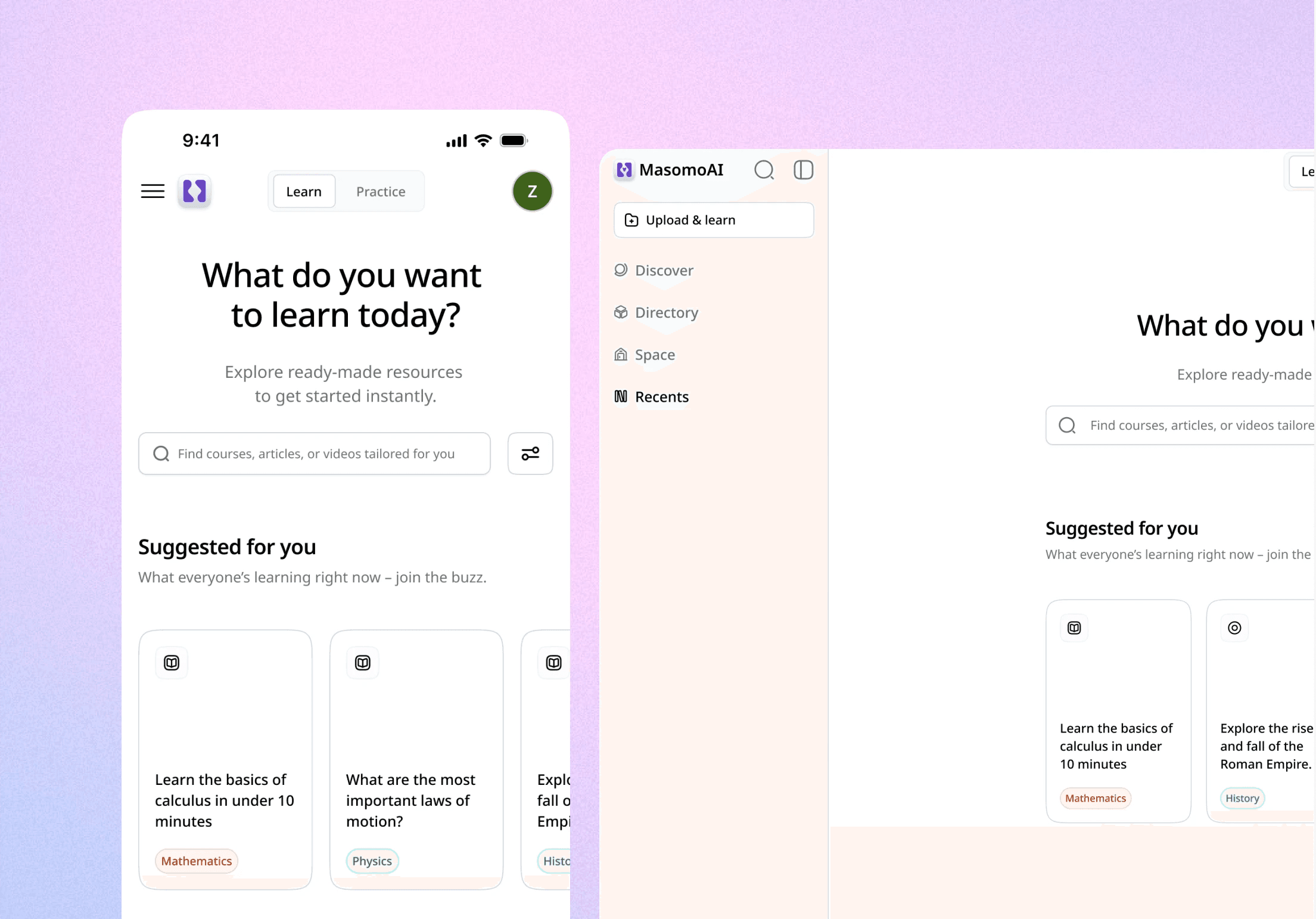
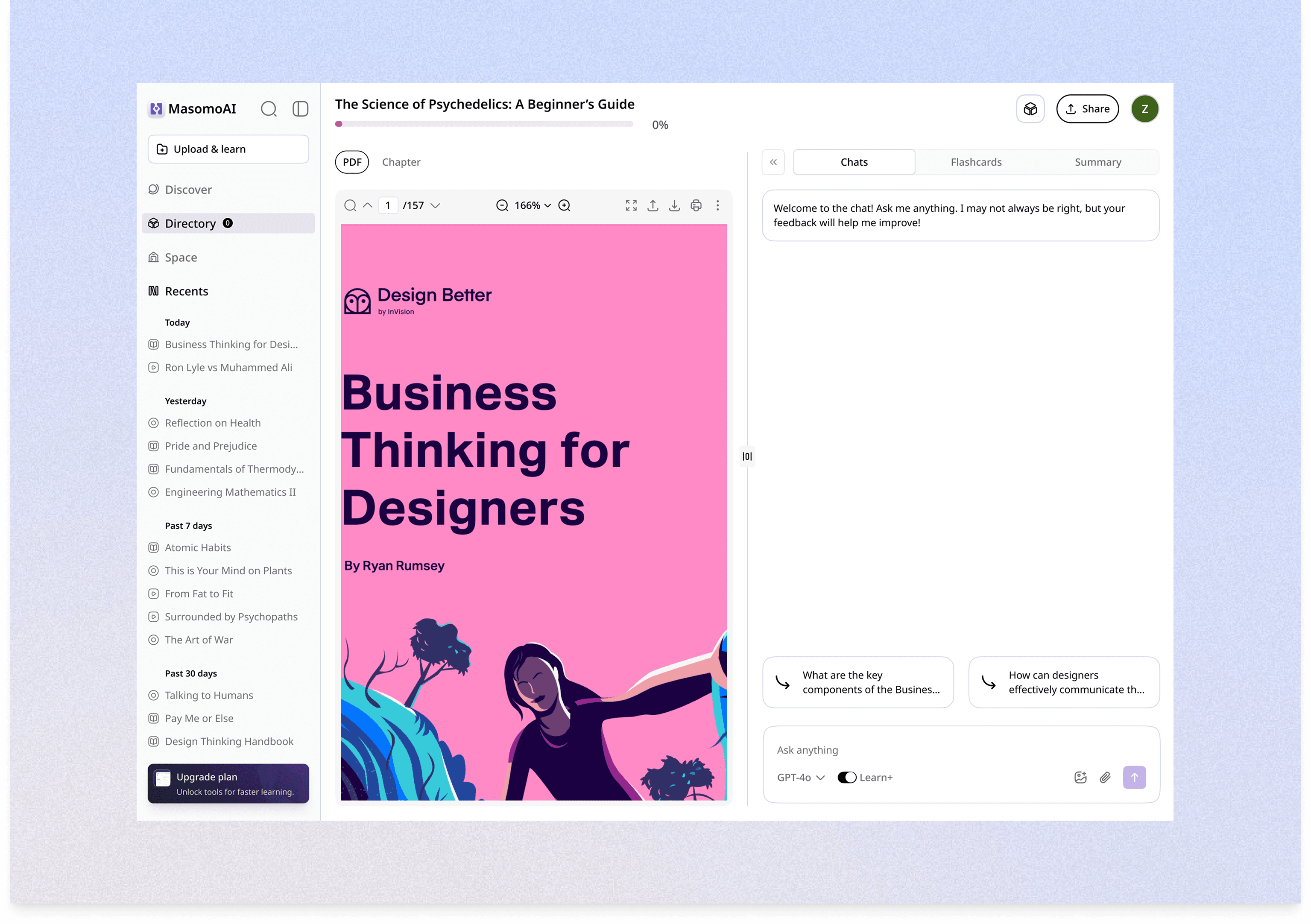
The final product combined AI search with a clean, student-first interface. featuring a:
Simple Question Flow – students type naturally, Masomo responds with structured, digestible answers.
Topic Navigator – a quick way to move between subjects without losing focus.
Lightweight Interface – built with performance in mind, so it runs smoothly on mid-range Android devices.
Study Companion Mode – progress tracking, revision reminders, and saved queries to build consistent habits.


Making Learning Effortless
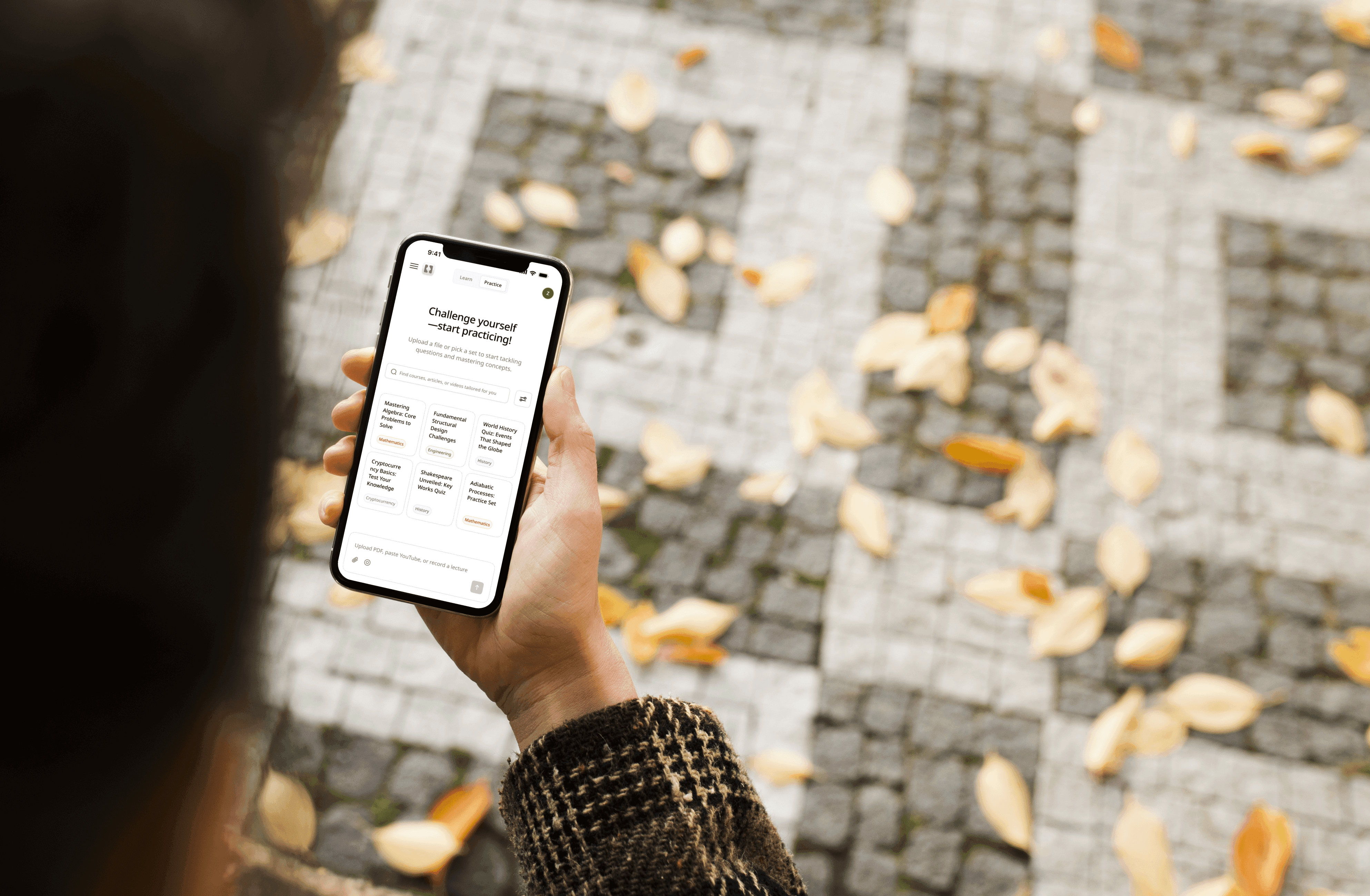
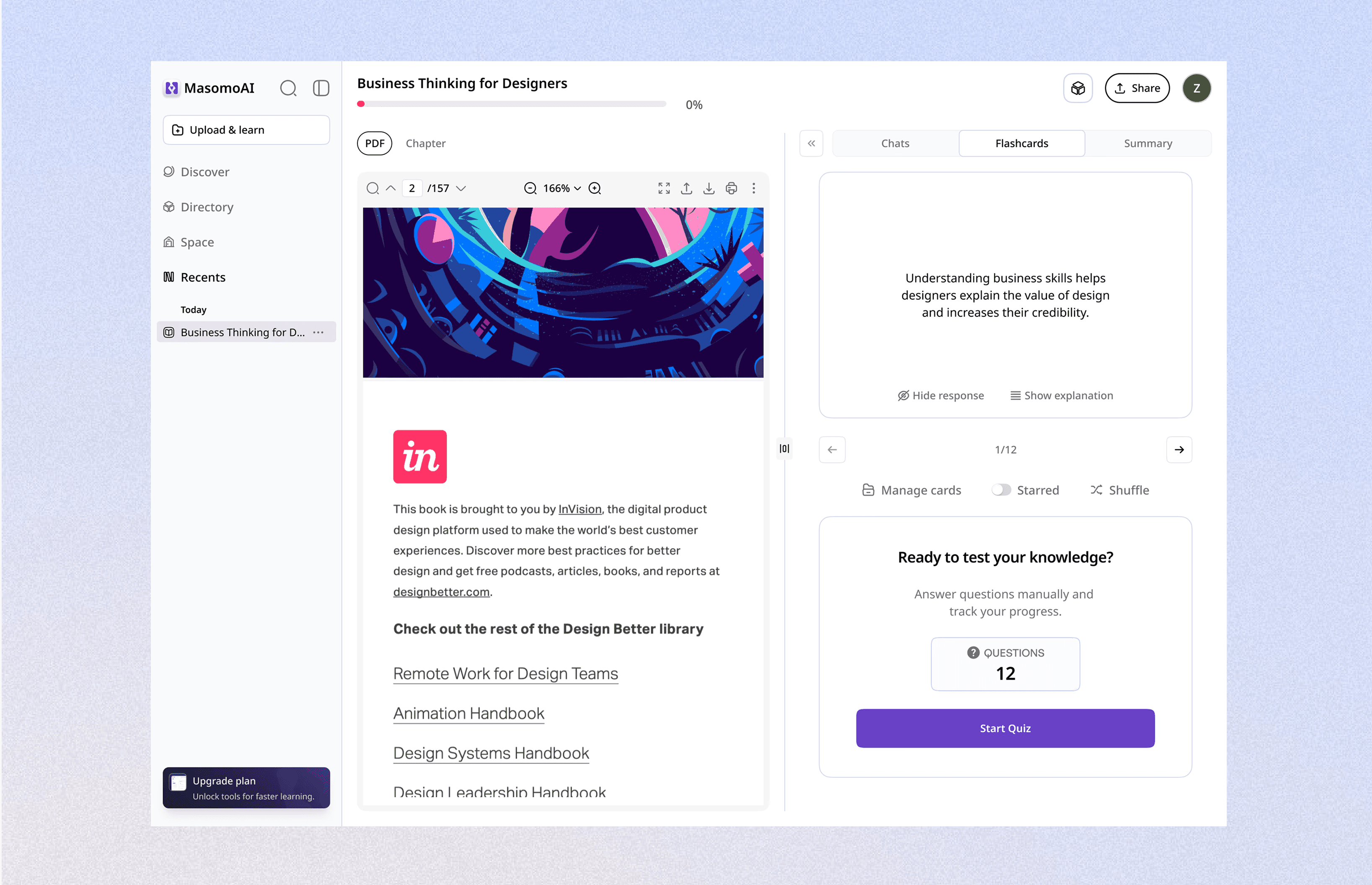
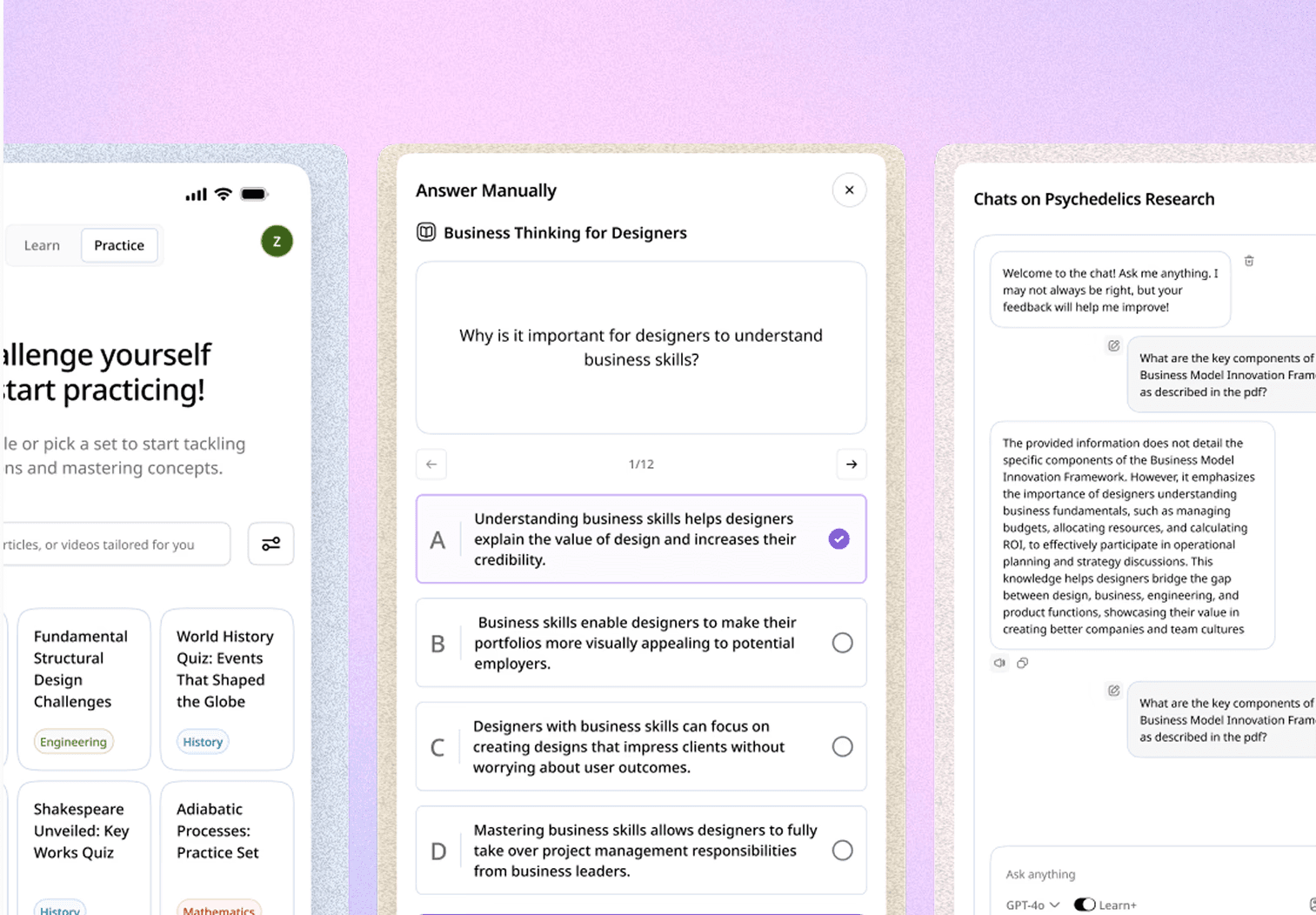
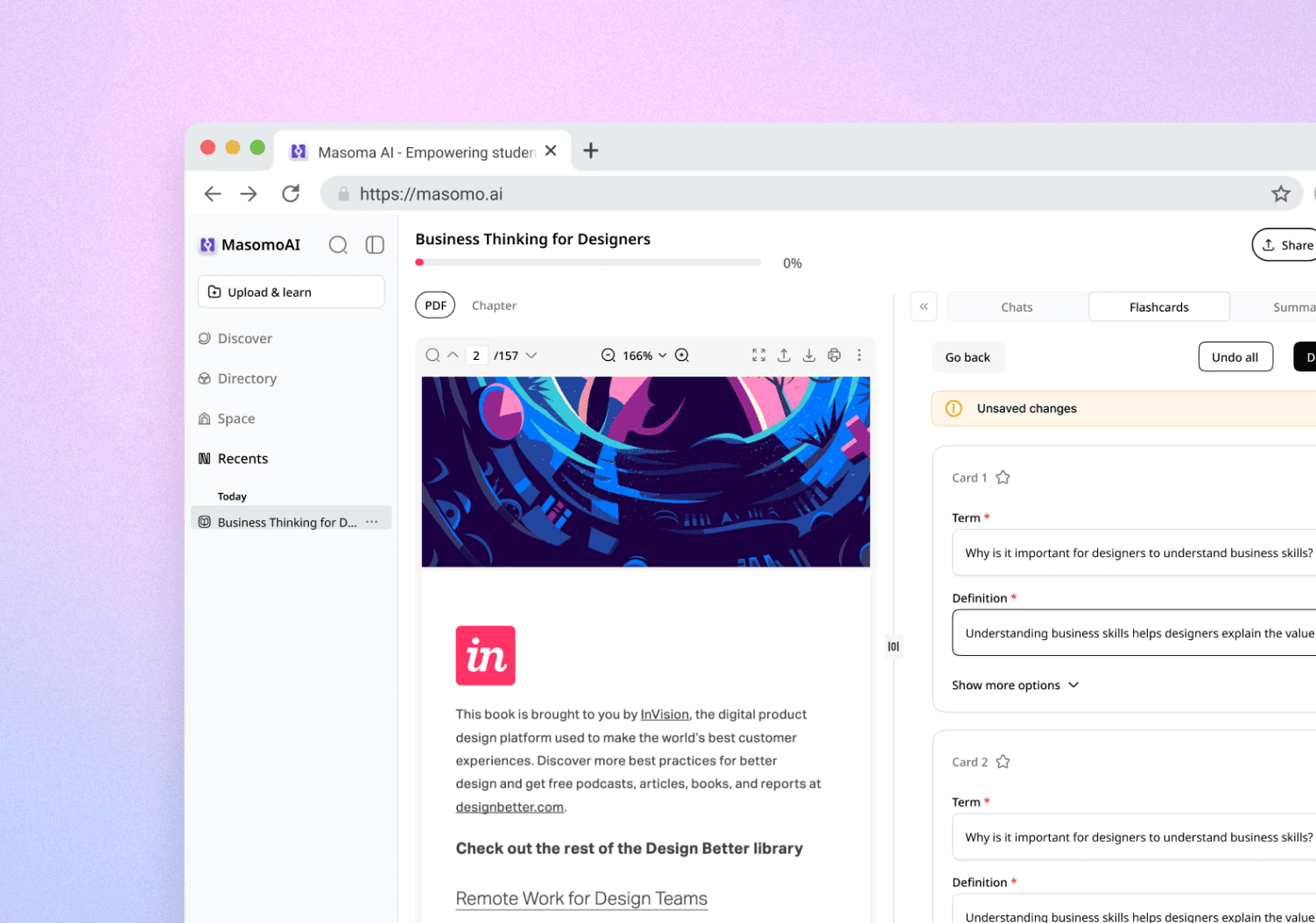
Flashcards were redesigned beyond static Q&A — they became a personalized practice engine.
When a student uploads a resource or creates a Directory, Masomo automatically distills key ideas, terms, and concepts into bite-sized flashcards built around active recall — the most effective method for long-term retention.
The result: a personal knowledge trainer that quizzes at the right intervals, strengthens weak areas, and turns complex topics into second nature.
Turning Practice into Confidence
For many students, the gap between learning and remembering is where progress breaks down. With flashcards, learners could choose the pace that worked for them — hints offered gentle nudges when they felt stuck, while spaced repetition cycles reinforced retention over time.
During usability sessions, students consistently reported that flashcards boosted their confidence and improved recall before exams.


Decluttering the Learning Journey
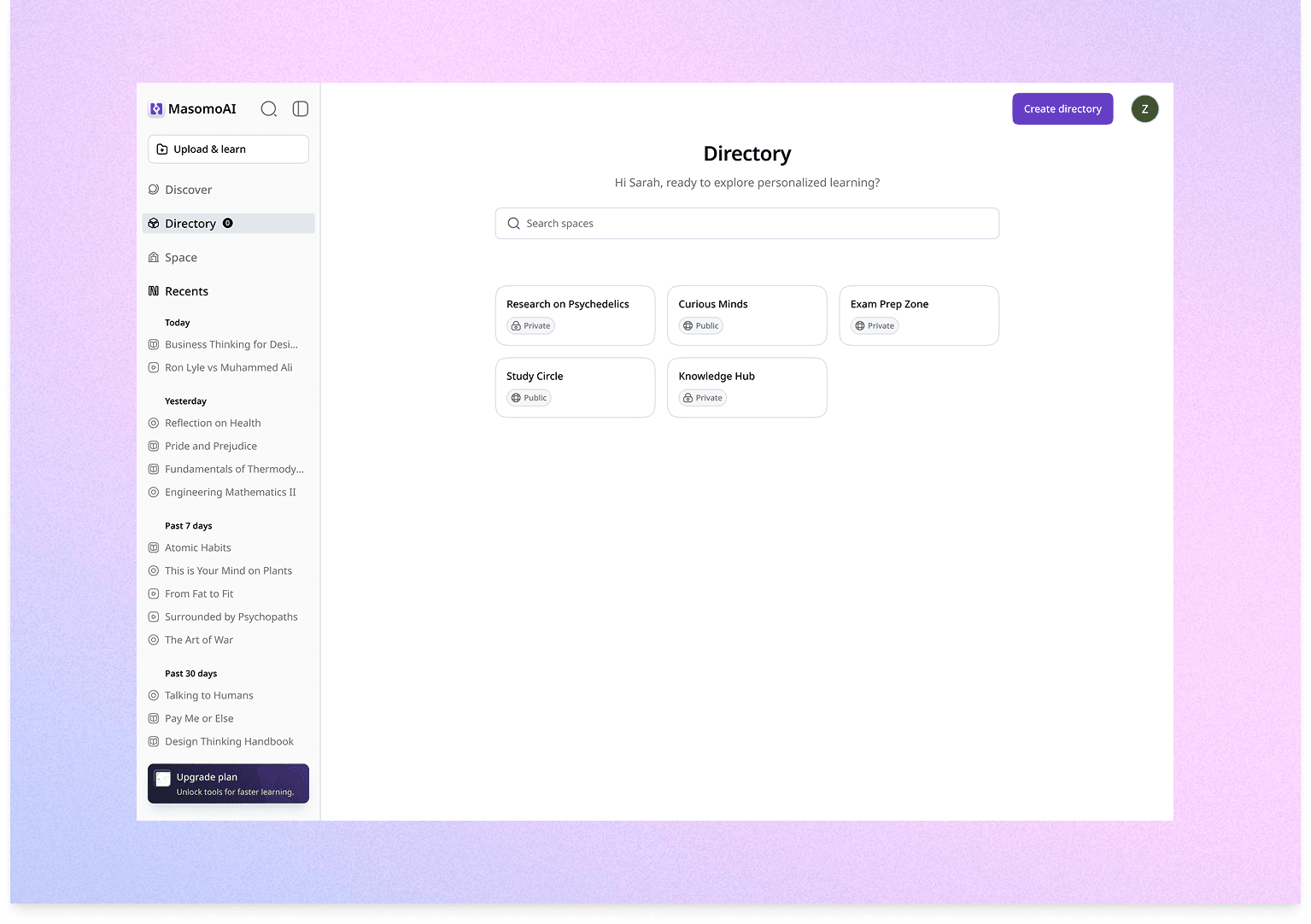
Through early research, we discovered a critical pain point: students weren’t struggling to find materials, they were struggling to make sense of them. Most learning tools treated PDFs, videos/Audios, or lecture notes as passive files. We wanted to turn them into dynamic, adaptive learning journeys. Collections could be made public, transforming personal organization into knowledge base.
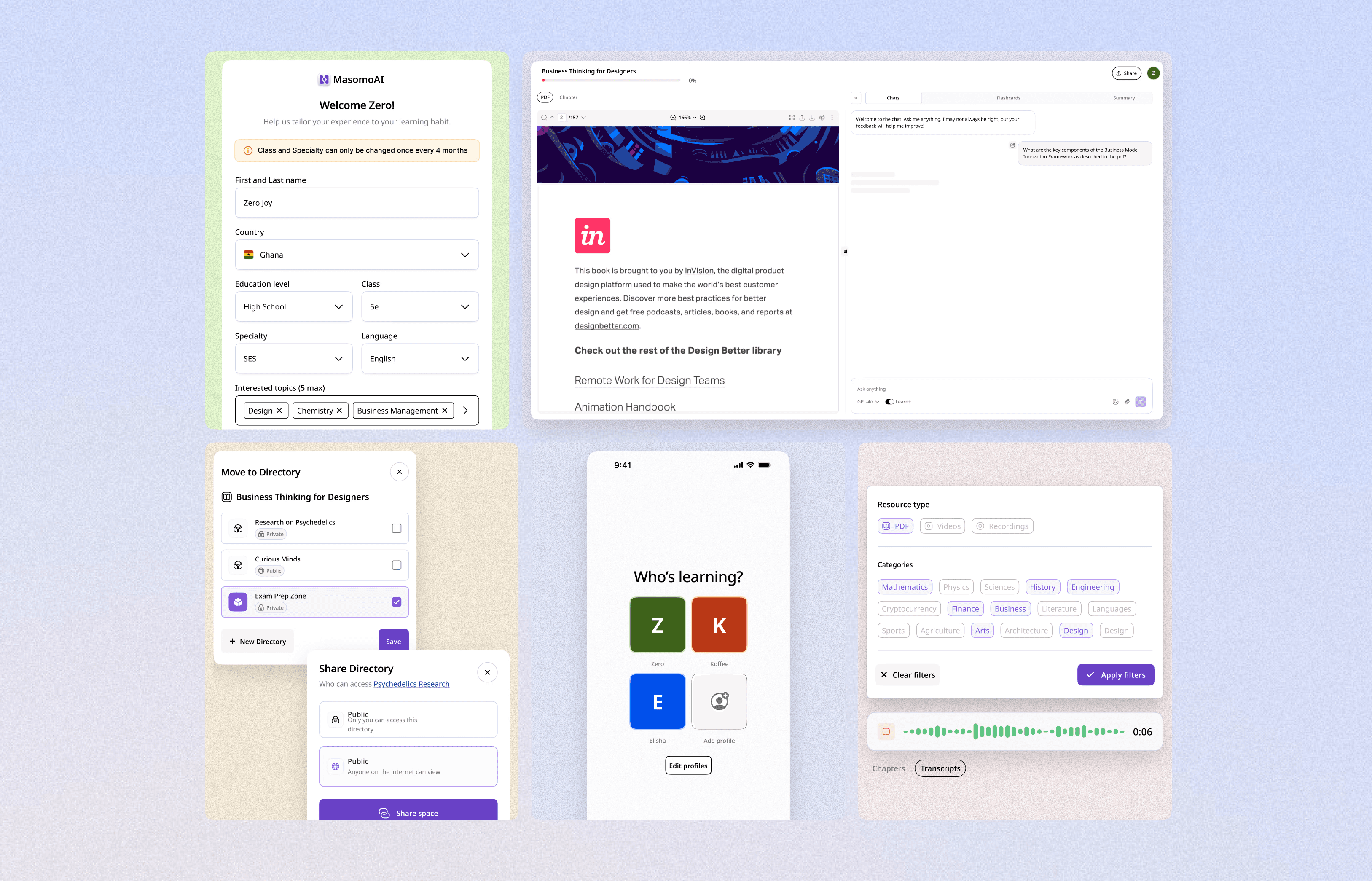
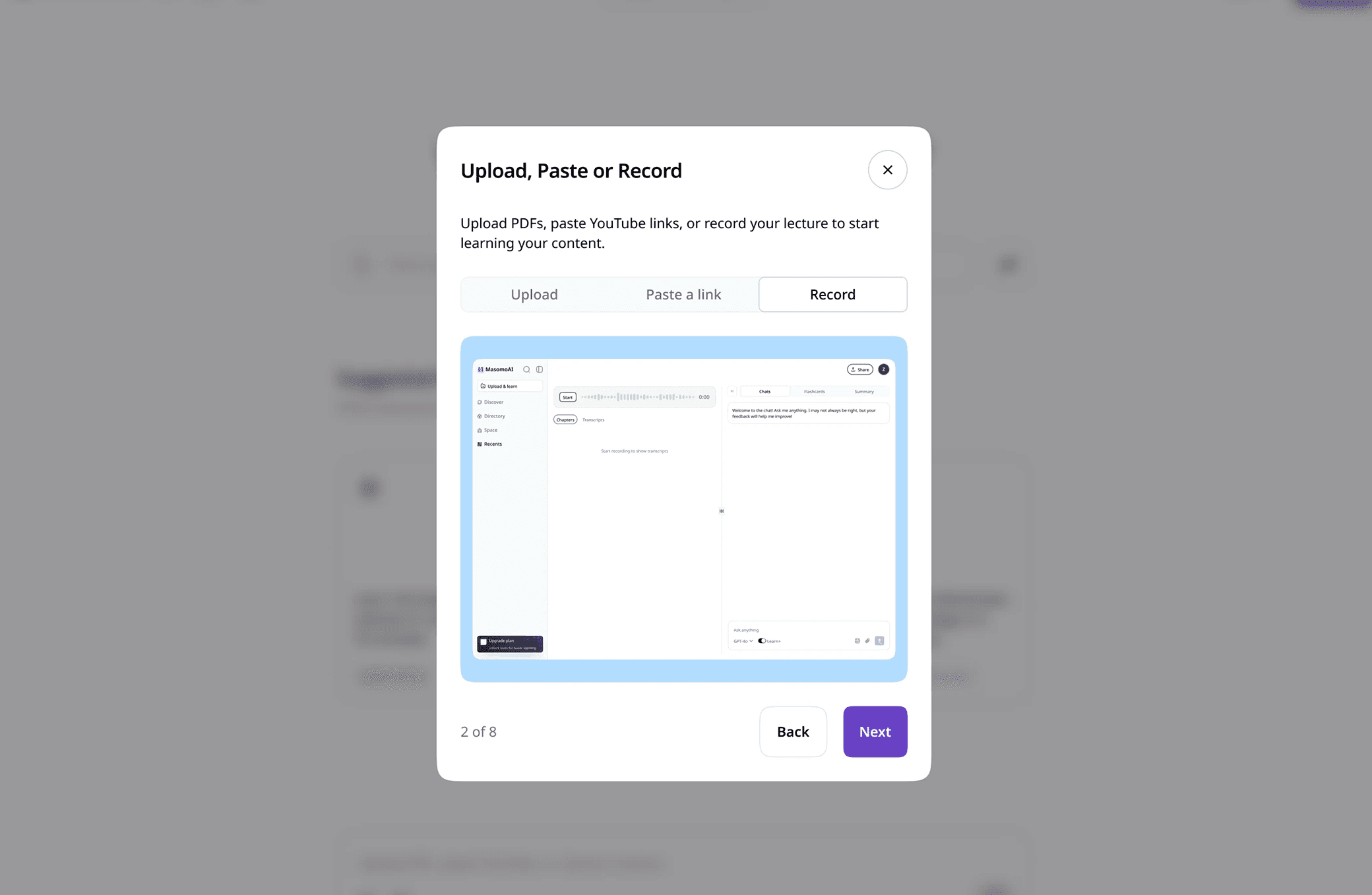
Our solution: the Directory became the space where learners upload or paste any resource — a PDF, YouTube lecture, or classroom note — and Masomo instantly transforms it into a structured course. From there, AI breaks it down into flashcards, generates contextual summaries, enables follow-up chats, and suggests next-step learning paths.
In summary, a Directory is a structured learning course you create by uploading a resource (like a PDF, article, or video) or writing a prompt. Masomo then transforms that material into an interactive learning experience — generating flashcards, summaries, quizzes, and AI chat explanations tailored to the content.


From Isolation to Belonging
Learning isn't meant to be solitary, yet many students found themselves struggling in silence — motivation dipping, questions going unanswered, and the drive to continue slowly fading.
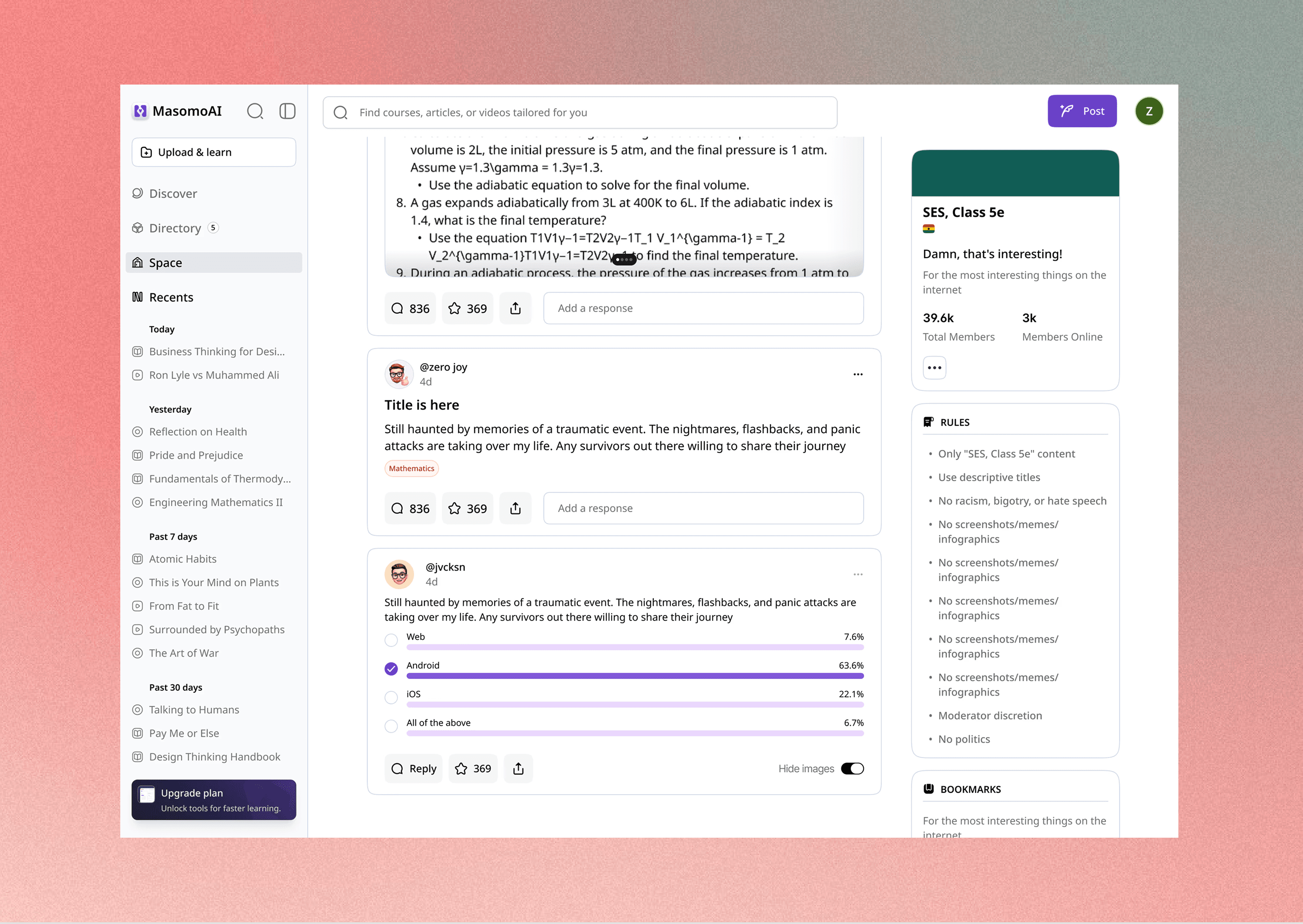
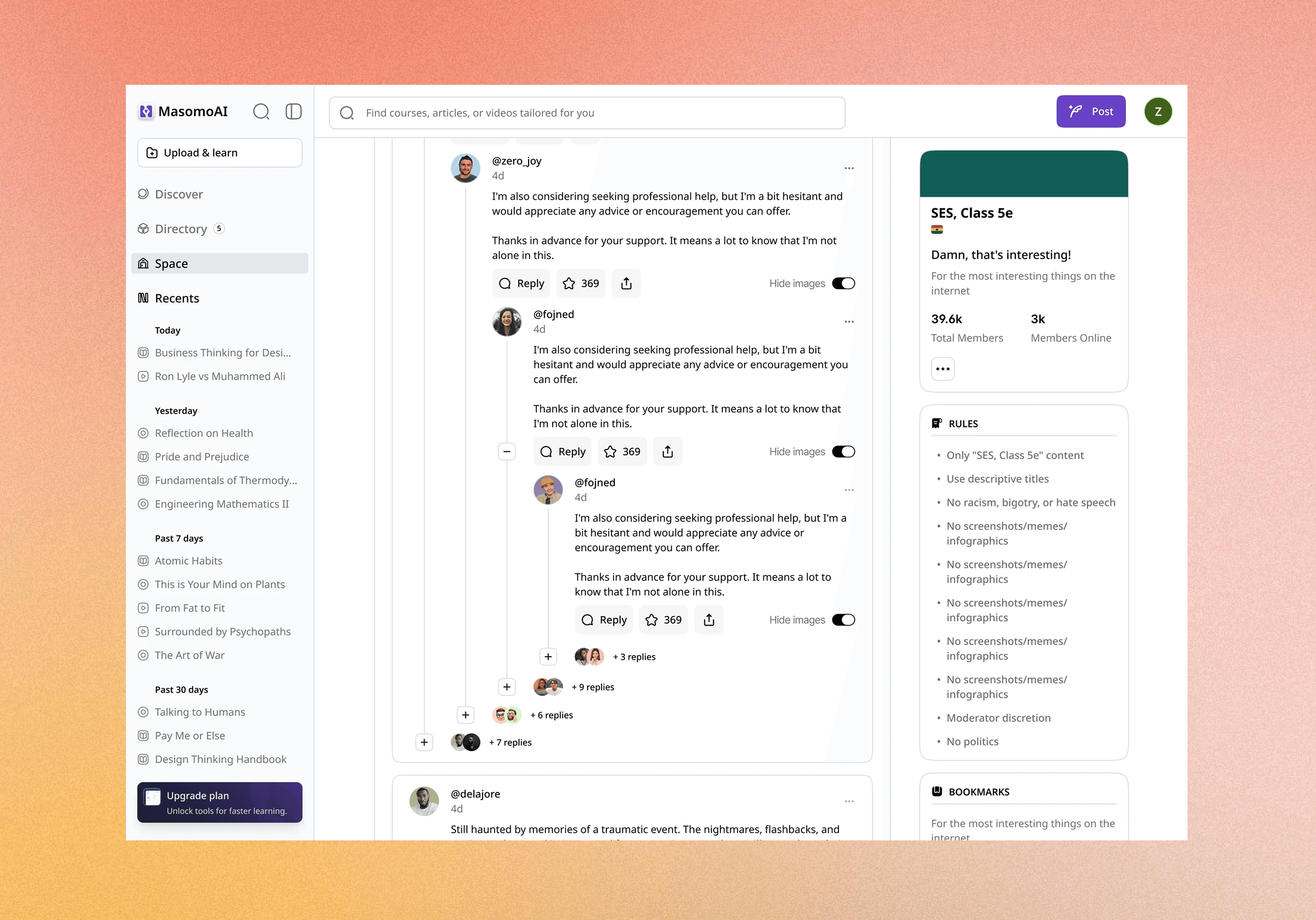
That's why we created Spaces: not just a chatroom, but a peer community where learners form study groups, share strategies, and hold each other accountable.
What began as an academic feature grew into something deeper — a place where knowledge is collective and momentum becomes contagious.


Challenges & Closing
No project is without constraints. Unreliable internet connectivity across target regions meant the design couldn't lean entirely on advanced AI features. The deliberate choice: prioritize a resilient core experience that still works when connections falter.
Every design decision came back to the same question: how do we make learning accessible, one interaction at a time?


Result That Count
45%
Increase in average study session length, showing students stayed engaged for longer periods.
15%
Boost in engagement with the quiz-based practice mode, confirming its effectiveness in active learning.
30%
More students started learning immediately after onboarding, thanks to pre-loaded resources.
Easier than Googling
Direct quote from student usability sessions, reflecting increased trust and perceived value of the platform
Masomo AI
Rethinking How Students Learn in Emerging Markets
Using artificial intelligence, Masomo AI is able to tailor educational content to each student’s unique pace, guiding them through adaptive learning paths, and equips educators with clear, actionable insights for student growth.

Year
2025
Project Role
Asst. Product Designer
Industry
AI Edtech
Why It Matters
In Africa, education doesn’t exist in isolation, it’s layered with everyday realities. Classrooms are often overcrowded, resources stretched thin, and teachers tasked with guiding dozens of students at once. For many learners, schooling competes with daily responsibilities: helping at home, managing chores, or even working to support their families.
Our initial research focused on understanding why many students struggled to maintain consistent study habits. Through qualitative interviews and usability tests, we uncovered key pain points:
Context and Research
Through interviews, surveys, and observation sessions, several recurring challenges came to light as listed below:
Information overload – students jumped between WhatsApp groups, PDFs, and YouTube videos, often feeling overwhelmed. Synthesizing scattered content across fragmented sources was a constant friction point.
Low trust – Low trust — Students worried about outdated or unreliable resources and had no clear way to verify what they found. Access to credible, up-to-date information was scarce..
UI barriers – Clunky, unintuitive apps made it harder to stay focused, leading to frequent drop-offs. Poor UX compounded the problem for students facing language barriers, further reducing retention
Rigid systems A one-size-fits-all teaching approach ignored individual learning paces, leaving slower students behind and giving educators no visibility into where learners were struggling.


Product Clarity
We figured through several review on challenges, that we could:
Personalize content to match each student’s learning curve
Simplify how they discover and navigate materials
Gamify progress through adaptive difficulty
…then we could meaningfully increase engagement, improve study consistency, and position Masomo as an indispensable part of students’ academic routines.
Our design direction followed a “guided autonomy” principle — give users freedom to learn, but guide them intelligently at every step through personalization and contextual recommendations.
Defining Building Blocks
To scale, we created a small but flexible design system. Clean typography, a calm palette to reduced eye strain ( supporting long study sessions ), and reusable components like subject cards and progress trackers kept the product cohesive.
The final product combined AI search with a clean, student-first interface. featuring a:
Simple Question Flow – students type naturally, Masomo responds with structured, digestible answers.
Topic Navigator – a quick way to move between subjects without losing focus.
Lightweight Interface – built with performance in mind, so it runs smoothly on mid-range Android devices.
Study Companion Mode – progress tracking, revision reminders, and saved queries to build consistent habits.


Making Learning Effortless
Flashcards were redesigned beyond static Q&A — they became a personalized practice engine.
When a student uploads a resource or creates a Directory, Masomo automatically distills key ideas, terms, and concepts into bite-sized flashcards built around active recall — the most effective method for long-term retention.
The result: a personal knowledge trainer that quizzes at the right intervals, strengthens weak areas, and turns complex topics into second nature.
Turning Practice into Confidence
For many students, the gap between learning and remembering is where progress breaks down. With flashcards, learners could choose the pace that worked for them — hints offered gentle nudges when they felt stuck, while spaced repetition cycles reinforced retention over time.
During usability sessions, students consistently reported that flashcards boosted their confidence and improved recall before exams.


Decluttering the Learning Journey
Through early research, we discovered a critical pain point: students weren’t struggling to find materials, they were struggling to make sense of them. Most learning tools treated PDFs, videos/Audios, or lecture notes as passive files. We wanted to turn them into dynamic, adaptive learning journeys. Collections could be made public, transforming personal organization into knowledge base.
Our solution: the Directory became the space where learners upload or paste any resource — a PDF, YouTube lecture, or classroom note — and Masomo instantly transforms it into a structured course. From there, AI breaks it down into flashcards, generates contextual summaries, enables follow-up chats, and suggests next-step learning paths.
In summary, a Directory is a structured learning course you create by uploading a resource (like a PDF, article, or video) or writing a prompt. Masomo then transforms that material into an interactive learning experience — generating flashcards, summaries, quizzes, and AI chat explanations tailored to the content.


From Isolation to Belonging
Learning isn't meant to be solitary, yet many students found themselves struggling in silence — motivation dipping, questions going unanswered, and the drive to continue slowly fading.
That's why we created Spaces: not just a chatroom, but a peer community where learners form study groups, share strategies, and hold each other accountable.
What began as an academic feature grew into something deeper — a place where knowledge is collective and momentum becomes contagious.


Challenges & Closing
No project is without constraints. Unreliable internet connectivity across target regions meant the design couldn't lean entirely on advanced AI features. The deliberate choice: prioritize a resilient core experience that still works when connections falter.
Every design decision came back to the same question: how do we make learning accessible, one interaction at a time?


Result That Count
45%
Increase in average study session length, showing students stayed engaged for longer periods.
15%
Boost in engagement with the quiz-based practice mode, confirming its effectiveness in active learning.
30%
More students started learning immediately after onboarding, thanks to pre-loaded resources.
Easier than Googling
Direct quote from student usability sessions, reflecting increased trust and perceived value of the platform
Masomo AI
Rethinking How Students Learn in Emerging Markets
Using artificial intelligence, Masomo AI is able to tailor educational content to each student’s unique pace, guiding them through adaptive learning paths, and equips educators with clear, actionable insights for student growth.

Year
2025
Project Role
Asst. Product Designer
Industry
AI Edtech
Why It Matters
In Africa, education doesn’t exist in isolation, it’s layered with everyday realities. Classrooms are often overcrowded, resources stretched thin, and teachers tasked with guiding dozens of students at once. For many learners, schooling competes with daily responsibilities: helping at home, managing chores, or even working to support their families.
Our initial research focused on understanding why many students struggled to maintain consistent study habits. Through qualitative interviews and usability tests, we uncovered key pain points:
Context and Research
Through interviews, surveys, and observation sessions, several recurring challenges came to light as listed below:
Information overload – students jumped between WhatsApp groups, PDFs, and YouTube videos, often feeling overwhelmed. Synthesizing scattered content across fragmented sources was a constant friction point.
Low trust – Low trust — Students worried about outdated or unreliable resources and had no clear way to verify what they found. Access to credible, up-to-date information was scarce..
UI barriers – Clunky, unintuitive apps made it harder to stay focused, leading to frequent drop-offs. Poor UX compounded the problem for students facing language barriers, further reducing retention
Rigid systems A one-size-fits-all teaching approach ignored individual learning paces, leaving slower students behind and giving educators no visibility into where learners were struggling.


Product Clarity
We figured through several review on challenges, that we could:
Personalize content to match each student’s learning curve
Simplify how they discover and navigate materials
Gamify progress through adaptive difficulty
…then we could meaningfully increase engagement, improve study consistency, and position Masomo as an indispensable part of students’ academic routines.
Our design direction followed a “guided autonomy” principle — give users freedom to learn, but guide them intelligently at every step through personalization and contextual recommendations.
Defining Building Blocks
To scale, we created a small but flexible design system. Clean typography, a calm palette to reduced eye strain ( supporting long study sessions ), and reusable components like subject cards and progress trackers kept the product cohesive.
The final product combined AI search with a clean, student-first interface. featuring a:
Simple Question Flow – students type naturally, Masomo responds with structured, digestible answers.
Topic Navigator – a quick way to move between subjects without losing focus.
Lightweight Interface – built with performance in mind, so it runs smoothly on mid-range Android devices.
Study Companion Mode – progress tracking, revision reminders, and saved queries to build consistent habits.


Making Learning Effortless
Flashcards were redesigned beyond static Q&A — they became a personalized practice engine.
When a student uploads a resource or creates a Directory, Masomo automatically distills key ideas, terms, and concepts into bite-sized flashcards built around active recall — the most effective method for long-term retention.
The result: a personal knowledge trainer that quizzes at the right intervals, strengthens weak areas, and turns complex topics into second nature.
Turning Practice into Confidence
For many students, the gap between learning and remembering is where progress breaks down. With flashcards, learners could choose the pace that worked for them — hints offered gentle nudges when they felt stuck, while spaced repetition cycles reinforced retention over time.
During usability sessions, students consistently reported that flashcards boosted their confidence and improved recall before exams.


Decluttering the Learning Journey
Through early research, we discovered a critical pain point: students weren’t struggling to find materials, they were struggling to make sense of them. Most learning tools treated PDFs, videos/Audios, or lecture notes as passive files. We wanted to turn them into dynamic, adaptive learning journeys. Collections could be made public, transforming personal organization into knowledge base.
Our solution: the Directory became the space where learners upload or paste any resource — a PDF, YouTube lecture, or classroom note — and Masomo instantly transforms it into a structured course. From there, AI breaks it down into flashcards, generates contextual summaries, enables follow-up chats, and suggests next-step learning paths.
In summary, a Directory is a structured learning course you create by uploading a resource (like a PDF, article, or video) or writing a prompt. Masomo then transforms that material into an interactive learning experience — generating flashcards, summaries, quizzes, and AI chat explanations tailored to the content.


From Isolation to Belonging
Learning isn't meant to be solitary, yet many students found themselves struggling in silence — motivation dipping, questions going unanswered, and the drive to continue slowly fading.
That's why we created Spaces: not just a chatroom, but a peer community where learners form study groups, share strategies, and hold each other accountable.
What began as an academic feature grew into something deeper — a place where knowledge is collective and momentum becomes contagious.


Challenges & Closing
No project is without constraints. Unreliable internet connectivity across target regions meant the design couldn't lean entirely on advanced AI features. The deliberate choice: prioritize a resilient core experience that still works when connections falter.
Every design decision came back to the same question: how do we make learning accessible, one interaction at a time?


Result That Count
45%
Increase in average study session length, showing students stayed engaged for longer periods.
15%
Boost in engagement with the quiz-based practice mode, confirming its effectiveness in active learning.
30%
More students started learning immediately after onboarding, thanks to pre-loaded resources.
Easier than Googling
Direct quote from student usability sessions, reflecting increased trust and perceived value of the platform