Masomo AI is an AI-assisted learning platform built for students who often study across scattered PDFs, videos, notes, and group chats. The product was designed to help students turn those materials into structured learning through summaries, flashcards, quizzes, contextual explanations, and study spaces without making the experience feel heavier than the problem it was trying to solve.
For many of the students we were designing for, learning did not happen in one neat place.
A lecture could lead to a PDF. The PDF might be buried in a WhatsApp group. Someone would recommend a YouTube video. Notes lived somewhere else. And when it was finally time to revise, the student first had to remember where everything was.
Our early conversations kept pointing back to the same issue: students did not necessarily lack content. They were surrounded by it.
What they lacked was a reliable way to turn all of that material into a learning process they could return to.
That changed the question for us.
Instead of asking:
“How can AI give students more information?”
we started asking:
“How can AI help them make better use of what they already have?
Through interviews, surveys, observation, and early usability work, a few patterns kept coming back.
Information overload was the obvious one. Students were moving between PDFs, videos, notes, and group chats, then spending extra energy trying to work out what was actually important.
Trust was another. Finding an answer was easy; knowing whether that answer was reliable was harder.
Then there was the interface itself. Heavy or confusing learning products demanded attention students did not always have, especially when language, device performance, and connectivity were already creating friction.
And underneath all of that was a more basic problem: most learning systems still expected everyone to move at roughly the same pace.
Those findings made us careful about simply adding more AI features. A product that generated more content could easily make the original problem worse.
AI could generate summaries, explanations, flashcards, quizzes, and recommendations almost endlessly.
But students were already overwhelmed.
So the product could not become another place throwing information at them.
We landed on a principle we called guided autonomy: give students enough freedom to decide what and how they wanted to study, while helping them understand the next useful step.
That gave us a clearer filter for features.
Could this help a student organise something?
Could it help them understand something?
Could it help them remember something?
Could it help them return to learning without having to figure everything out again?
If a feature could not answer one of those questions, it probably did not need to be competing for attention.
Once the product direction became clearer, the next challenge was keeping all of those capabilities from making the interface feel heavy.
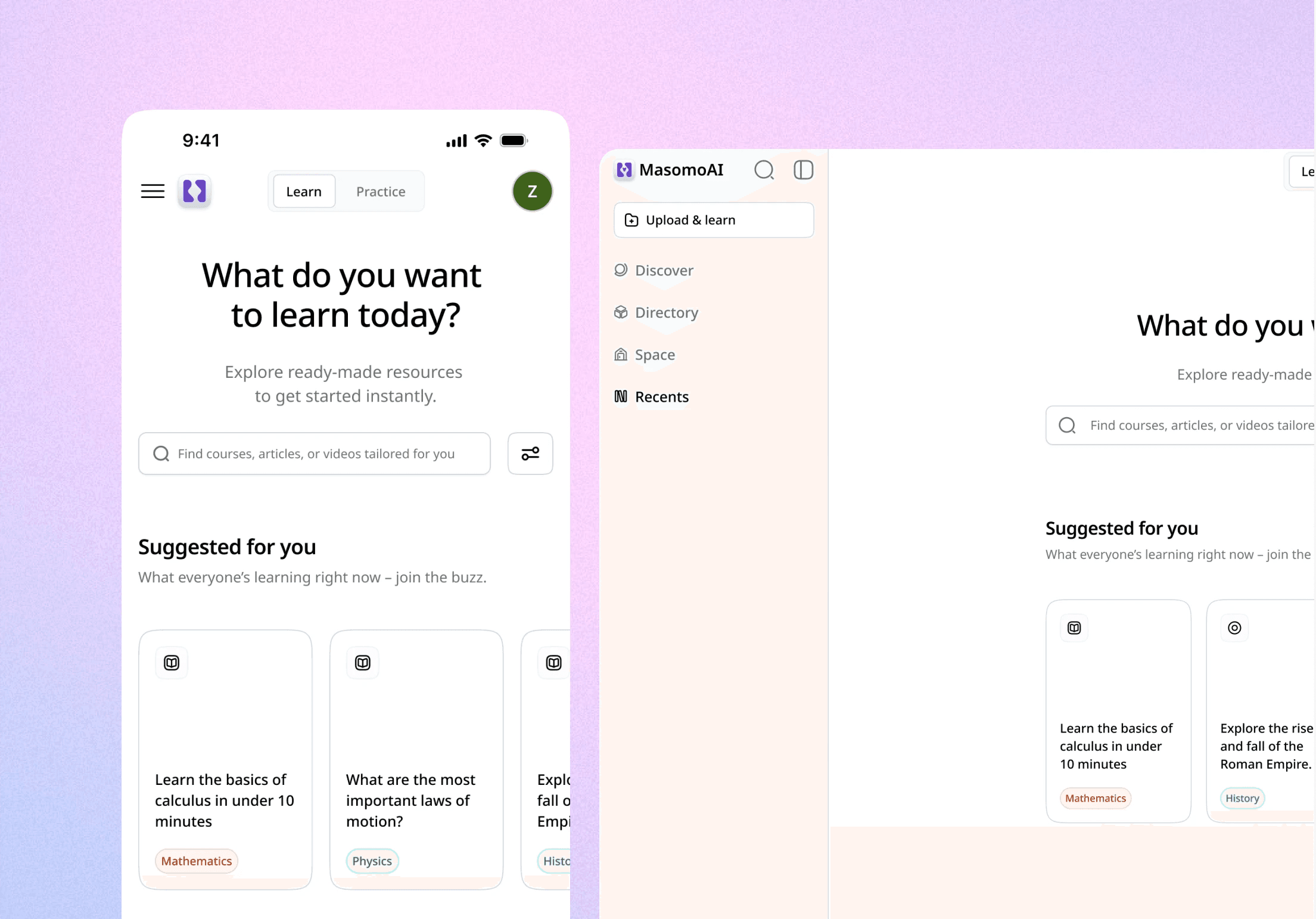
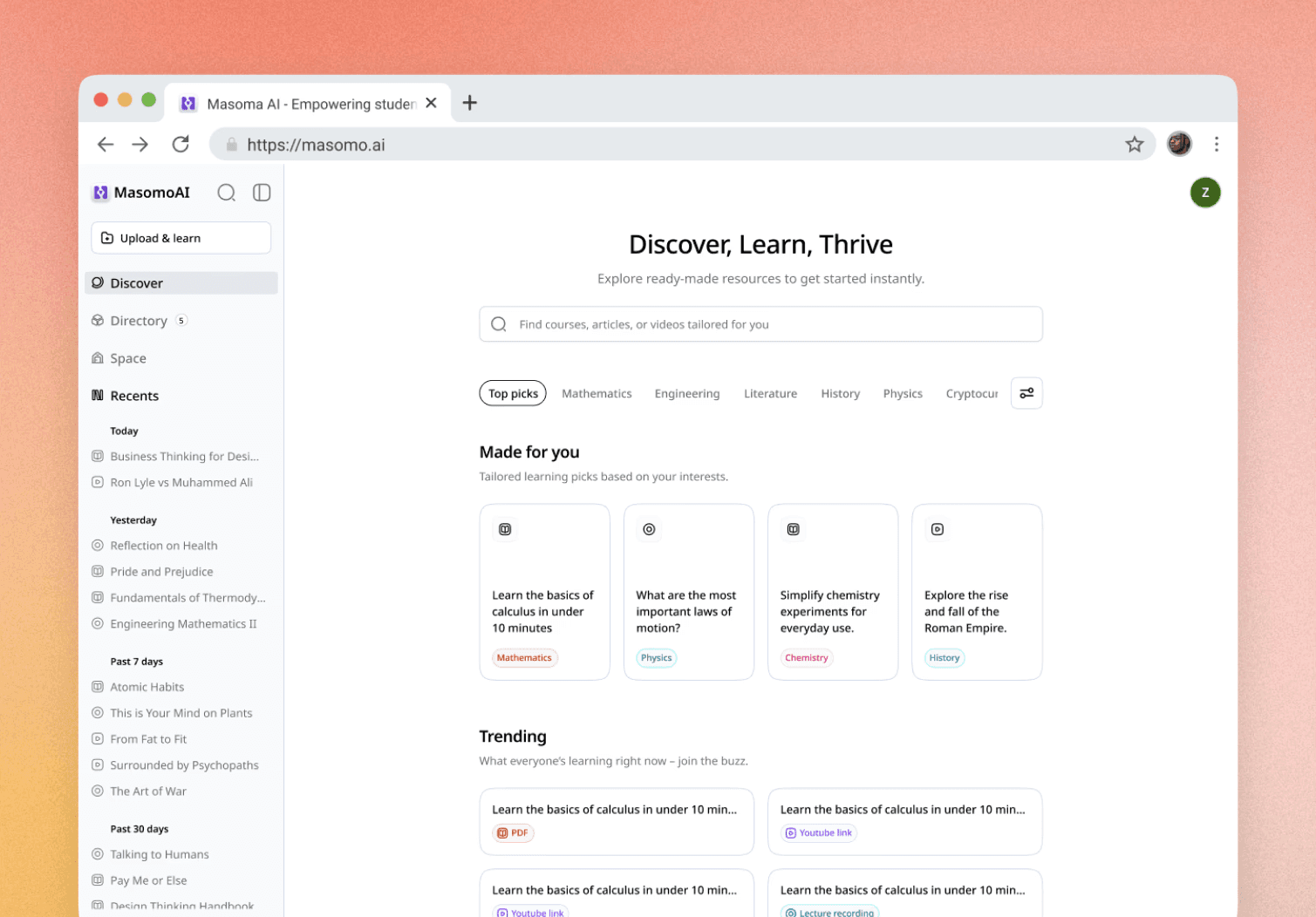
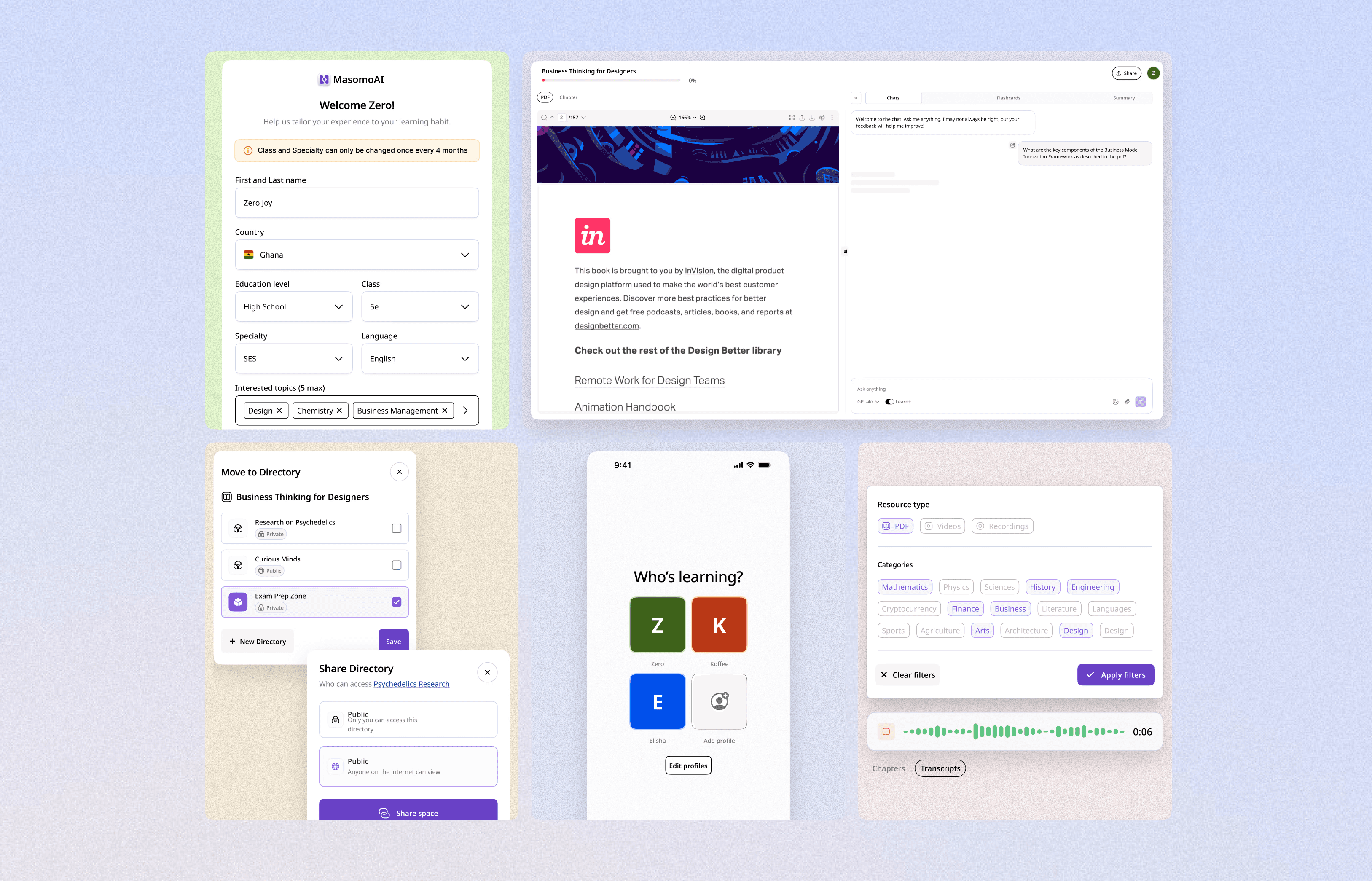
We created a small, flexible design system built around calm typography, restrained visual hierarchy, reusable content cards, progress patterns, and components that could survive across different learning modes.
Performance mattered too.
We were designing for students who might be using a mid-range Android device or an unreliable connection, so the interface could not depend on constant visual complexity to feel useful.
The system needed to support a few recurring behaviours well:
ask a question naturally;
move between subjects without losing context;
understand where you are in your learning;
save something worth returning to;
and continue without needing to relearn the interface.
The goal was not to make the AI look impressive.
It was to make the AI feel easy to use
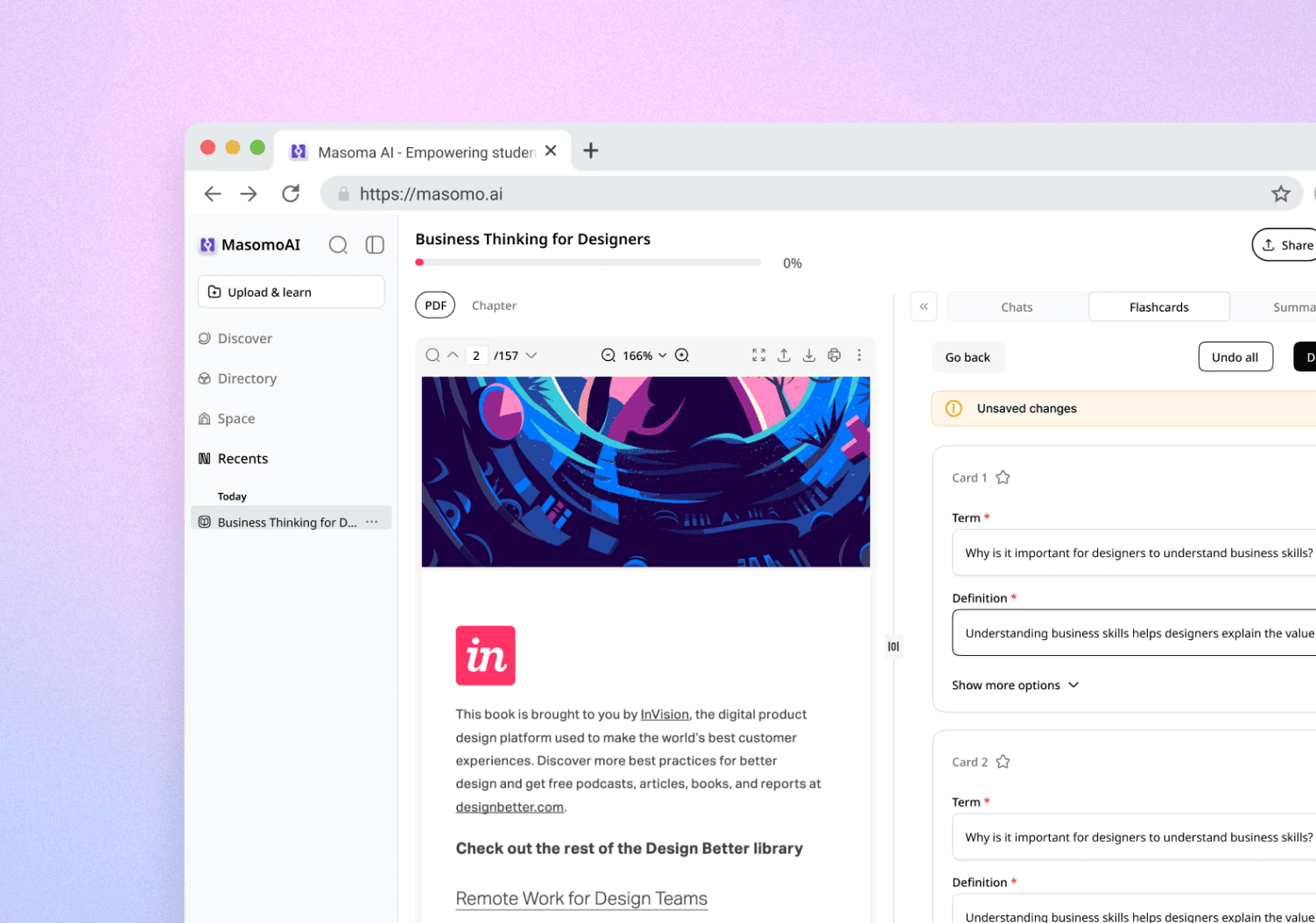
Flashcards made sense for Masomo because they solved a very practical problem: students wanted a way to practise what they had learned, but preparing good revision material takes time.
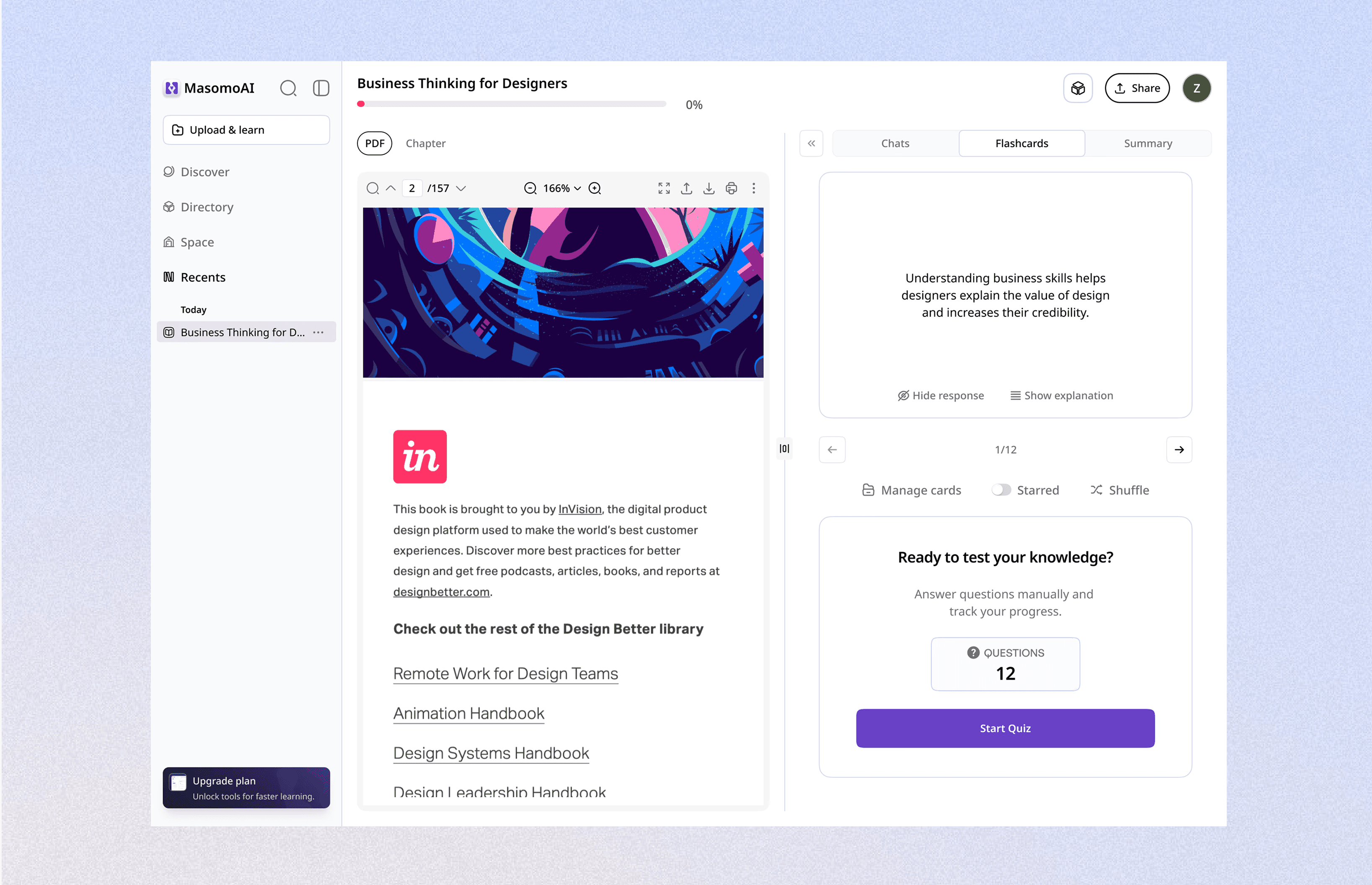
So instead of treating flashcards as another blank tool to fill manually, we connected them to the material a student was already studying.
When a student added a resource to a Directory, Masomo could pull out important concepts and turn them into smaller prompts for active recall.
The AI handled the preparation, the student still had to remember.
Practice only works when students are comfortable staying with it.
If every wrong answer feels like failure, it becomes easy to leave.
We designed the flashcard experience so students could ask for a hint when they were stuck, continue at a pace that worked for them, and revisit weaker concepts through spaced repetition rather than being pushed through one fixed sequence.
That mattered because the goal was not simply to score an answer as right or wrong.
It was to help students notice:
“I don’t remember this yet.”
and give them a reasonable path back to understanding it.
During usability sessions, students responded positively to the flashcard experience and described feeling more confident about recall before exams.
One of the stronger insights from the early research was that students were not always struggling to find materials.
They were struggling to make sense of what they had already found.
A PDF was still just a PDF. A YouTube lecture was still another tab. Classroom notes lived somewhere else.
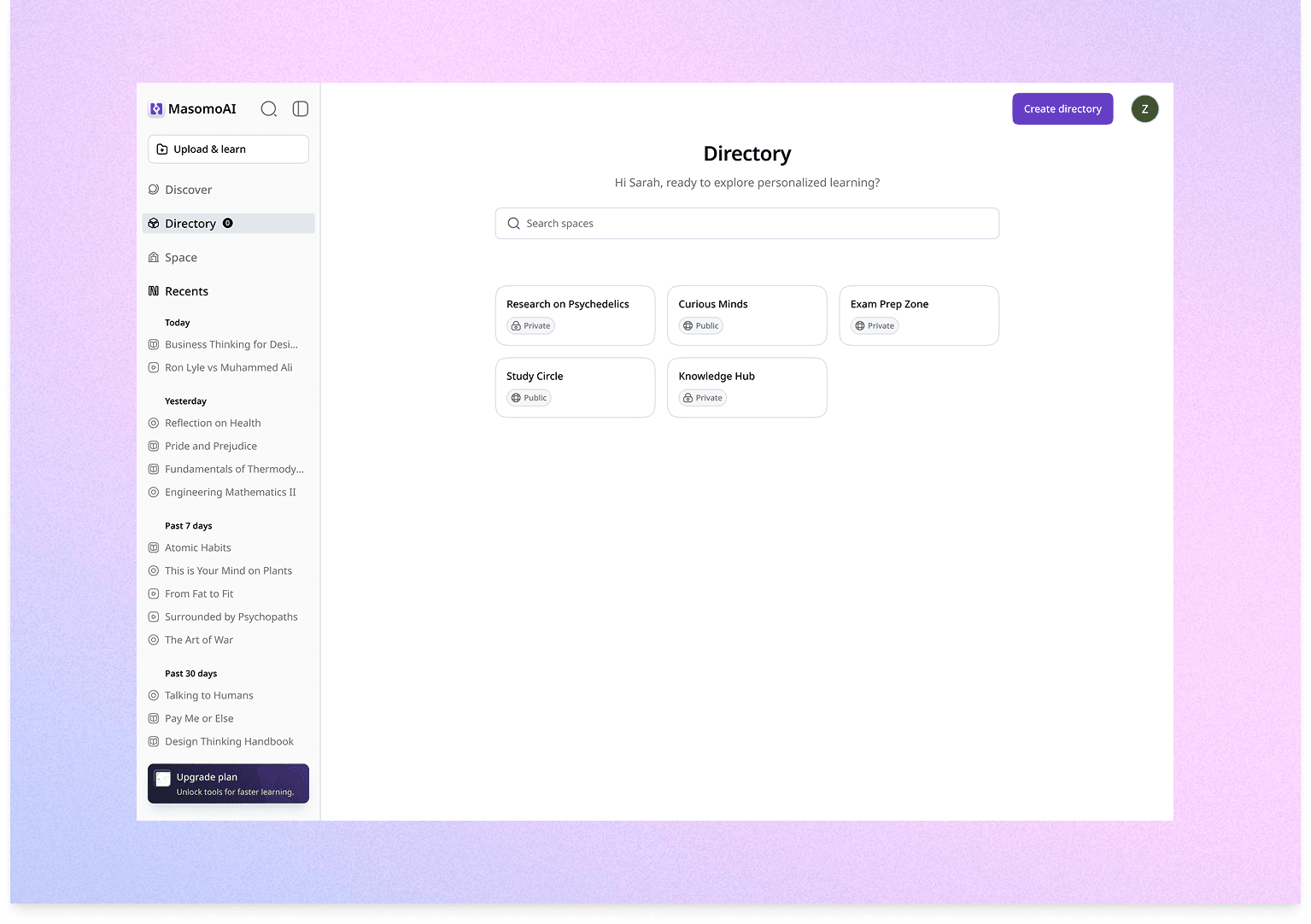
That led to the Directory.
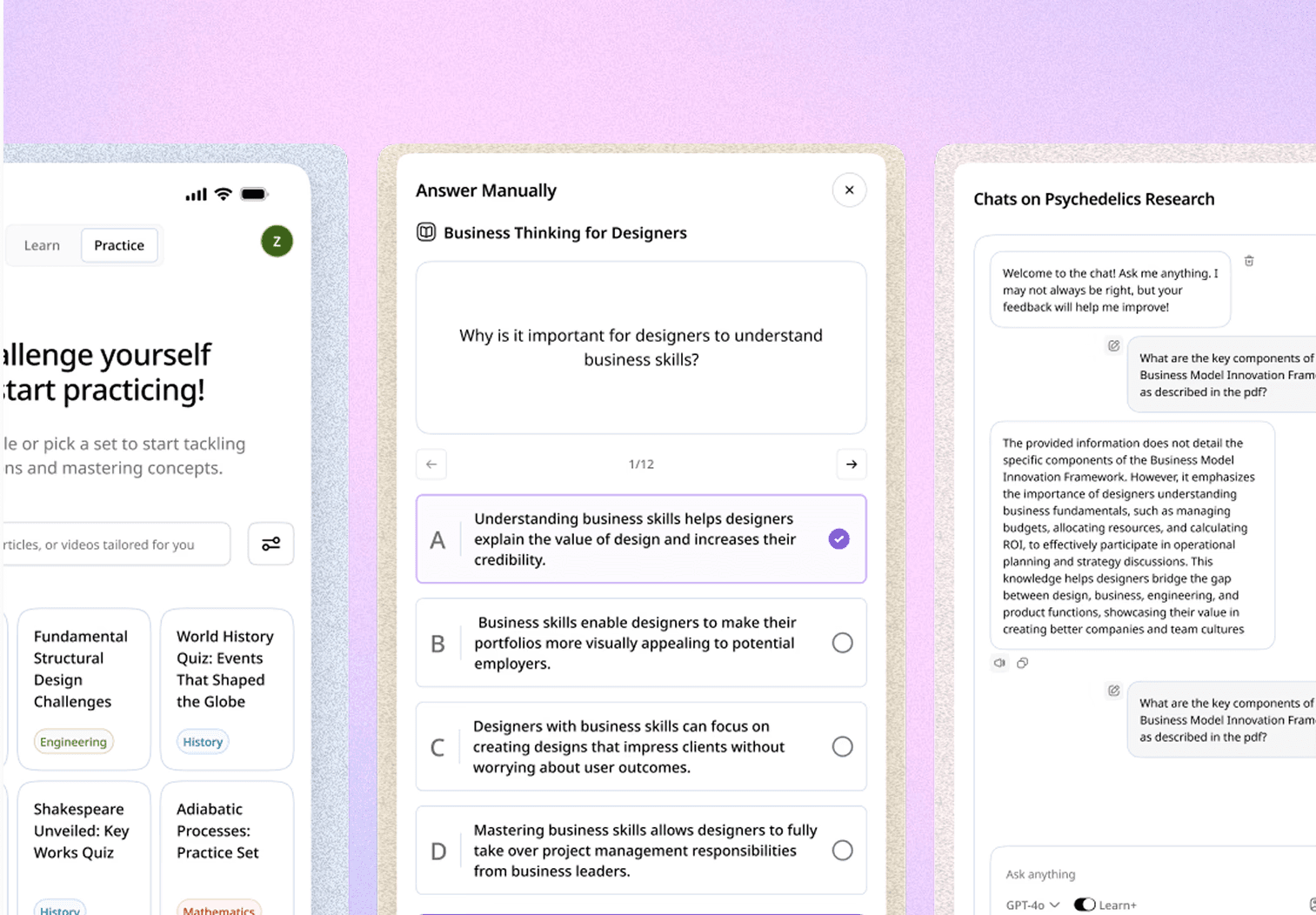
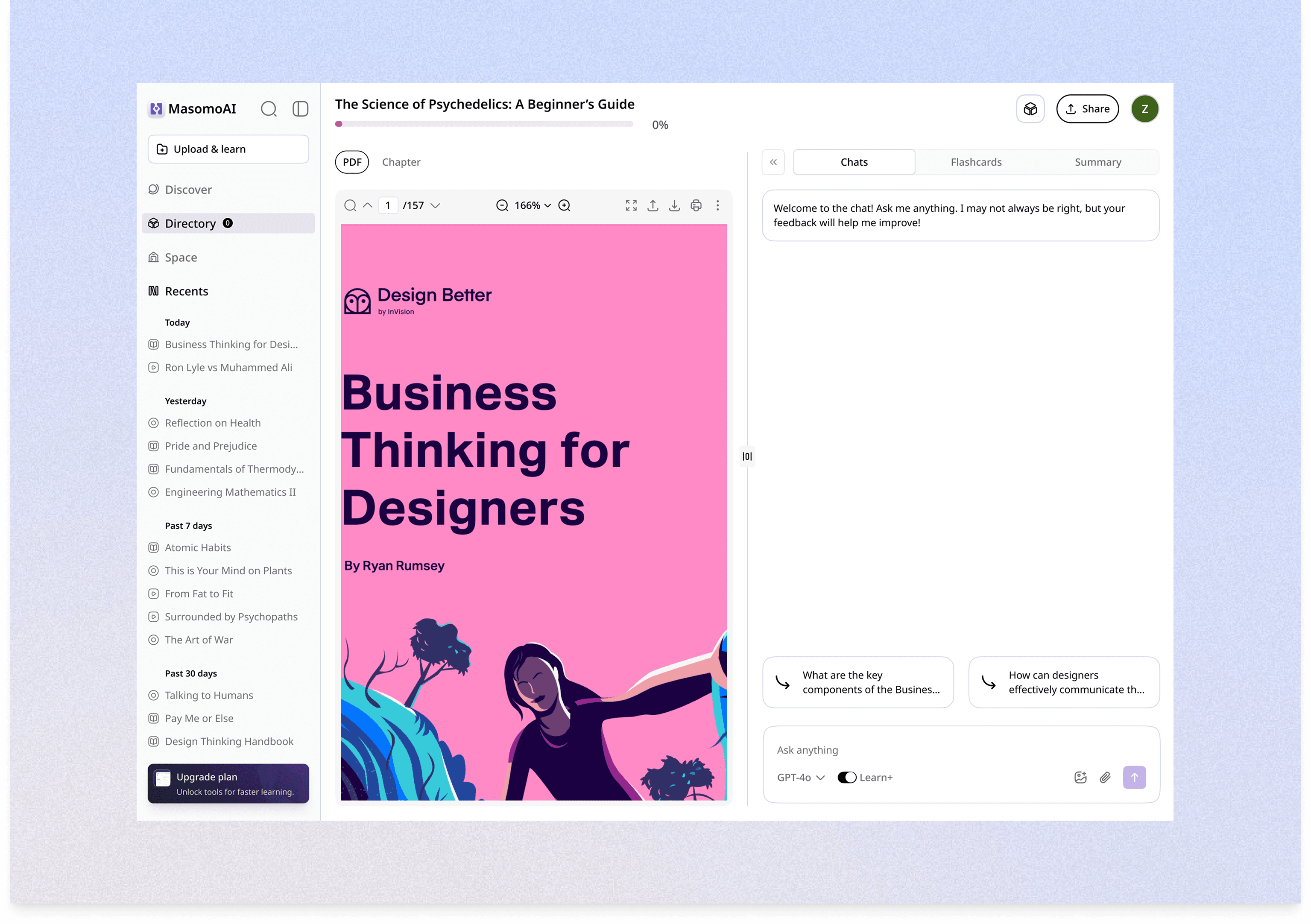
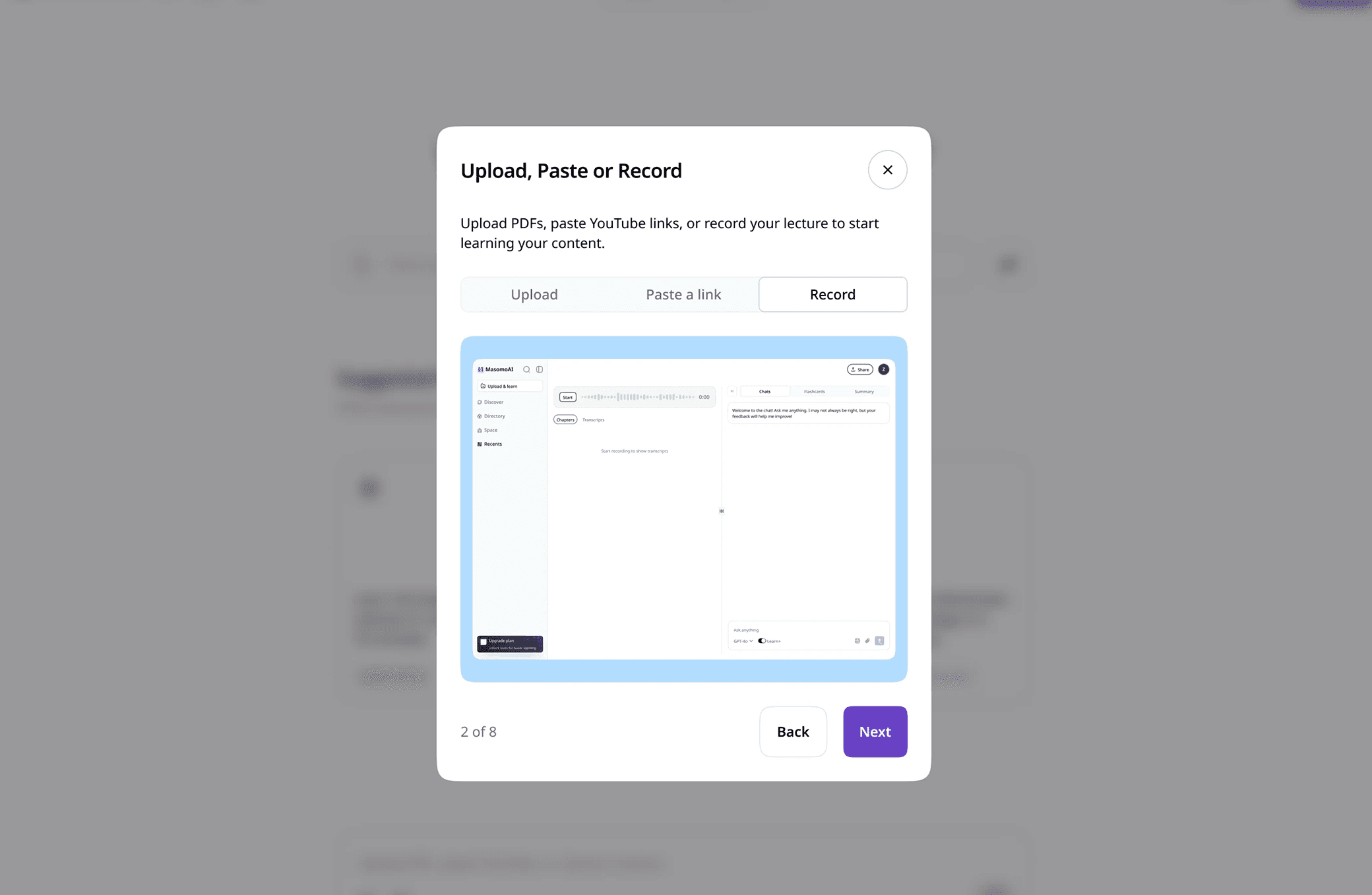
Instead of treating those resources as files sitting in storage, a student could add a PDF, video, article, note, or even start from a prompt and turn it into a structured learning space.
From that source, Masomo could create summaries, flashcards, quizzes, contextual explanations, and follow-up conversations around the same material.
That was important because it gave the AI context.
Rather than constantly asking students to start from a blank chat, the learning experience could begin from something they were already trying to understand.
The more we looked at how students actually studied, the clearer it became that learning was not only about accessing information.
Sometimes the thing that keeps someone going is another person.
Students had questions they wanted to ask casually, things they wanted explained differently, and moments when motivation mattered more than another generated summary.
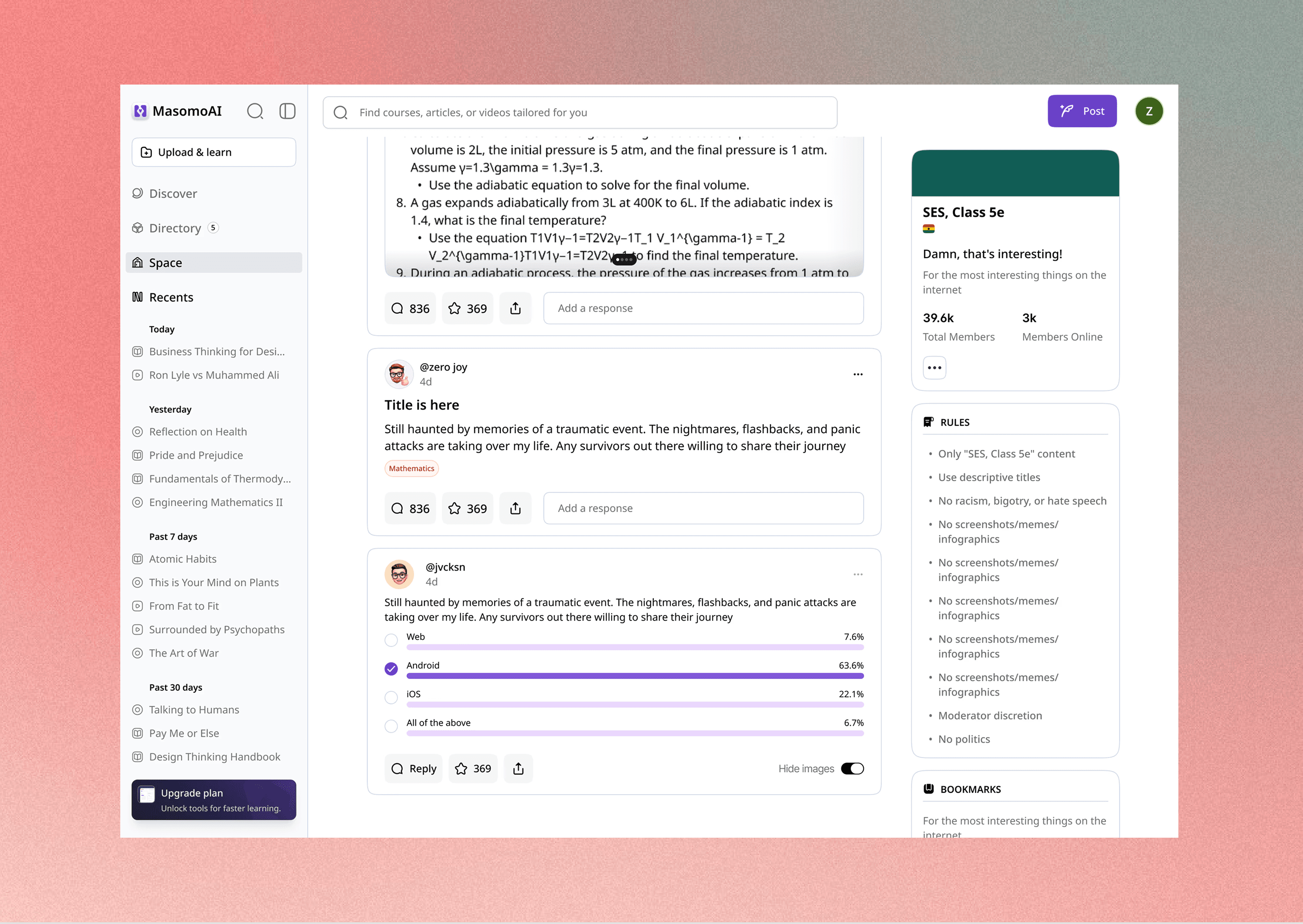
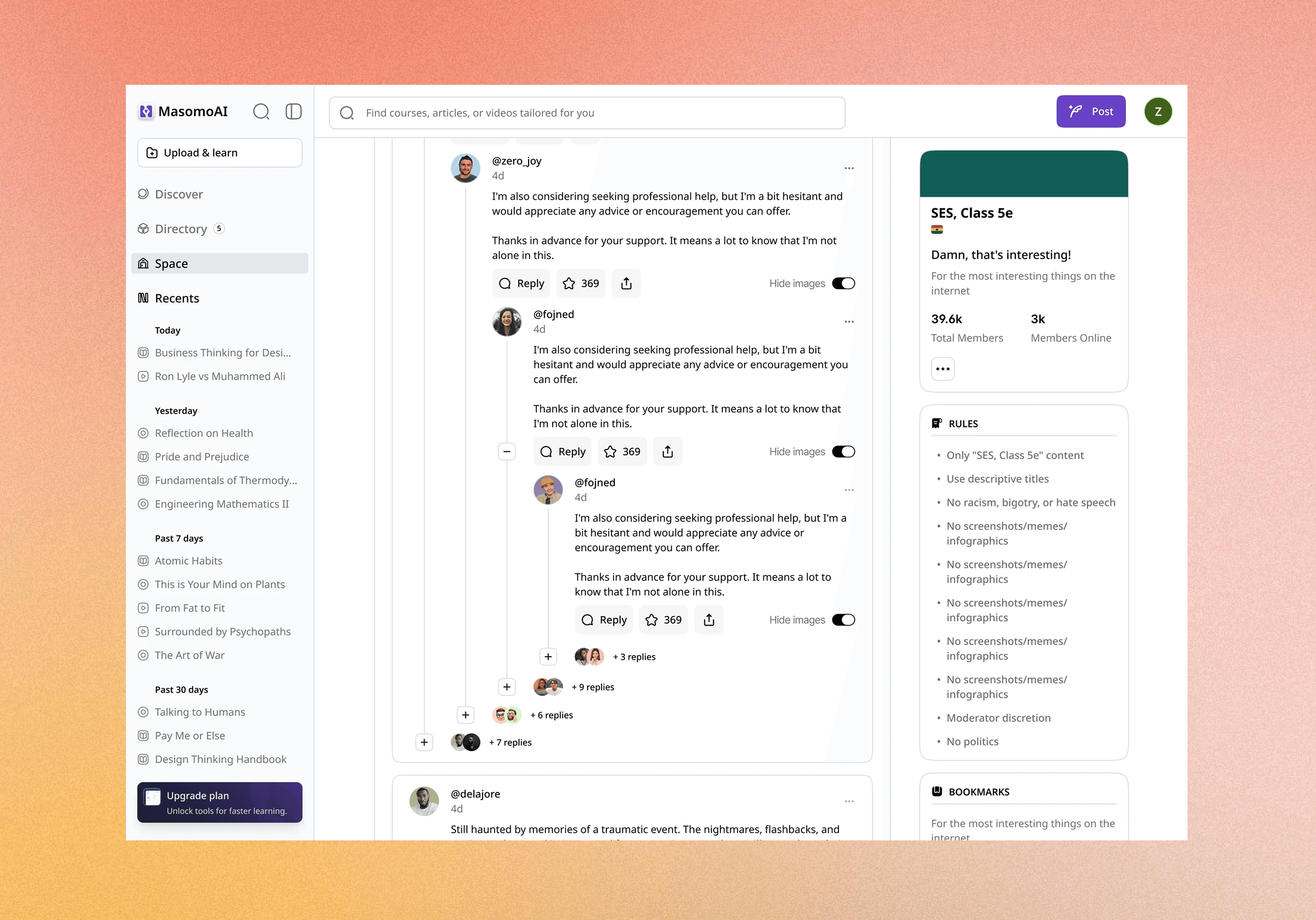
That thinking led to Spaces. Spaces gave students a place to form study groups, share what they were learning, ask each other questions, and keep some accountability around their progress.
Many of the students we were designing for could not assume they would always have one.
That forced us to be careful about how dependent the core experience became on real-time AI interactions. The product still needed to feel understandable and useful when connectivity was slow, inconsistent, or temporarily unavailable.
It also influenced how much we placed on screen, how heavy interactions became, and why the core learning journey had to remain straightforward.
That constraint was useful.
It kept bringing us back to the same question:
If the technology disappeared for a moment, would the student still understand what they were trying to do?
Masomo taught me that designing AI for emerging markets is not only about making powerful technology accessible, It is about deciding how much technology the experience actually need
Longer study sessions became the order of the day
Engagement with quiz-based practice increased by 8% after 6 weeks
studies shows users searching around less, giving more time actually learning
more students began learning immediately after onboarding after resources were made available earlier in the experience.