YourWorkBuddy is a talent marketplace designed to make the first step between clients and independent professionals feel less transactional. Instead of pushing talents straight into long proposals, the product introduced Wave - a lightweight way to show interest, open a conversation, and gradually move into collaboration.
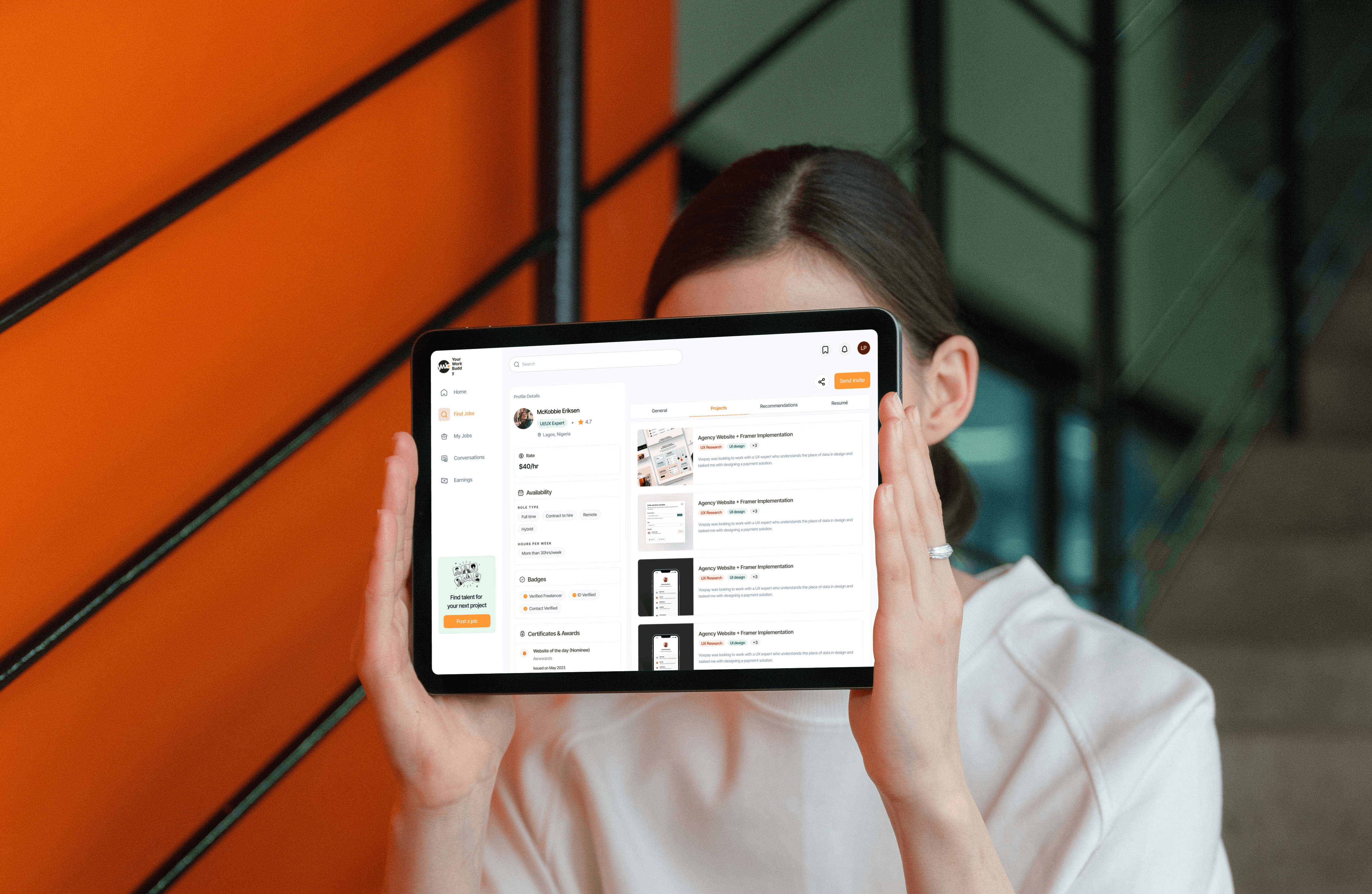
Talents were putting time into proposals without knowing whether clients had seen them or intended to respond. Clients had the opposite problem: they were receiving a high volume of applications but still struggling to identify the people they genuinely wanted to speak with.
The team wanted to create a less transactional starting point, one that did not require talents to write a full proposal before a client had shown any interest.
In both the corporate and creative job market, people are familiar with applying, submitting a proposal, or sending a direct message. A separate signal of interest sits somewhere between those behaviours.
That meant the interaction had to feel immediately understandable, especially for a target audience with different levels of digital confidence and different expectations around how hiring should work.
The Wave was designed as a small first step: enough for a talent to put their foot in the door, without asking them to invest in a full proposal before the client had shown interest.
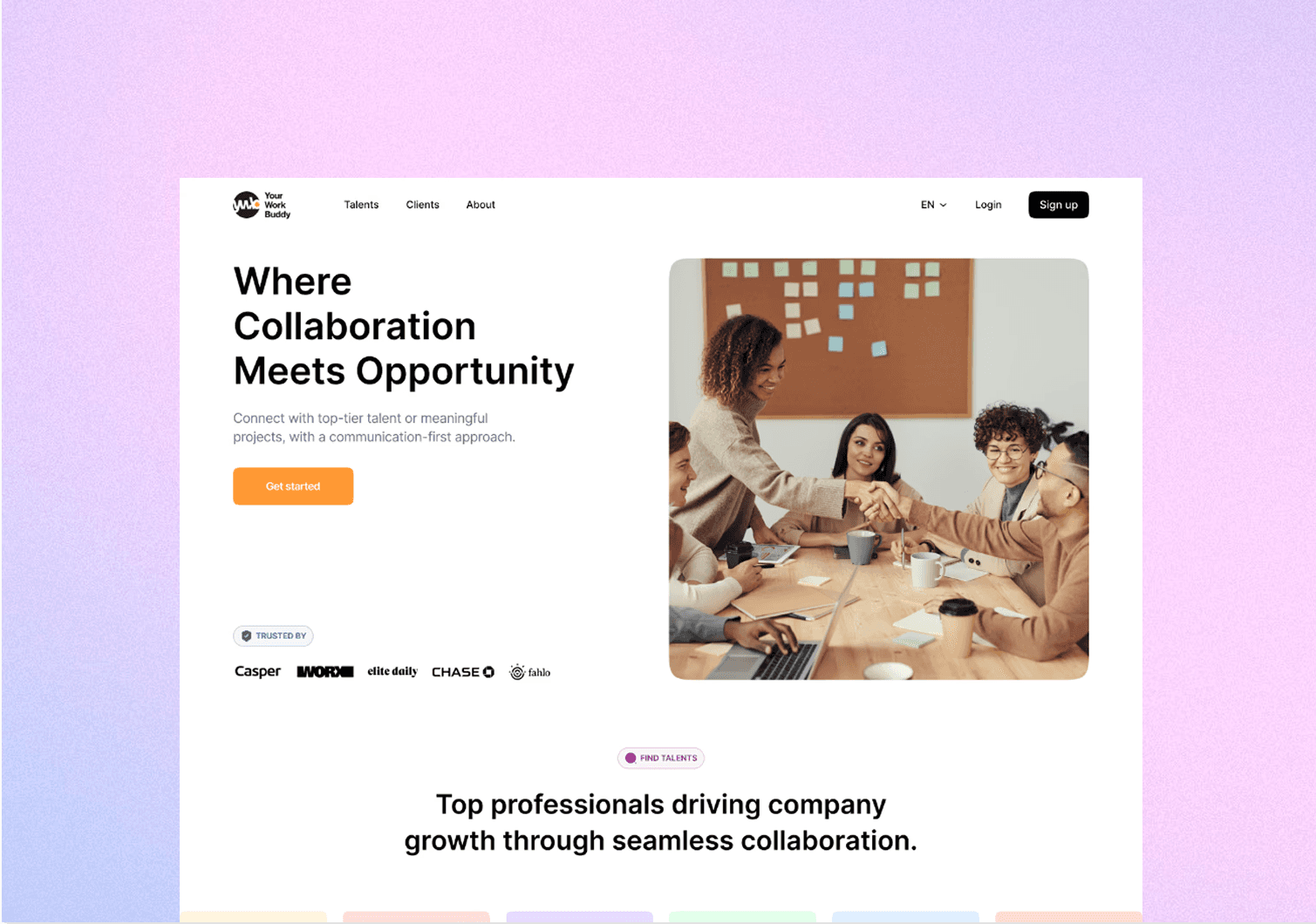
There was no need to create a complicated new hiring model. The value of the product rested on whether people could understand one new action: expressing interest without formally applying.
My confidence in the idea came less from exploring many competing concepts and more from the behaviour we were already observing. People often look for a low-pressure way to signal interest before committing to a full conversation.
The age and digital habits of the target users also mattered. The interaction needed to feel familiar enough for power users, but simple enough that it would not require explanation.
The Wave was never intended to replace profiles, conversations, or contracts. It was designed to reduce the pressure at the beginning.
A talent could show interest in a role. The client could decide whether to continue. Only after that would the experience move into a deeper conversation and project workflow.
That kept the interaction lightweight while preserving the parts of hiring that still required context and judgment.
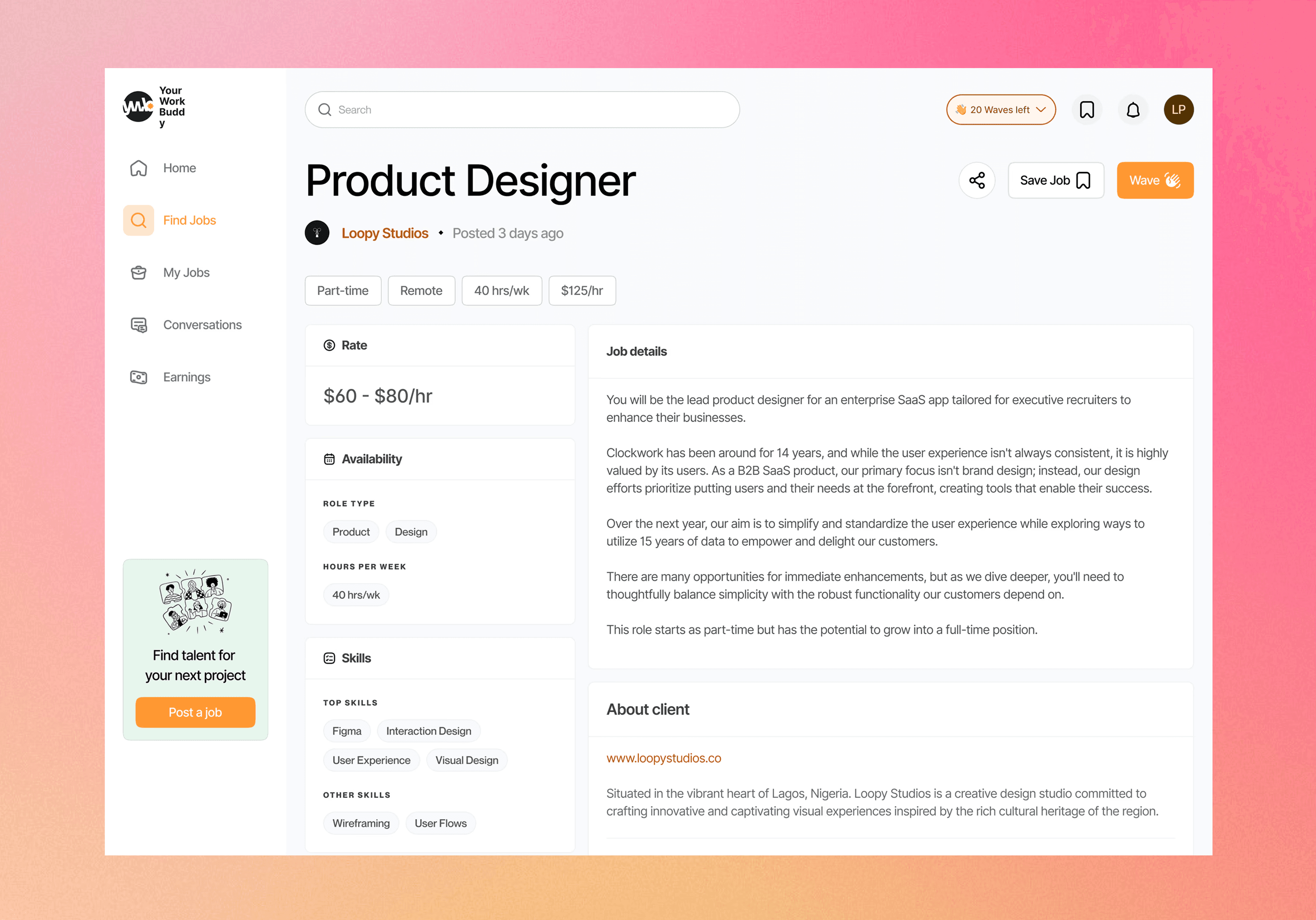
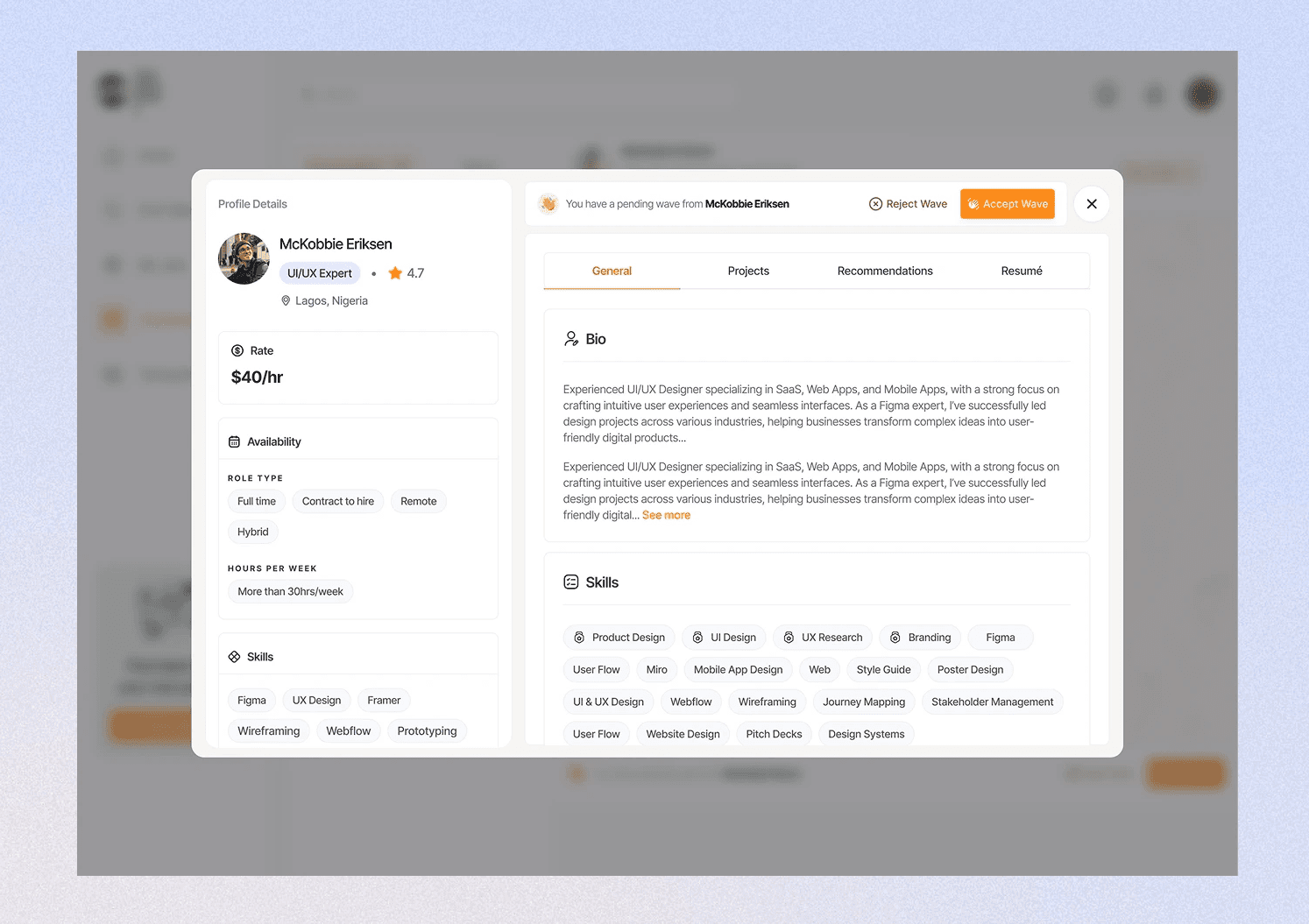
Because Wave introduced a new pattern, the design had to explain itself through the interface.
The action needed to sit close to familiar marketplace behaviours, use clear language, and make the next step obvious. I avoided turning it into a large application flow. The point was to let someone express interest quickly and understand what would happen afterwards.
The Wave was only useful if it led somewhere.
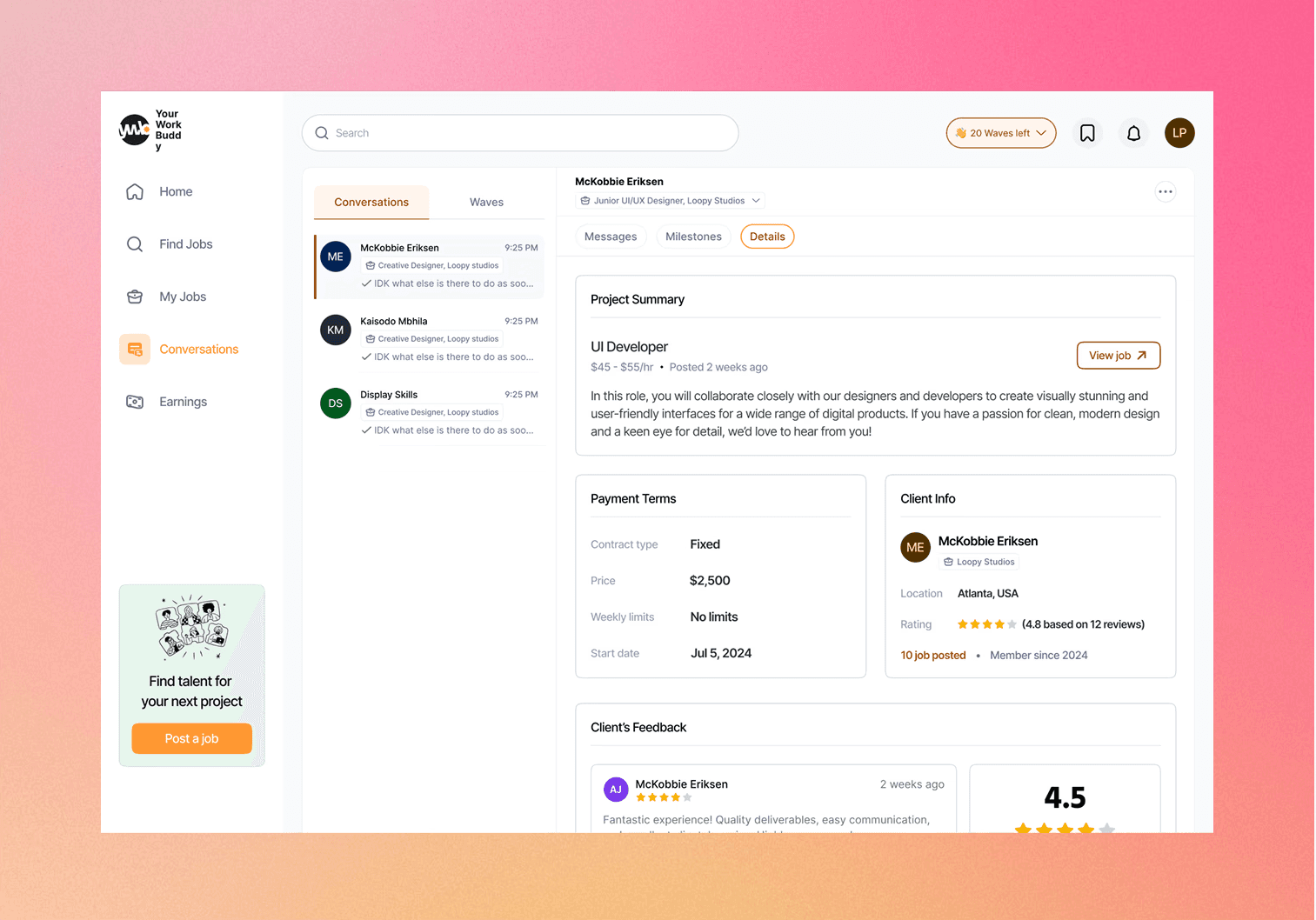
I designed the surrounding flow so that an accepted Wave could move naturally into conversation, collaboration, and contract management. This helped the feature feel less like a reaction button and more like the beginning of a professional relationship.
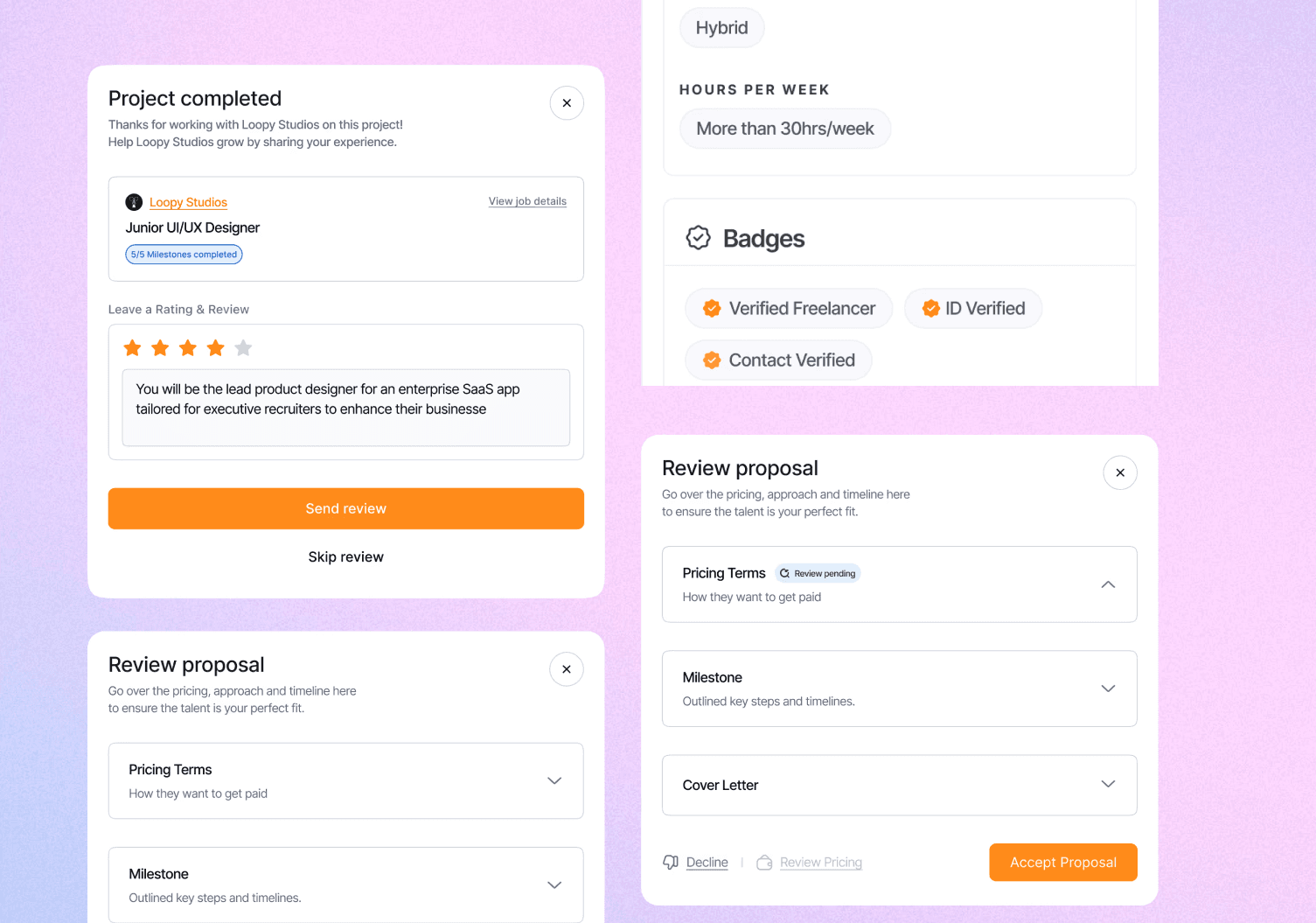
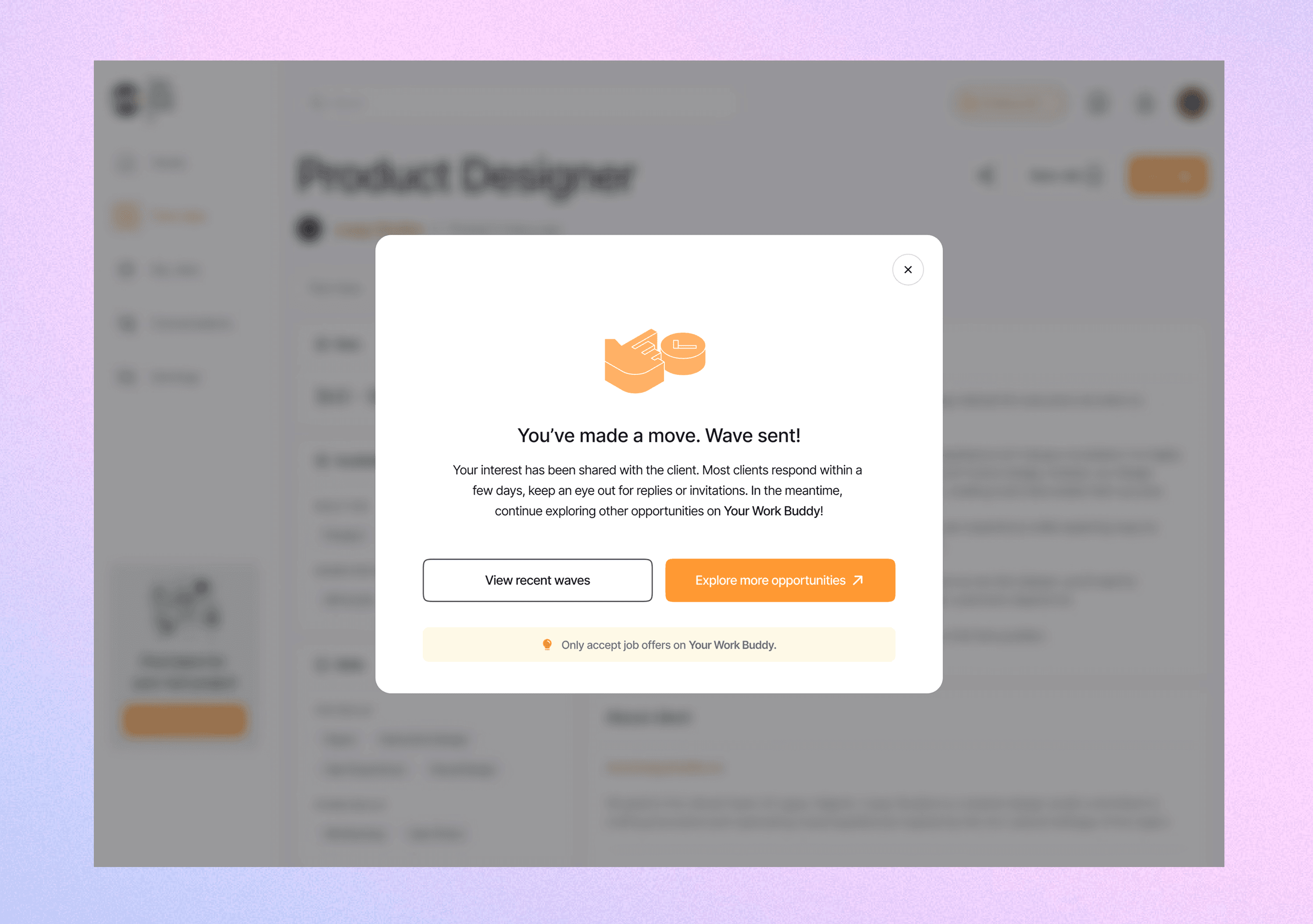
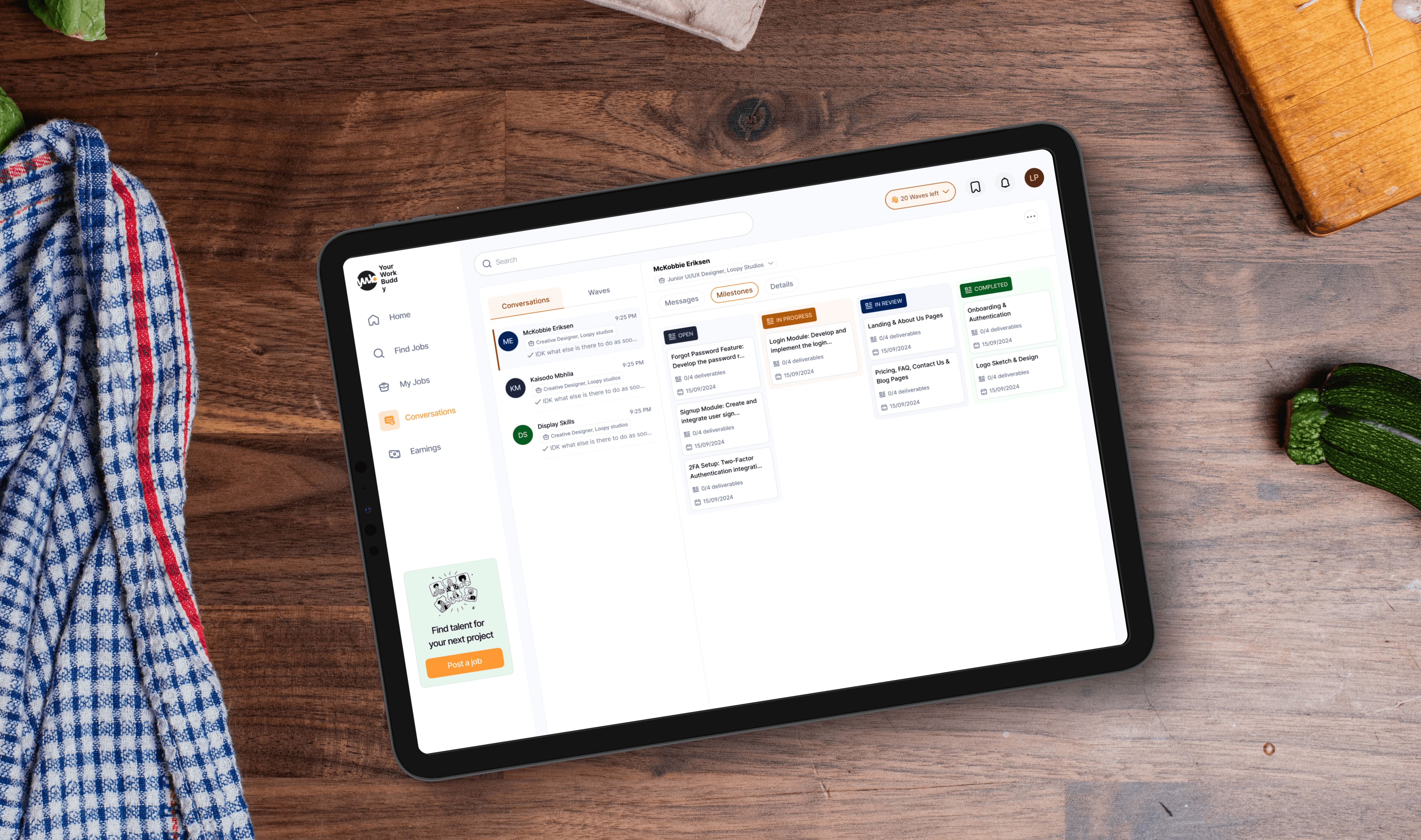
The experience made more sense when I stopped treating discovery, interest, conversation, and project work as separate features.
The experience followed a simple progression:
A talent finds a relevant opportunity and sends a Wave.
The client reviews the talent’s profile and decides whether to accept.
An accepted Wave opens a shared conversation.
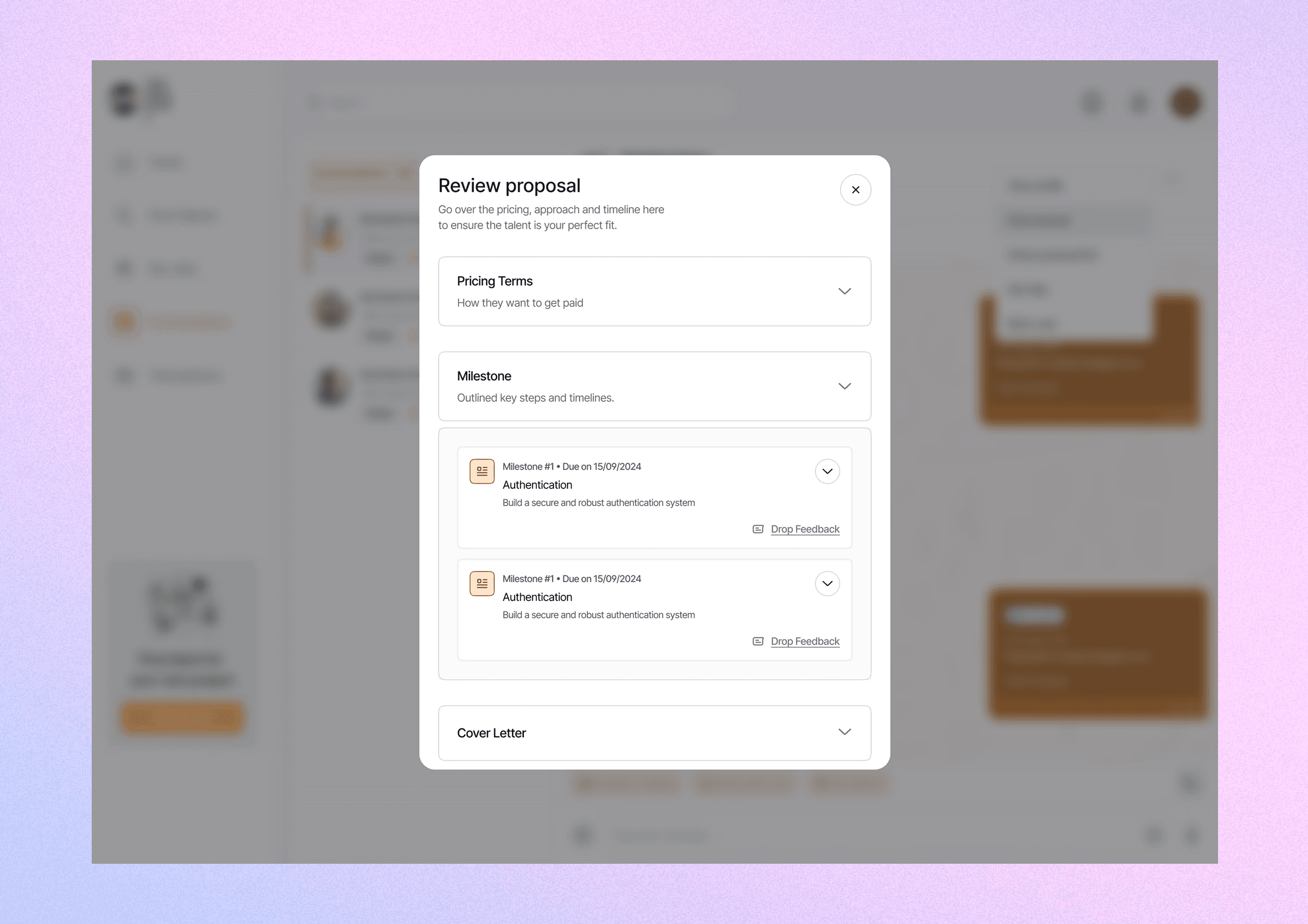
Both sides discuss the work and shape the proposal.
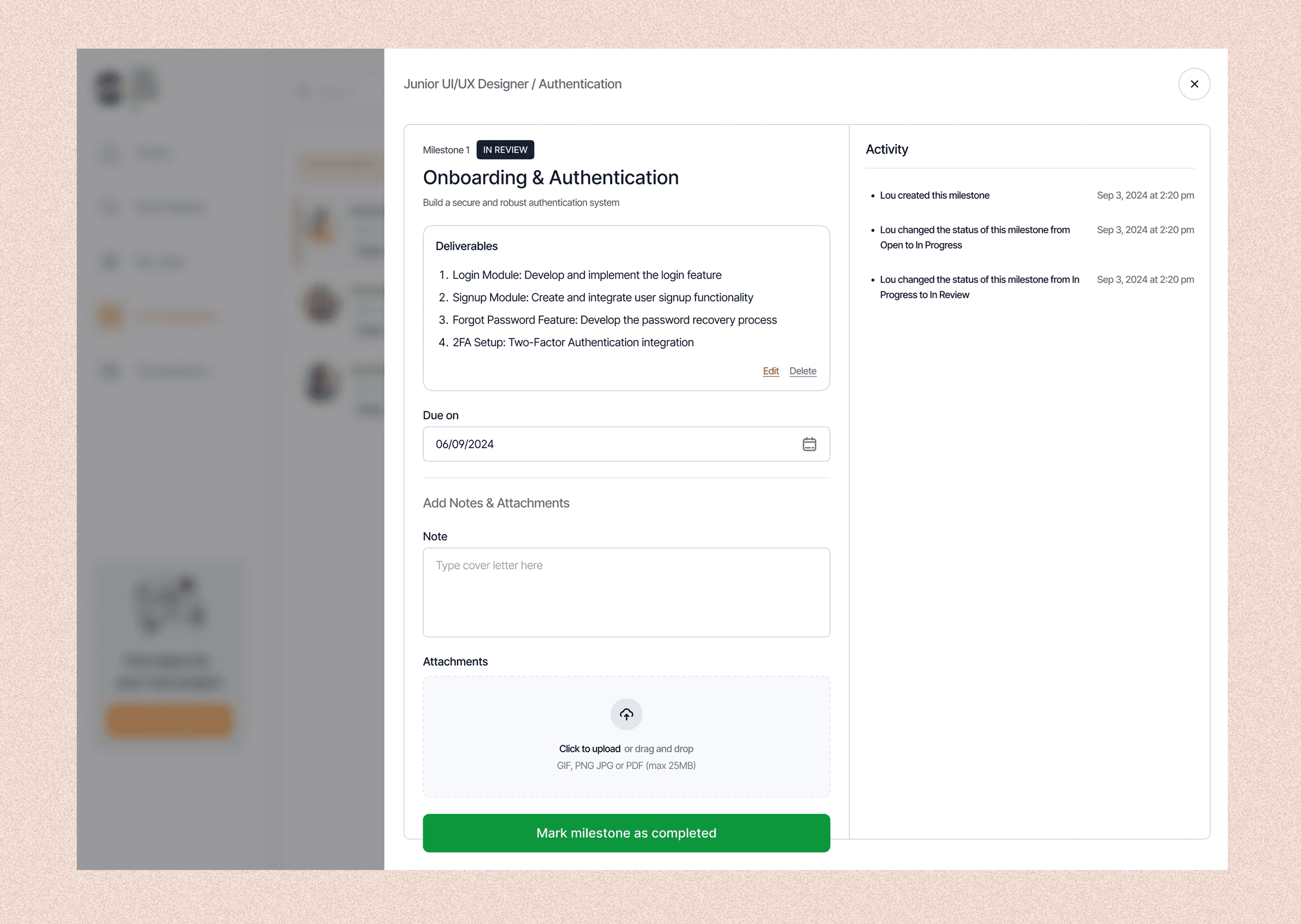
Milestones, deliverables, and project updates remain connected to that conversation.
I wanted each step to feel like a natural continuation of the one before it. People should not have to restart the relationship in another tool once the client showed interest.
The Wave opened the door. The workspace gave both sides somewhere to build from there
On the surface, a Wave is a small action. But the problem behind it was not small.
Looking for work can be tiring, especially when every opportunity asks for time and effort before offering any sign that someone is listening. From my own experience job hunting, silence was often the most frustrating part—not always knowing whether an application had been seen, considered, or ignored.
Clients faced a different kind of pressure. A long list of applications did not necessarily make choosing easier. It often meant more profiles to sort through, more repeated information, and more uncertainty about who was seriously interested.
The Wave was designed to soften that first interaction for both sides. Talents could express interest without overcommitting, while clients received a clearer signal from someone who had intentionally chosen the role.
It did not remove the work involved in hiring. It simply made the beginning feel more human.
A lightweight interaction can easily become meaningless if it gives the receiver nothing useful.
That was the risk with the Wave. If it behaved like a simple “like,” clients could end up with another list of names and no reason to respond.
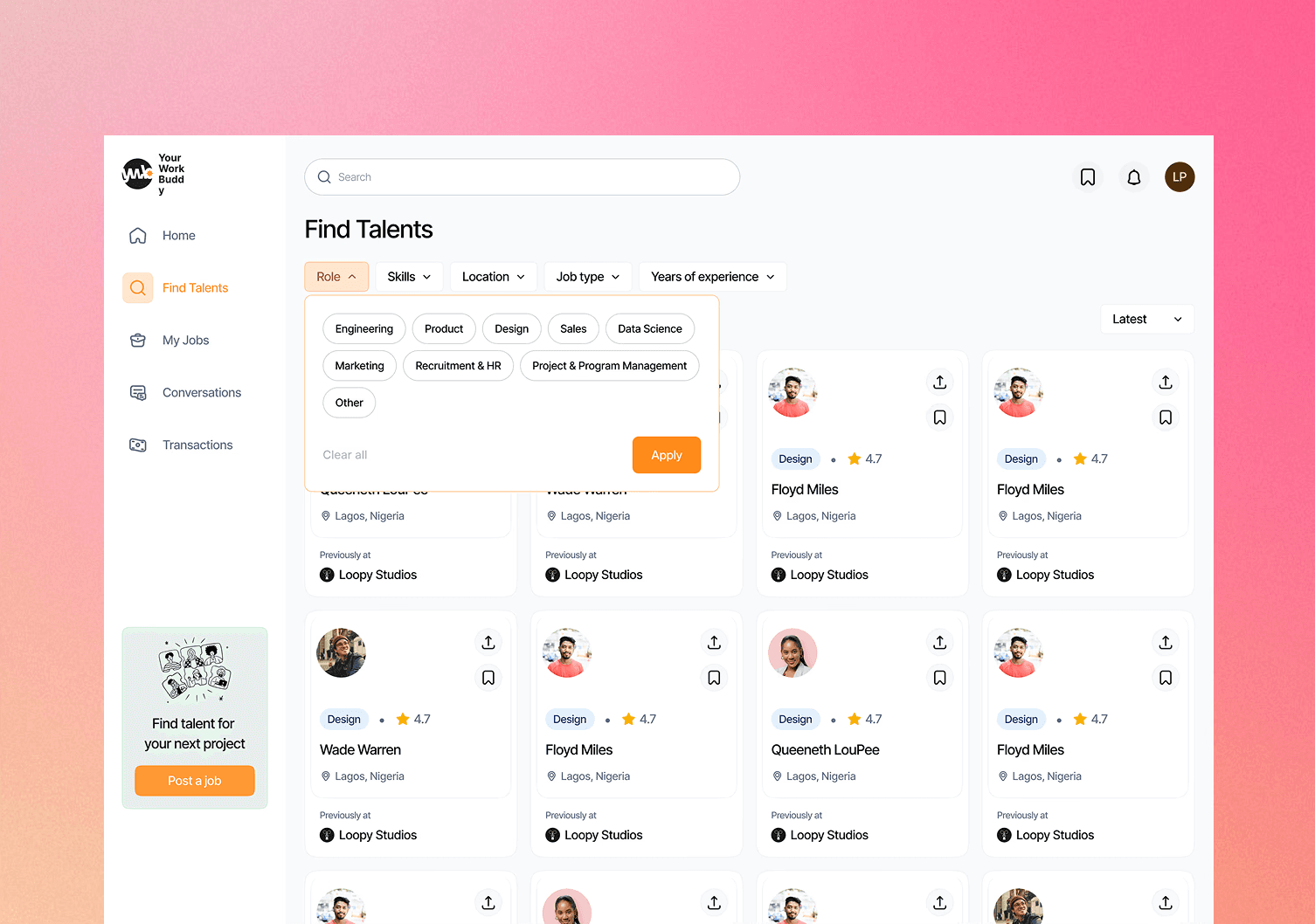
To avoid that, an incoming Wave was connected to the talent’s profile and relevant context. The client could see who was interested, understand their background, and decide whether opening a conversation was worthwhile.
The goal was not to make the Wave as detailed as a proposal. It was to provide just enough information for the next decision.
This gave the client three clear options:
continue the conversation;
leave the request pending while reviewing it;
or decline rather than leaving the talent without an answer.
That structure helped the interaction remain lightweight without becoming vague.
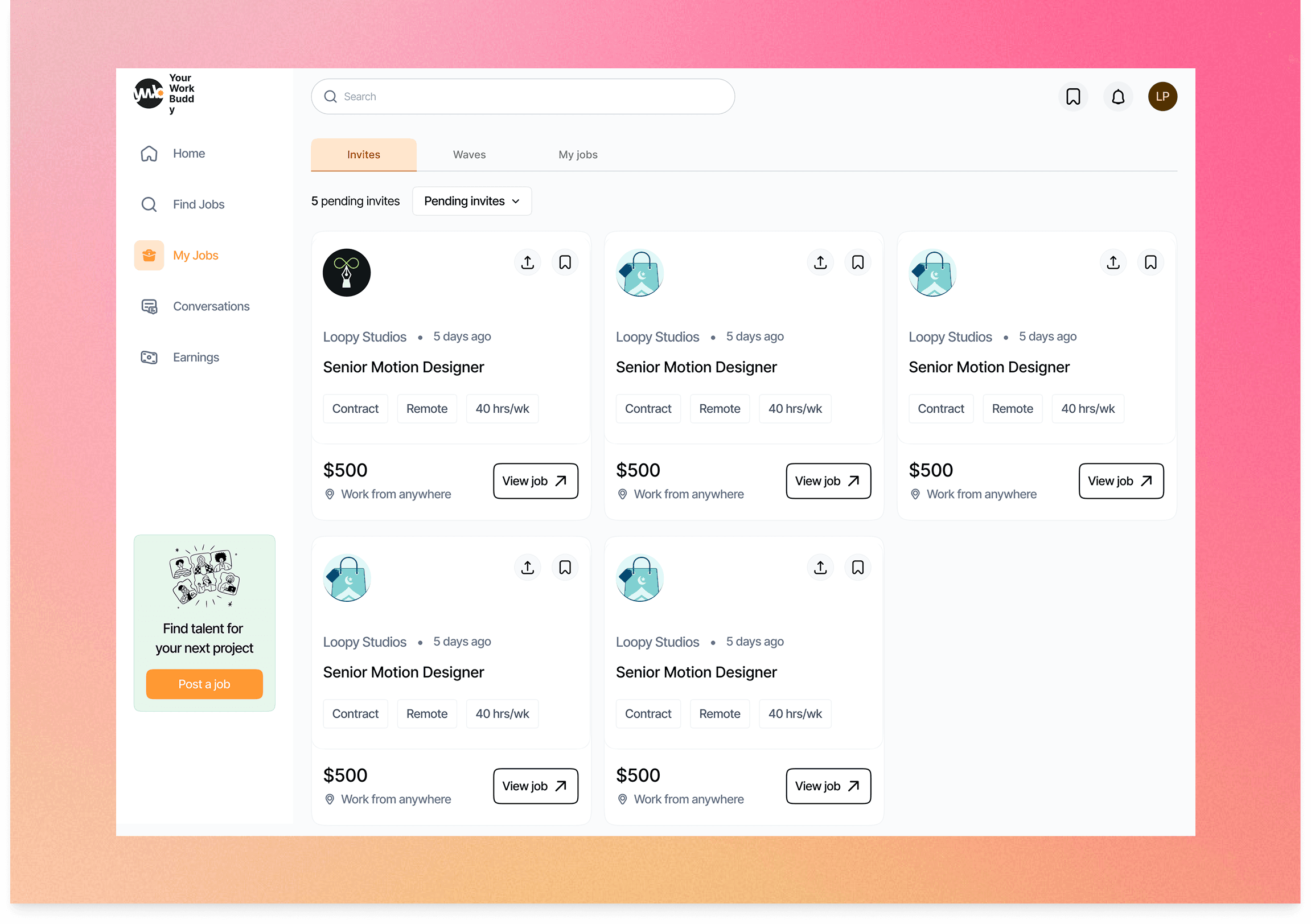
One of the quieter problems in job hunting is not knowing where you stand.
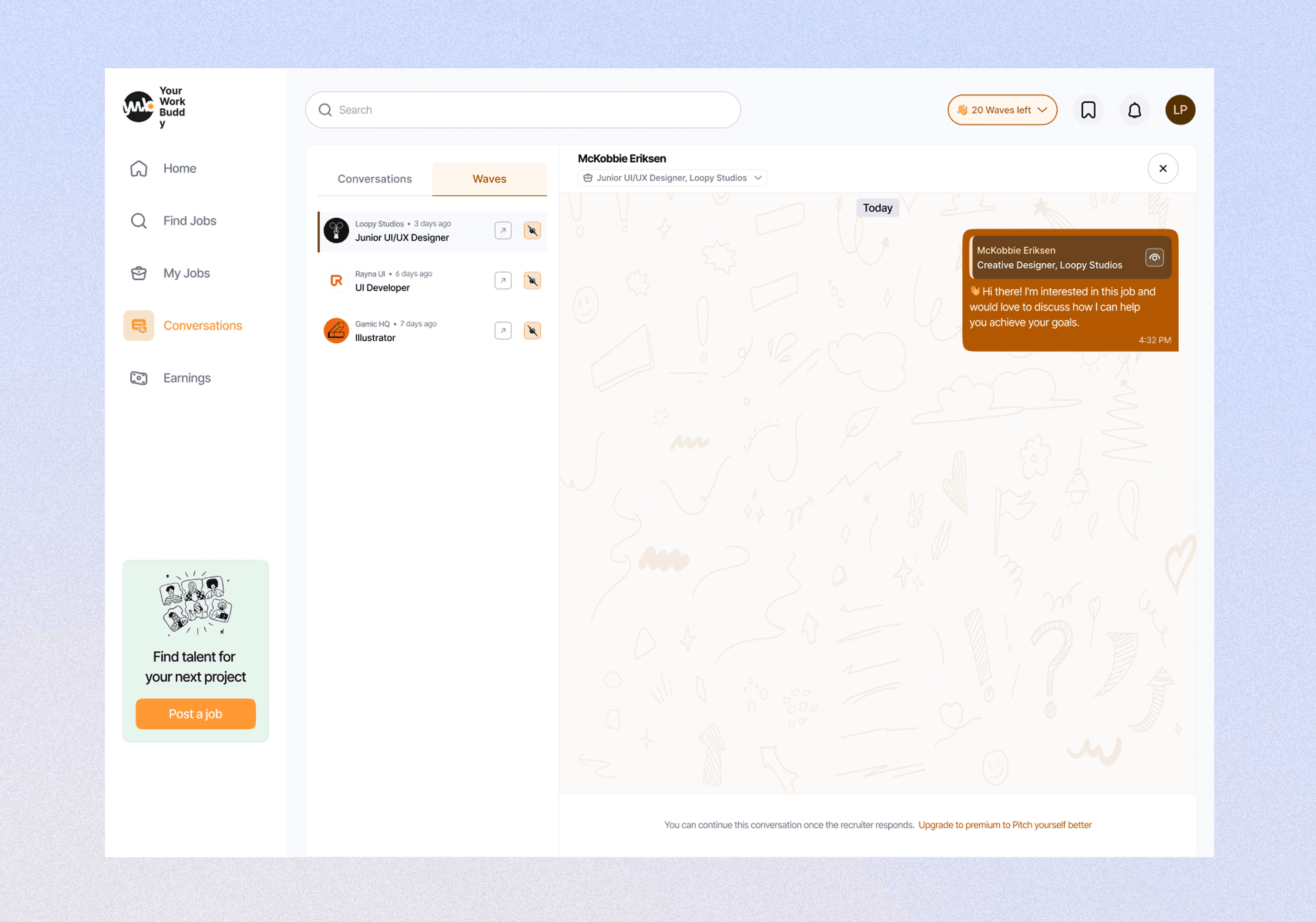
After sending a Wave, talents needed more than a confirmation that the request had left their screen. They needed to understand whether it was still waiting, had been viewed, or had received a response.
A decline was not necessarily a successful outcome for the talent, but it was still more useful than silence. It gave them closure and allowed them to move on rather than continuing to wait for a response that might never come. The product carried the context forward so both sides could continue from the interest already shown instead of starting again from an empty chat.
This was the larger idea behind YourWorkBuddy: not only helping people find opportunities, but giving the beginning of a working relationship more clarity and respect.
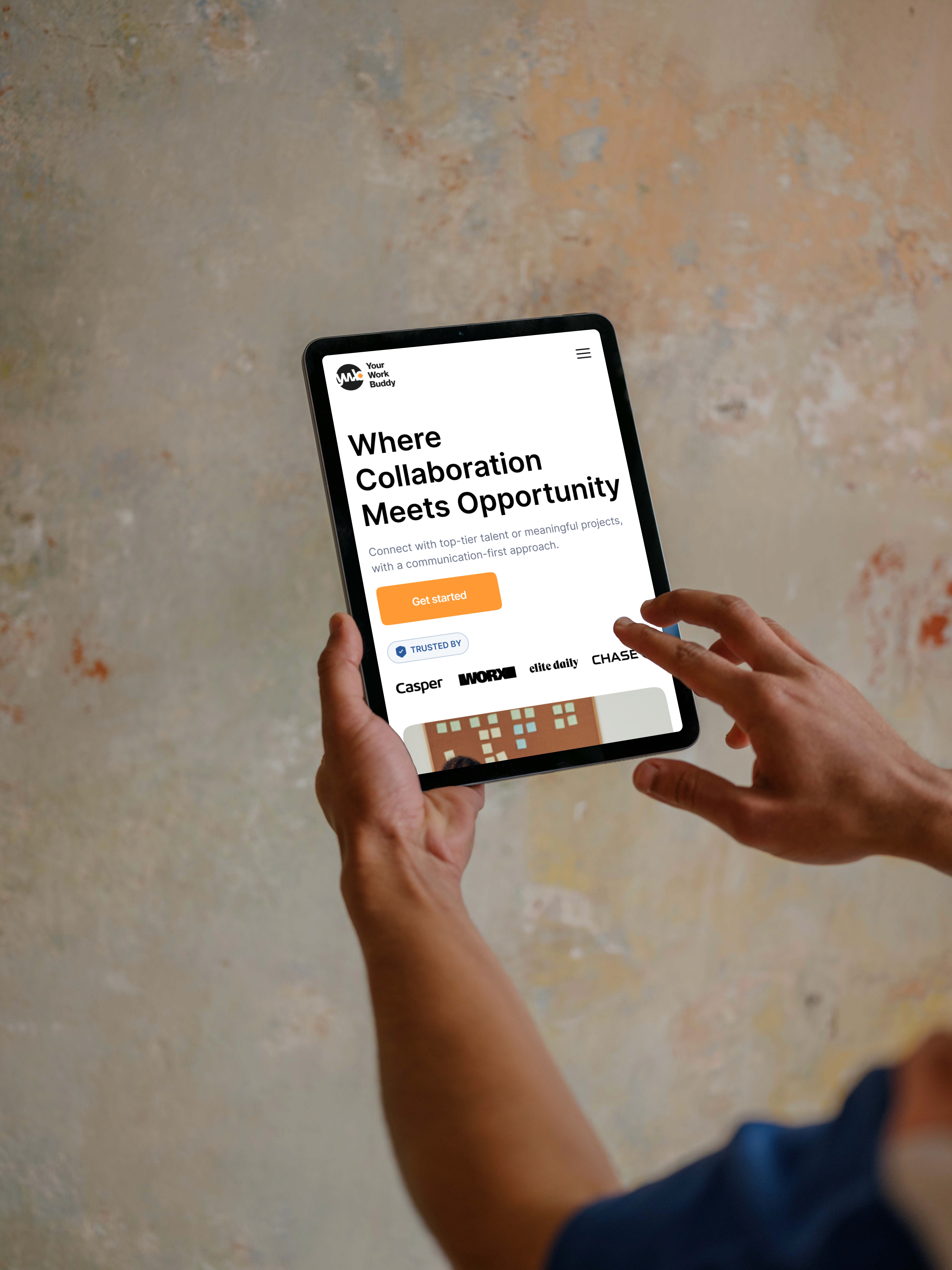
The Wave and its connected hiring journey were taken into beta before I left the project.
Clients received enough information to decide whether to continue, while talents could see the status of their requests.
The product linked job discovery, Waves, conversation, proposals, and milestones instead of treating them as disconnected experiences.
Talents could begin with a small expression of interest rather than writing a complete proposal before receiving any response.

